Ontario Road Signs Explained (Shapes, Colours & Meanings)
Published
Road signs are half of your G1 test (20 of the 40 questions), so they are the single best thing to study. The good news: Ontario signs follow a shape-and-colour system. Once you learn the system, you can read a sign you have never seen before. This guide decodes that system, then walks through every common Ontario sign by category with an official picture and a plain-English meaning. When you are ready, test yourself on our free G1 practice test.
Contents
The shape & colour system
Ontario doesn't expect you to memorize hundreds of signs cold. The shape and colour tell you what kind of sign it is before you even read the words. That's exactly how to answer a question about a sign you don't recognize.
| Shape / Colour | What it means | Examples |
|---|---|---|
| Red octagon | Come to a complete stop | Stop |
| Red & white downward triangle | Yield the right-of-way | Yield |
| White rectangle / red circle or slash | Regulatory: a law you must obey (red circle/slash = prohibited) | Speed limit, one way, no left turn |
| Yellow diamond | Warning: a permanent hazard ahead | Curve, bump, pedestrians |
| Orange diamond | Temporary: construction / road work ahead | Road work, detour, flagperson |
| Green | Permitted movements, directions & distances | Exits, destinations |
| Blue | Information / driver services | Hospital, gas, accessible parking |
| Brown | Recreation / culture / scenery | Parks, attractions |
Quick memory hook: red = stop or don't, yellow = permanent warning, orange = temporary warning, green = go / guidance, blue = services, brown = recreation.
Regulatory signs: the rules you must obey
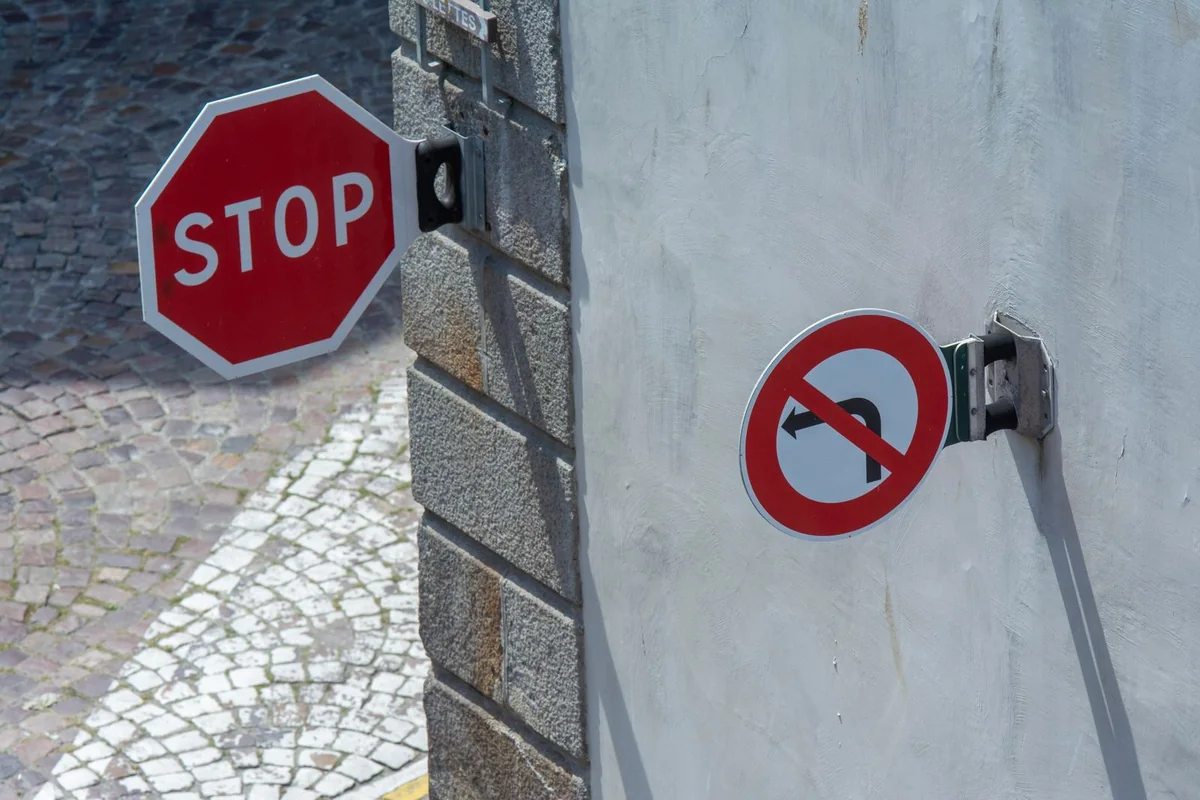
Regulatory signs are usually white rectangles (or a red circle with a slash for "you can't"). They are the law. Ignoring one is a traffic offence. Two have unique shapes you must know on sight, the red octagon (Stop) and the red-and-white downward triangle (Yield).
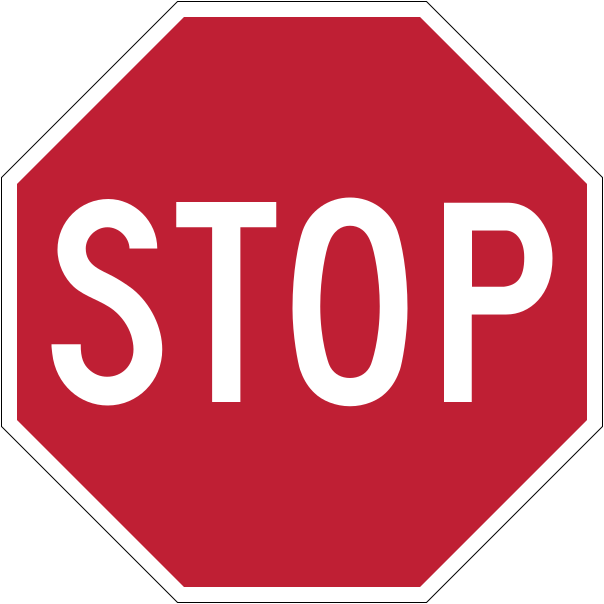 StopFull stop at the line. Go only when it's clear.
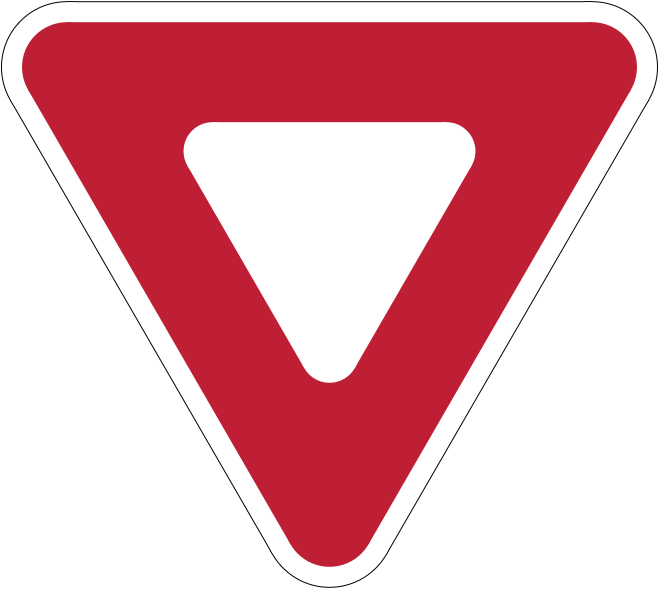 YieldSlow or stop and let other traffic and pedestrians go first.
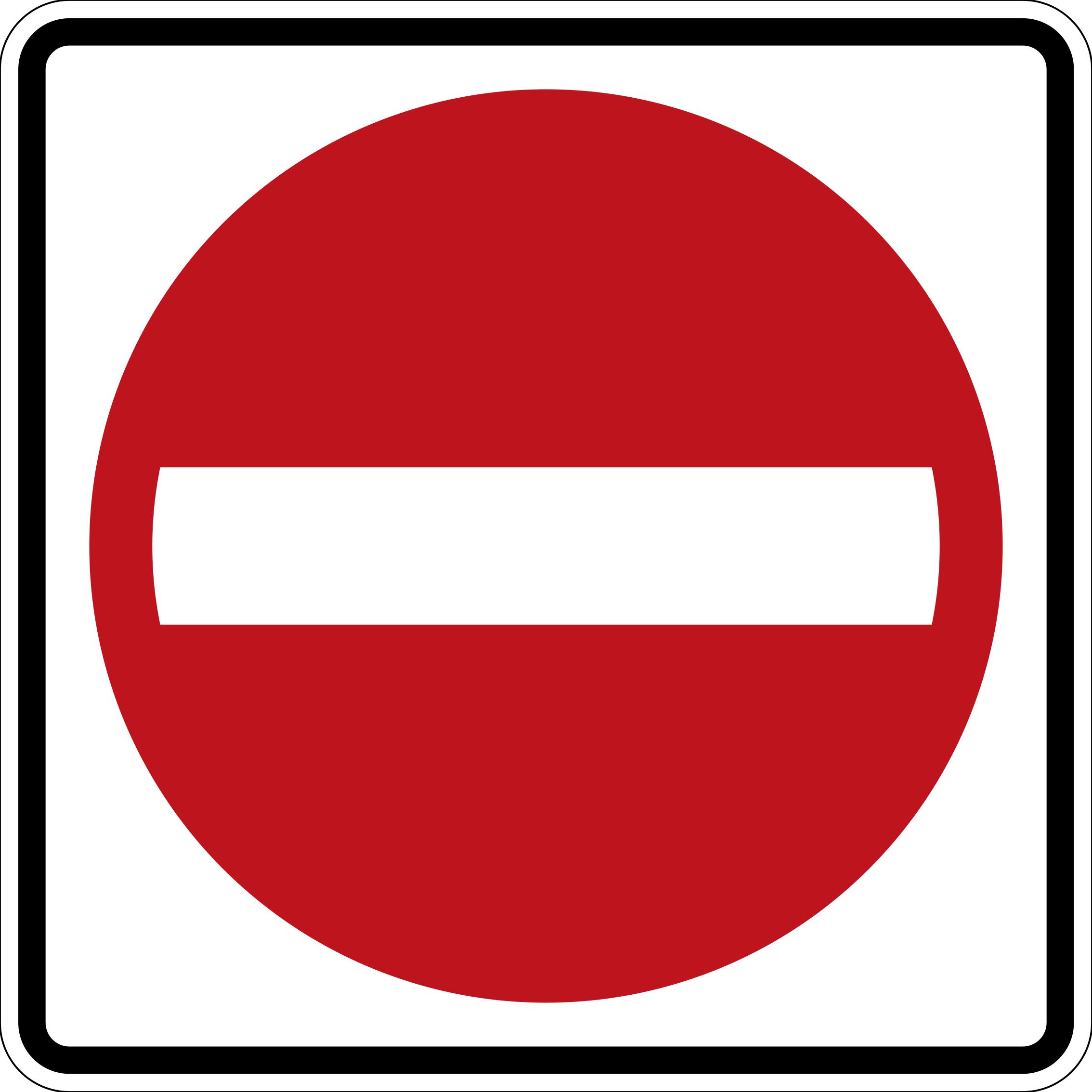 Do Not EnterYou may not enter this road or ramp.
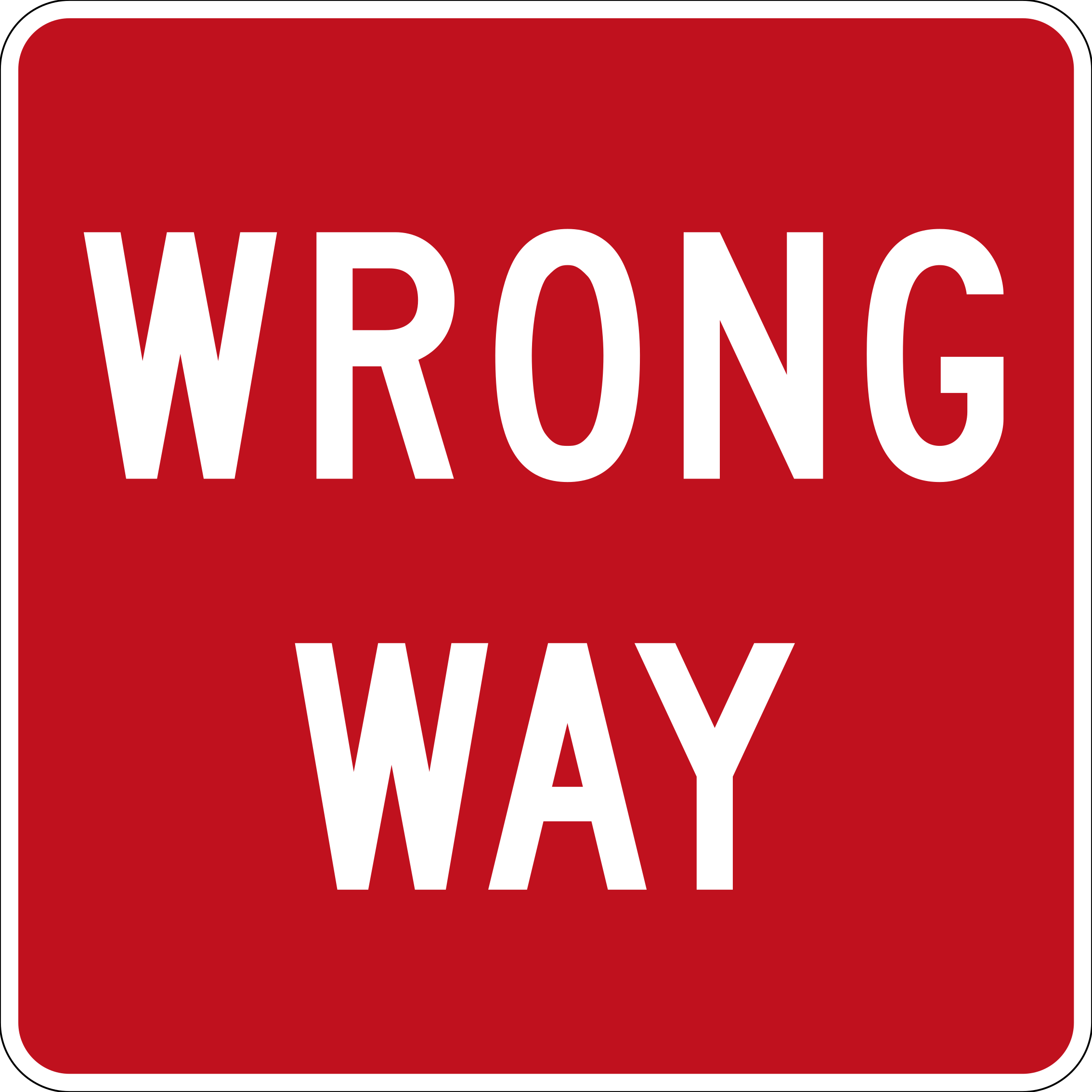 Wrong WayYou're facing oncoming traffic, turn around.
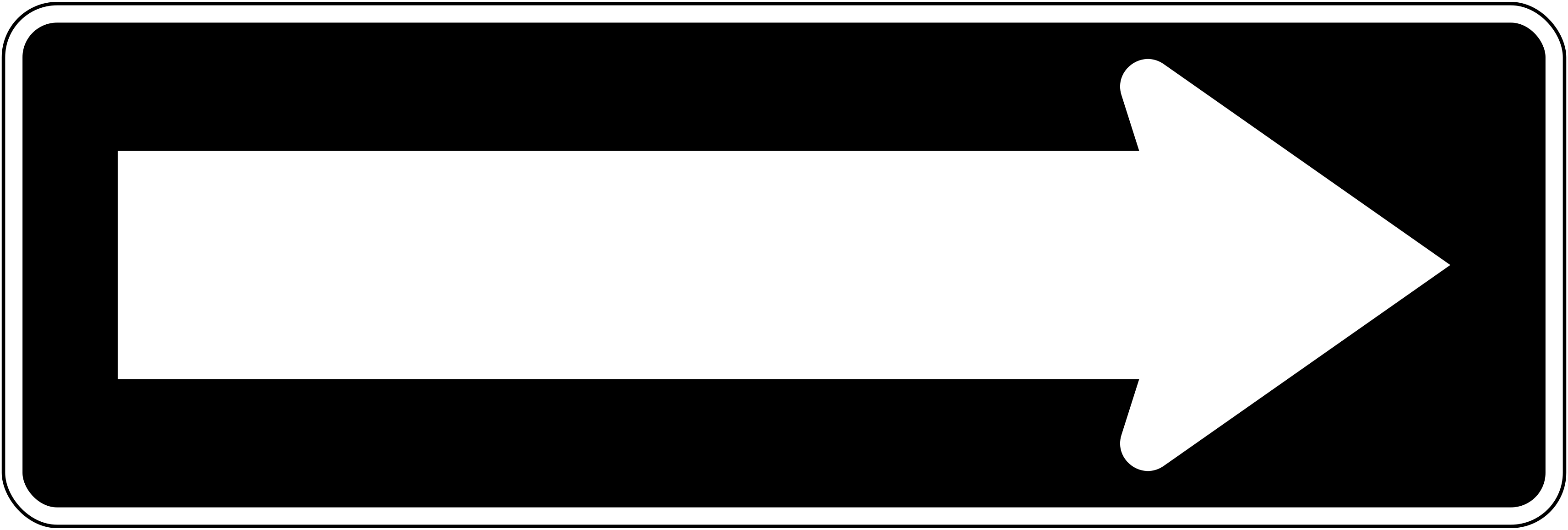 One WayTraffic moves only in the arrow's direction.
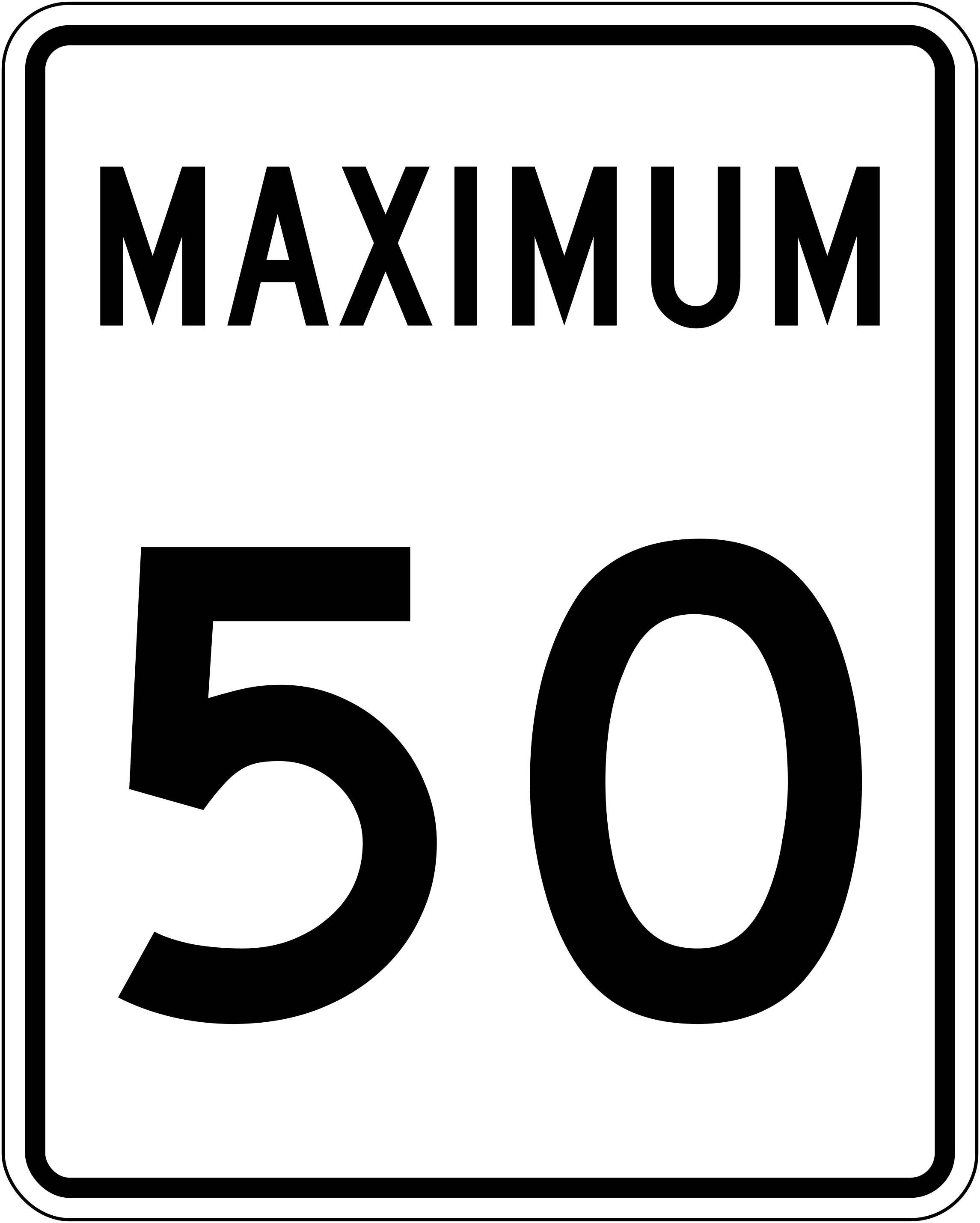 Maximum 50Top speed in km/h. 50 is the default in towns and cities.
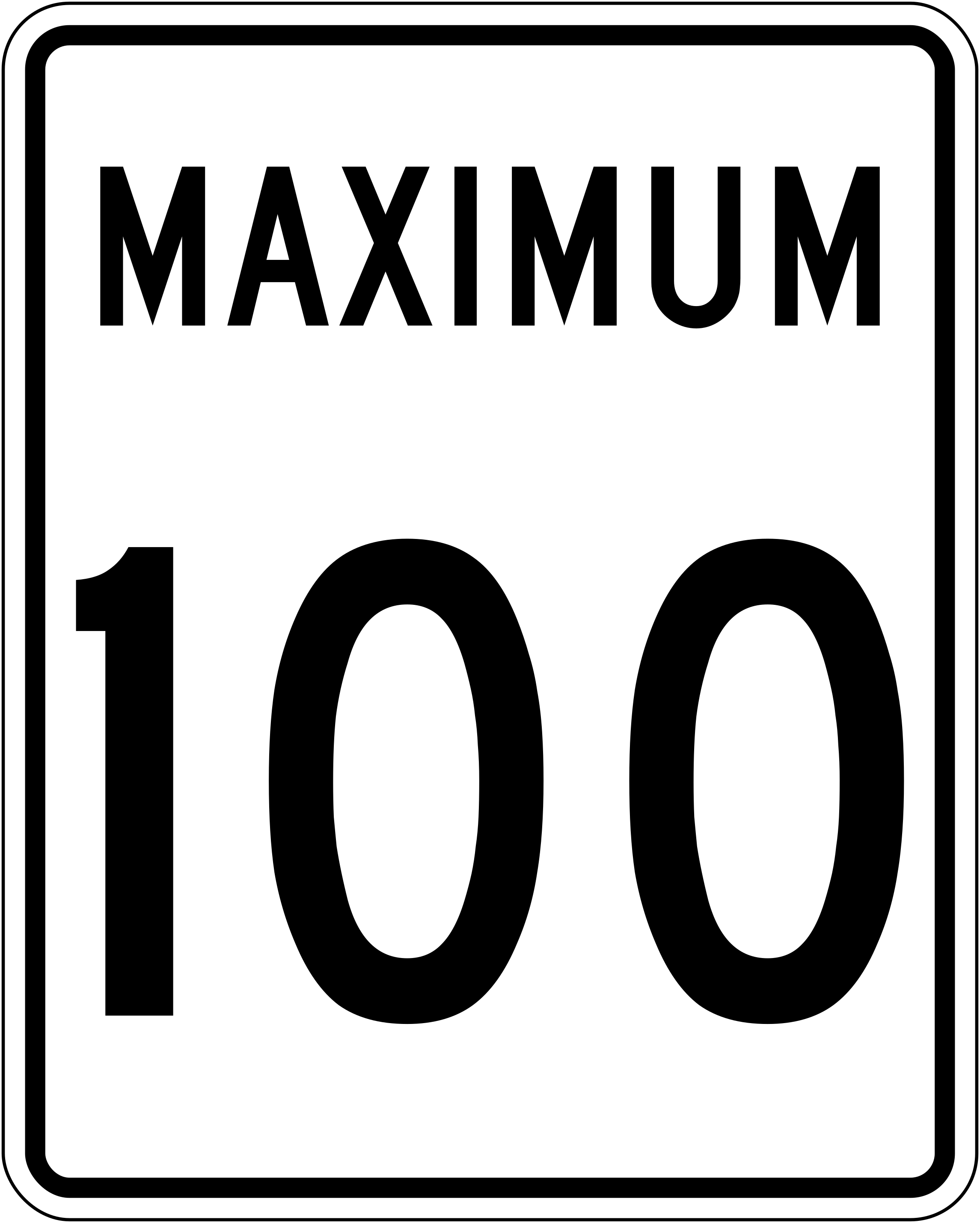 Maximum 100Top speed on the highway, as posted.
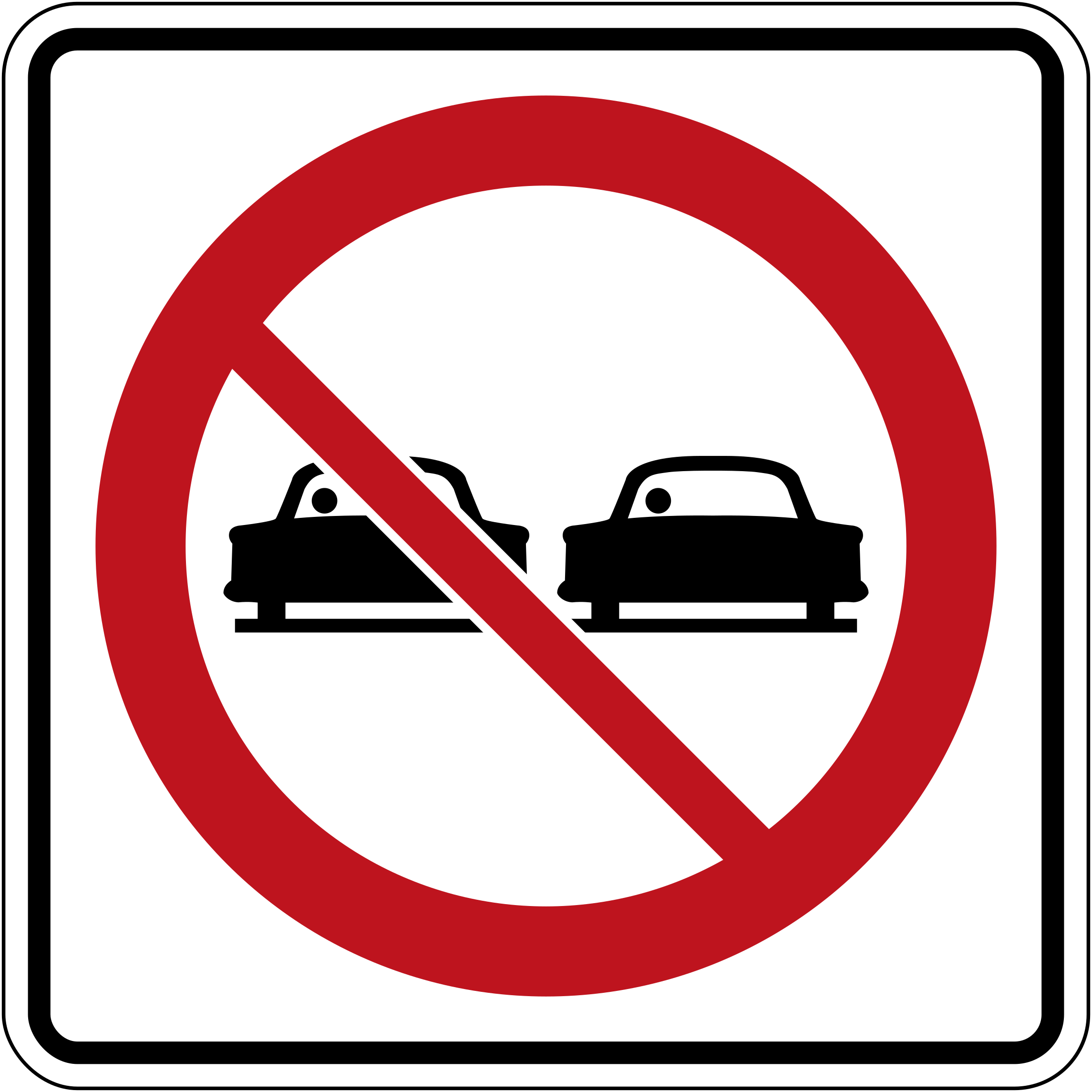 Do Not PassPassing other vehicles is not allowed here.
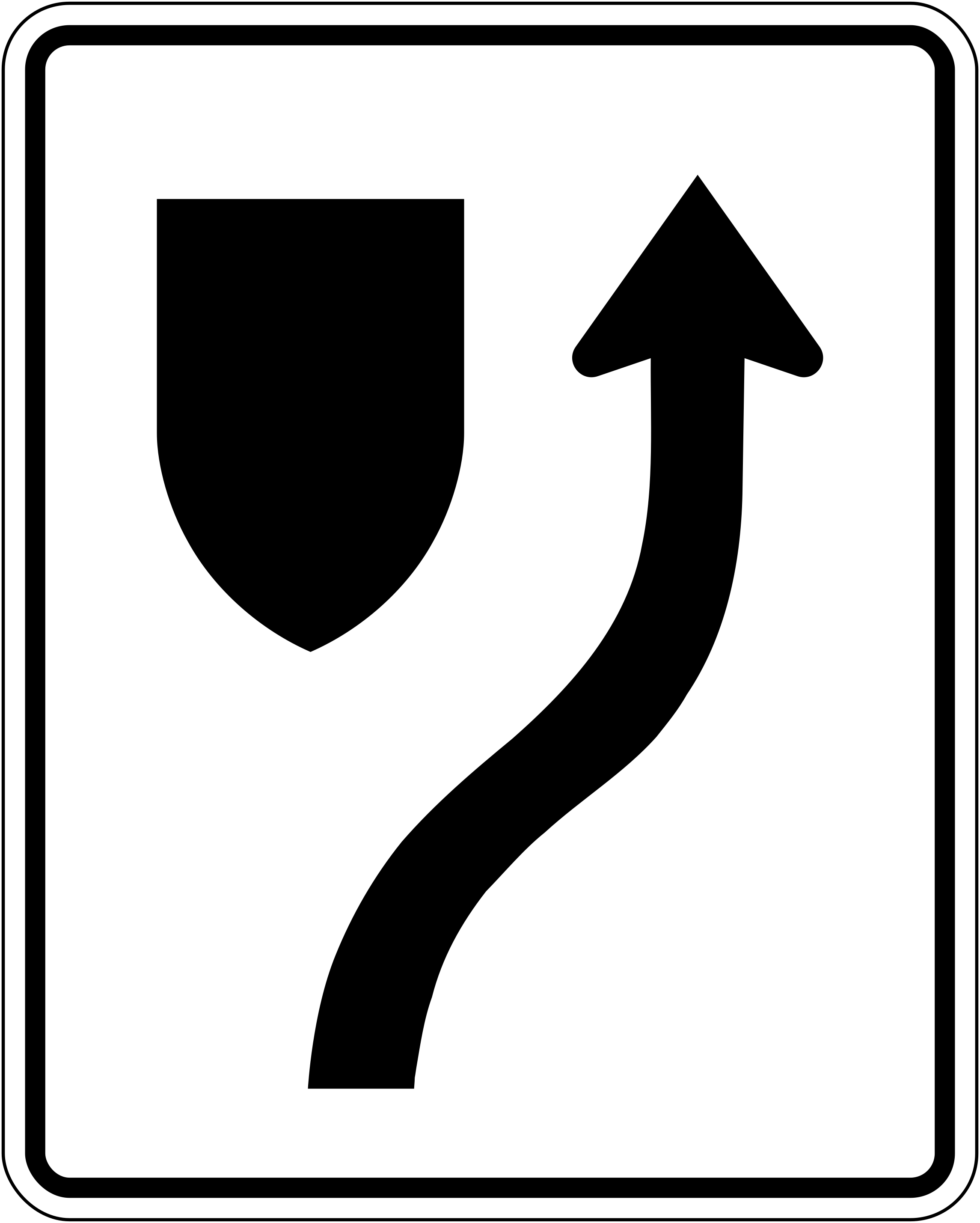 Keep RightPass to the right of the median or obstacle.
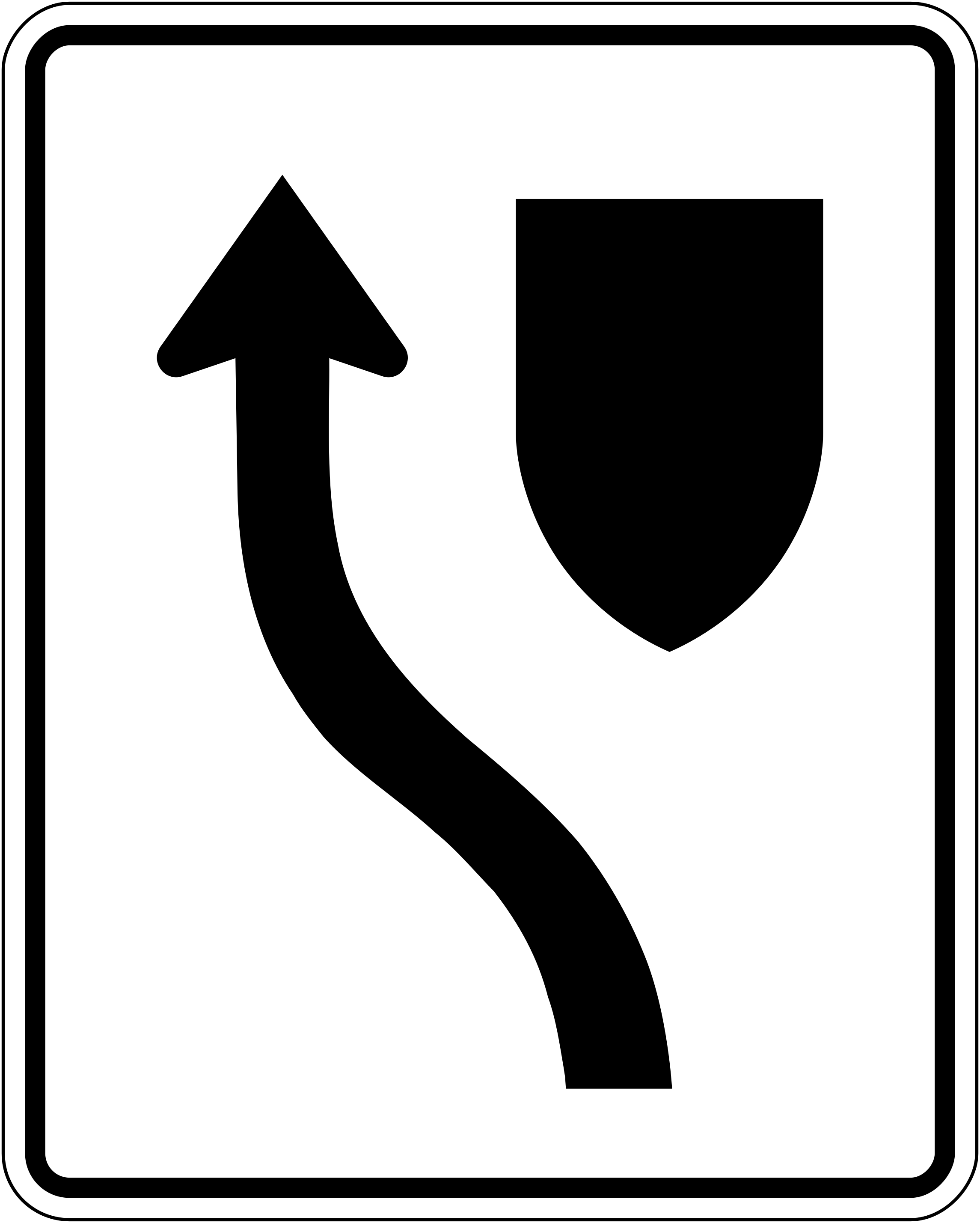 Keep LeftPass to the left of the median or obstacle.
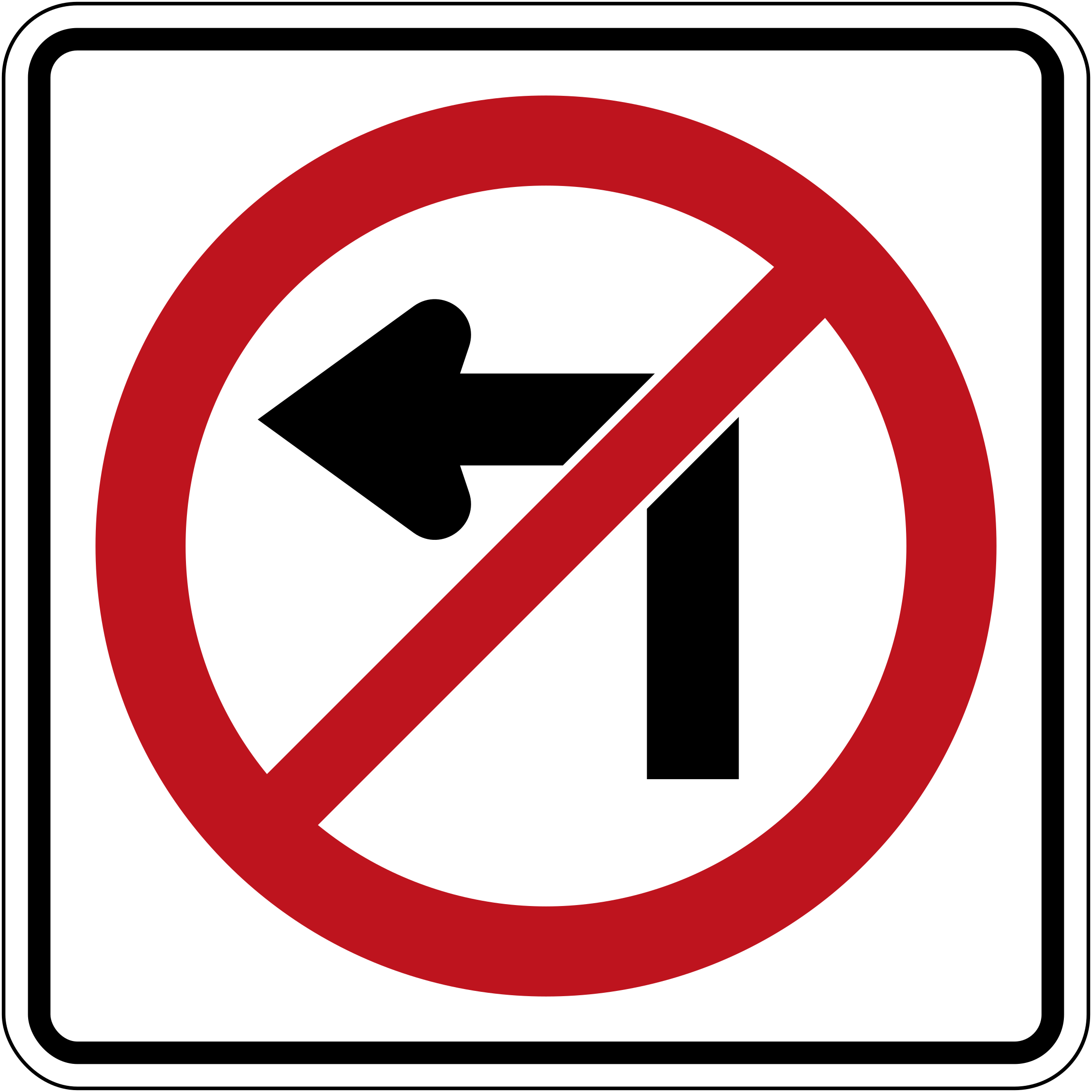 No Left TurnLeft turns are prohibited here.
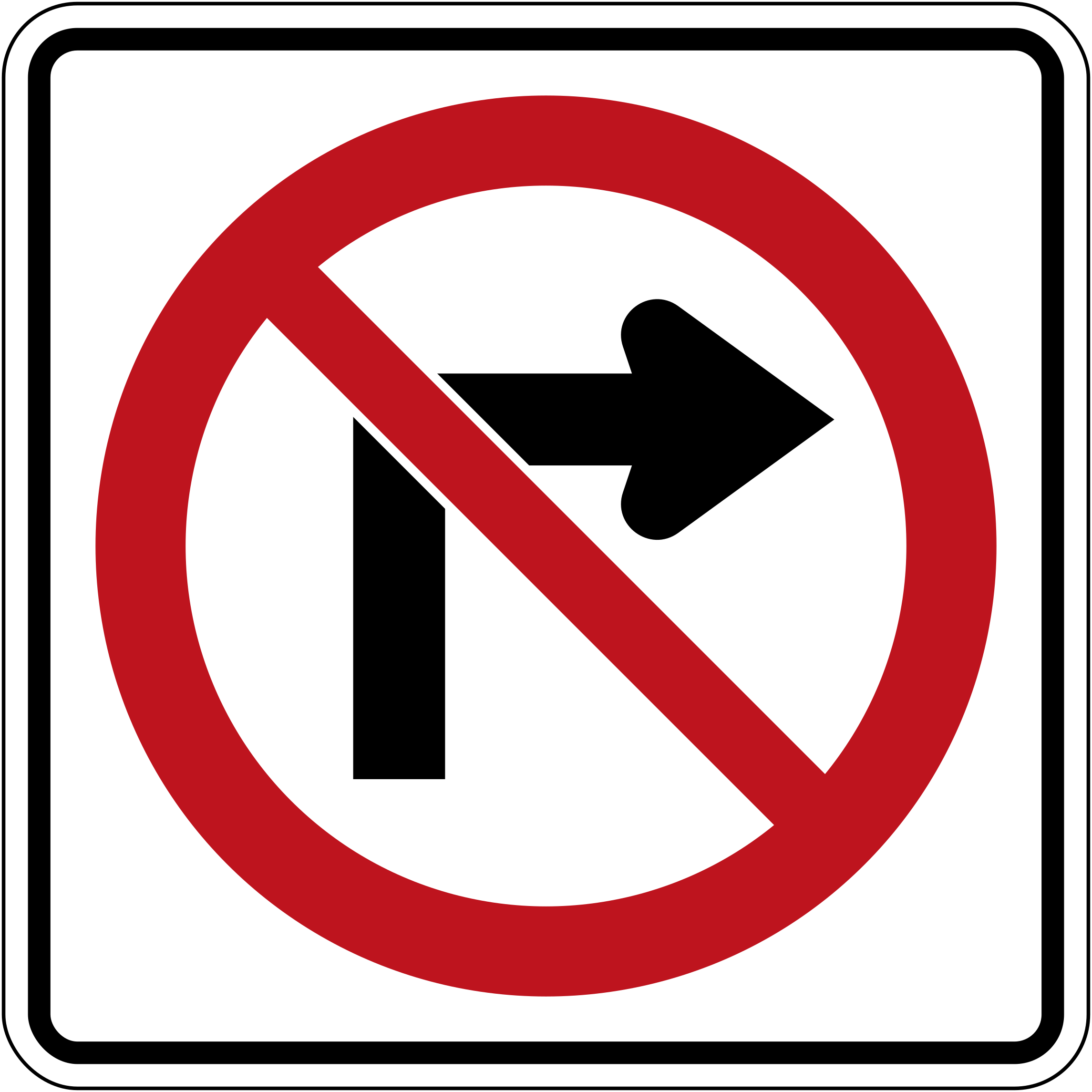 No Right TurnRight turns are prohibited here.
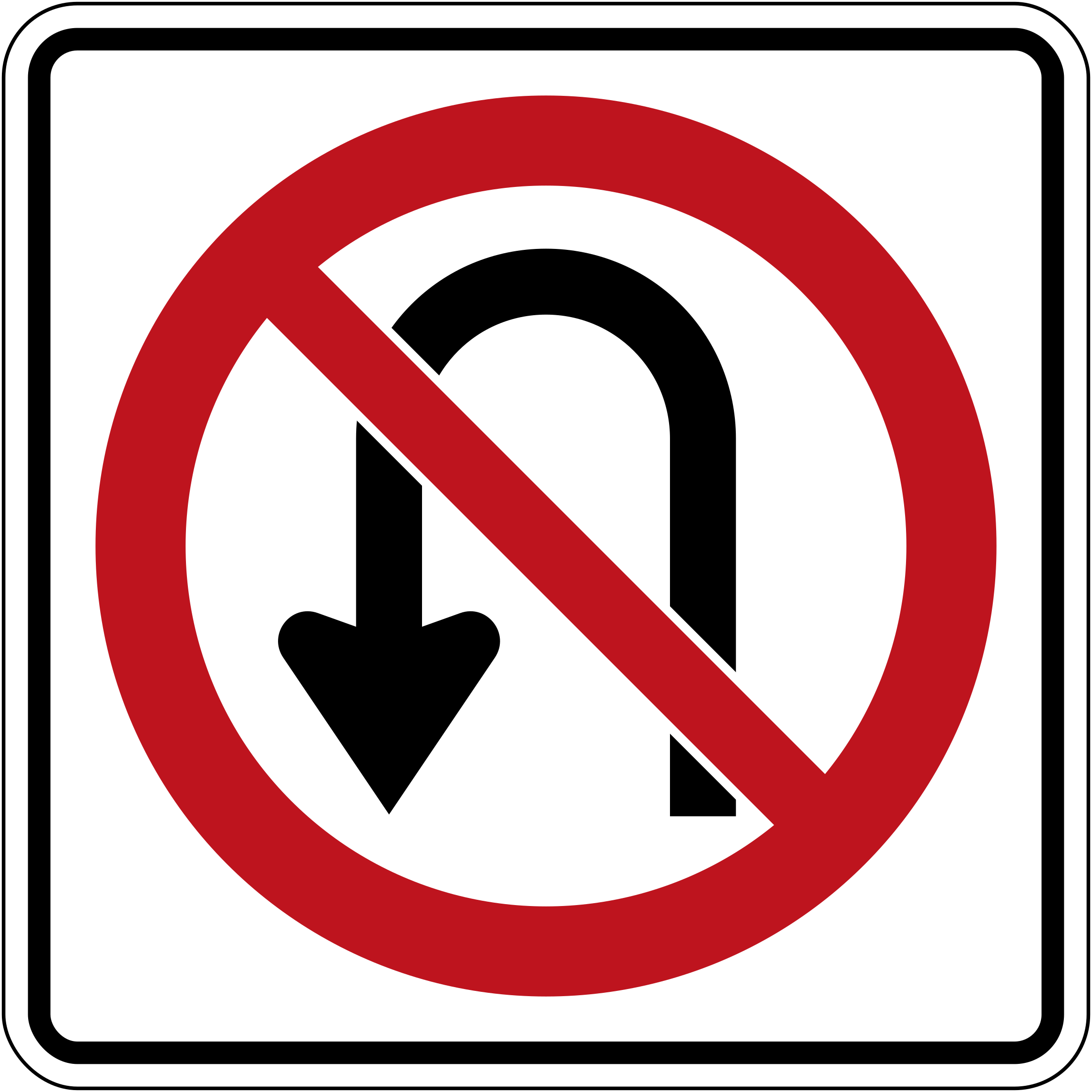 No U-TurnU-turns are prohibited here.
 No Right Turn on RedWait for a green light before turning right.
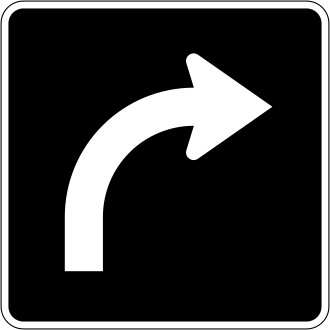 Right Turn OnlyYou must turn right from this lane.
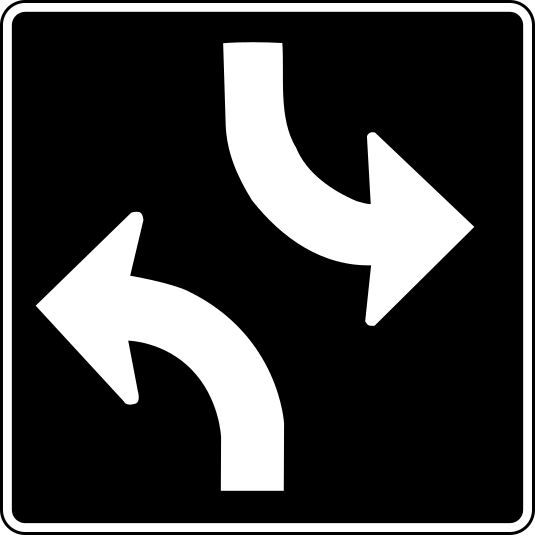 Two-Way Left-Turn LaneShared centre lane for left turns from both directions.
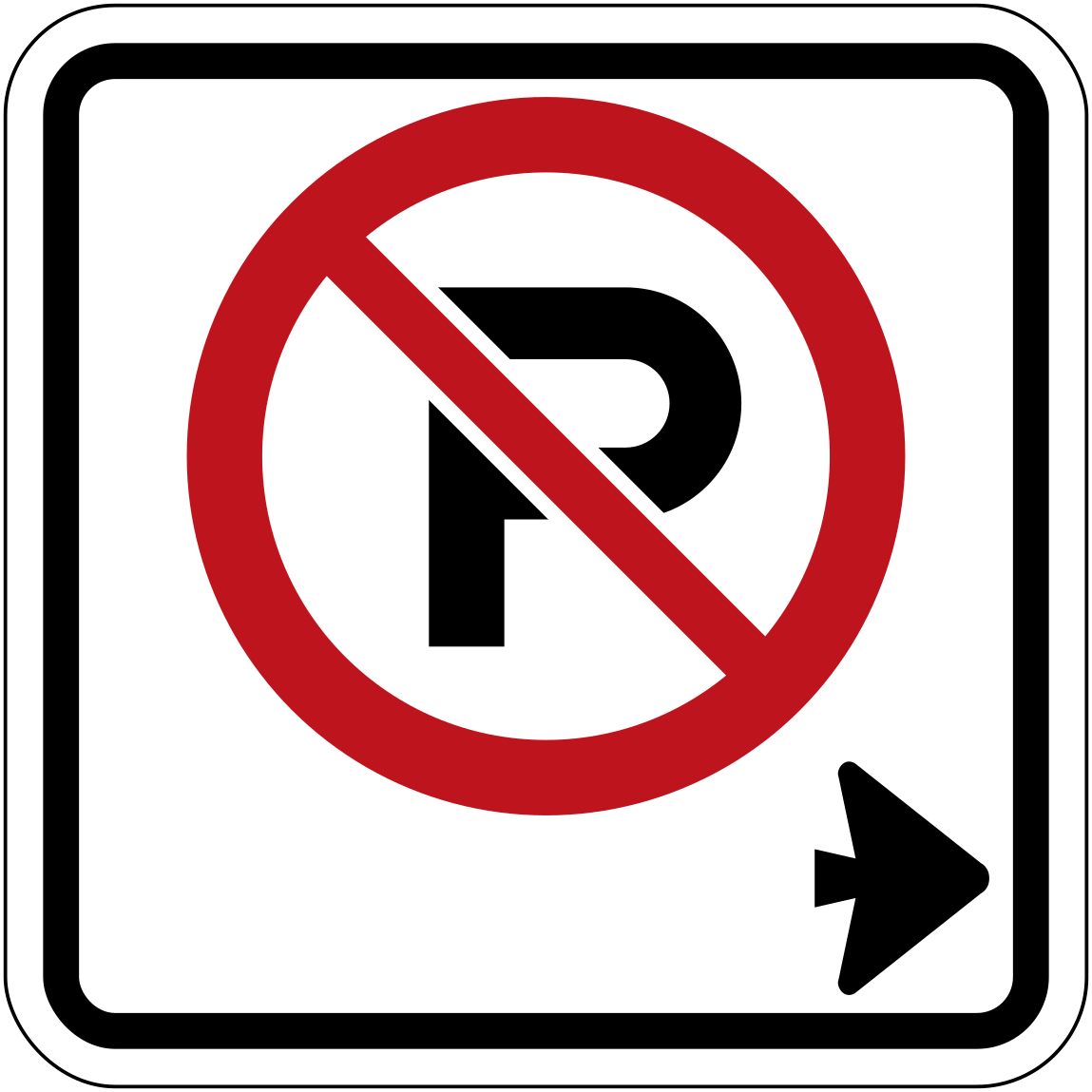 No ParkingDon't park in this zone (as posted).
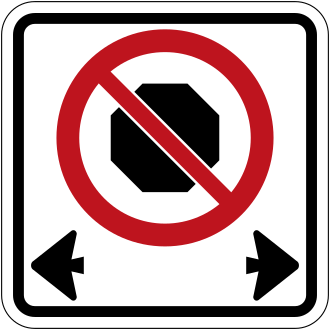 No StoppingDon't stop here at all, even for a moment.
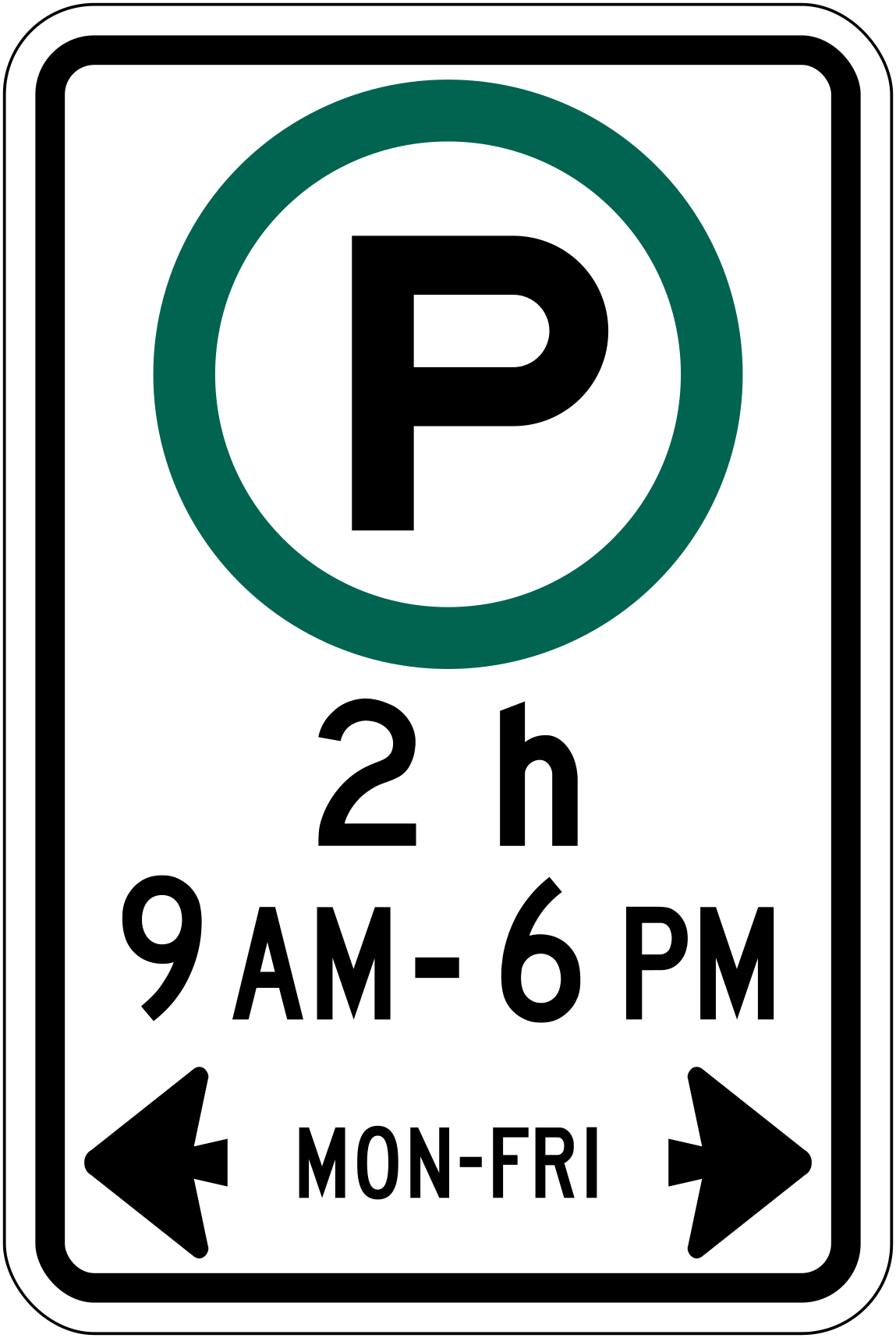 Parking PermittedParking allowed per the arrows and times shown.
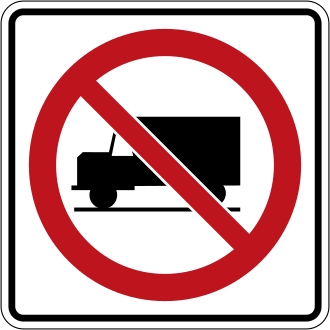 No TrucksTrucks are not allowed on this road.
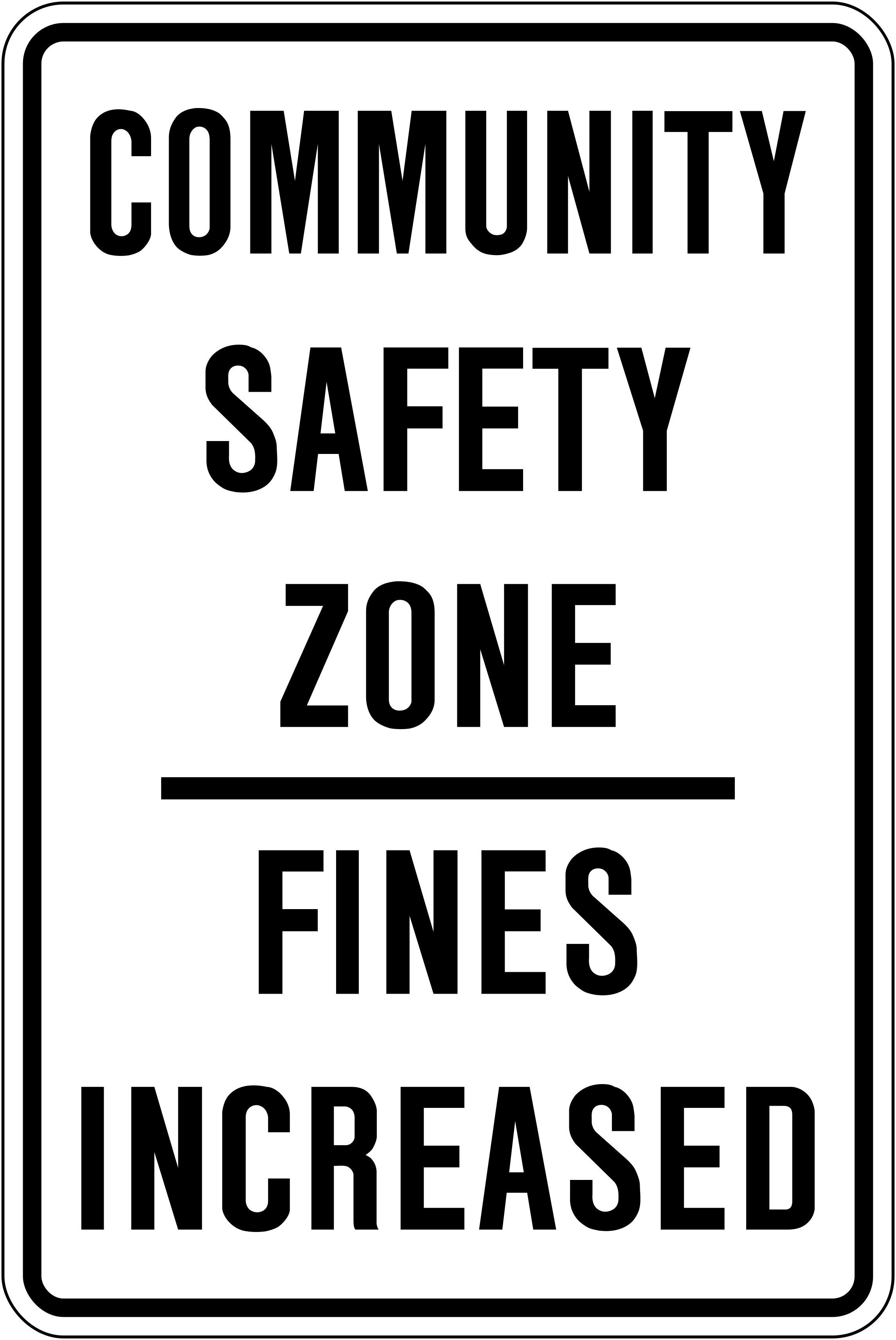 Community Safety ZoneArea where traffic fines are increased.
 HOV LaneLane reserved for car-pools (high-occupancy vehicles).
Warning signs: yellow diamonds
Yellow diamonds warn of a permanent hazard ahead so you can slow down and get ready. They don't order you to do anything, they just tell you what's coming.
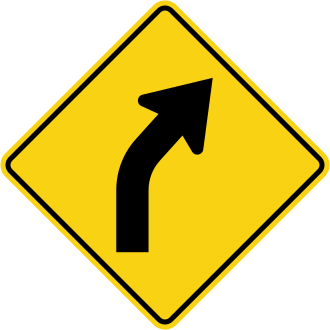 CurveThe road curves in the direction shown. Slow down.
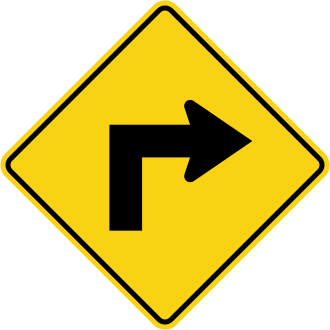 Sharp TurnA sharp bend ahead. Reduce speed more.
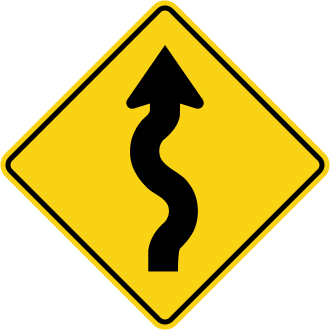 Winding RoadA series of curves ahead.
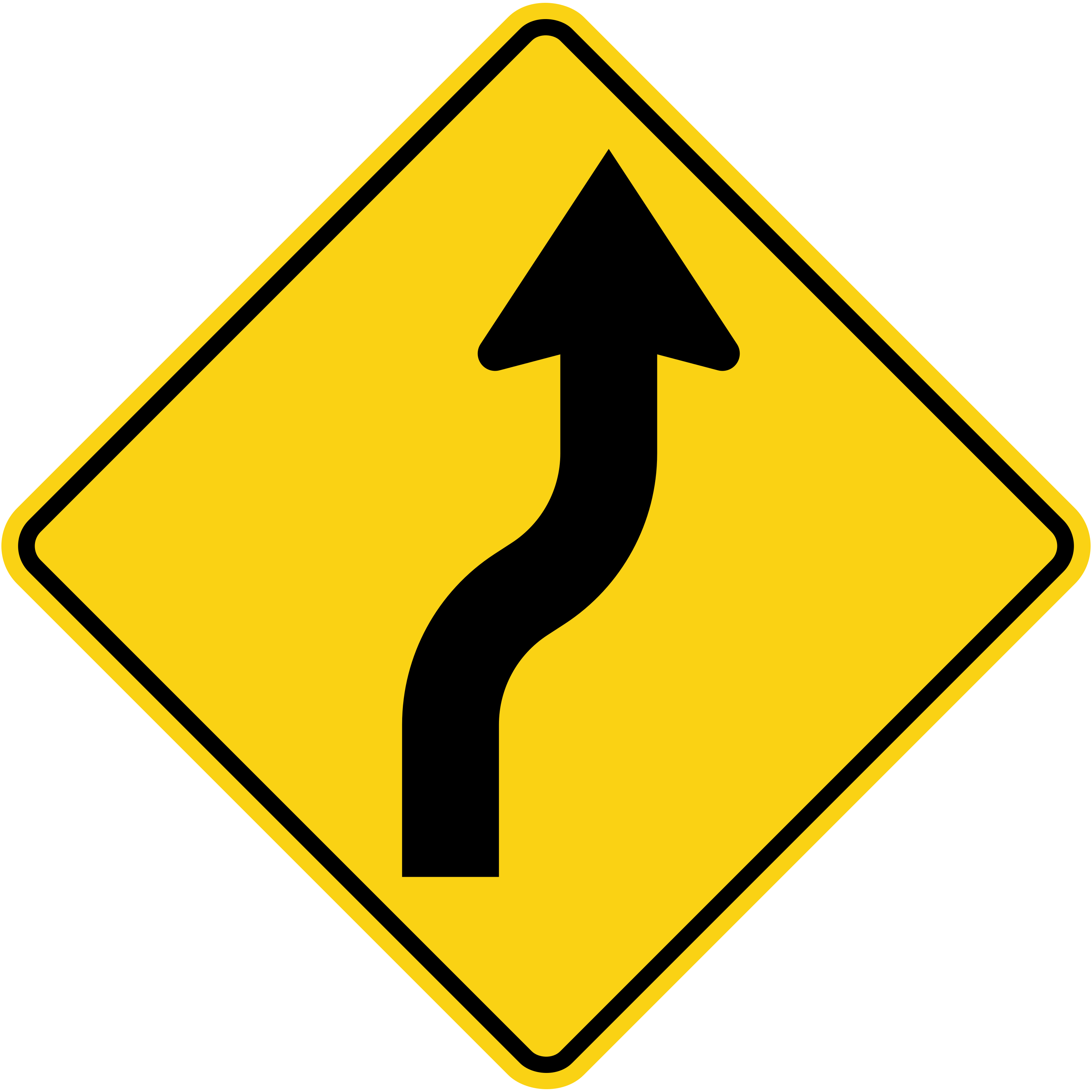 Reverse CurveThe road curves one way, then back the other.
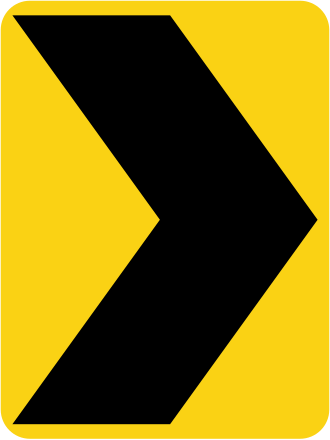 ChevronMarks a sharp change in direction. Follow the arrows.
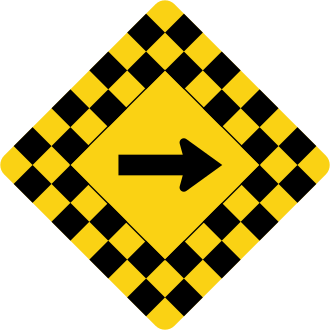 CheckerboardA sharp change in road direction ahead (often a T).
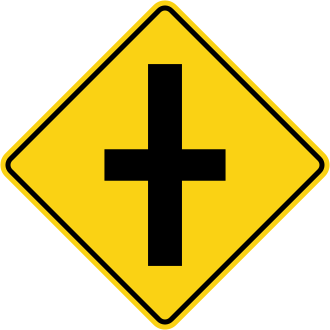 CrossroadAn intersection ahead. Watch for cross traffic.
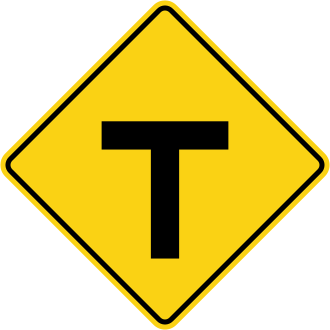 T-IntersectionThe road ends ahead. You must turn left or right.
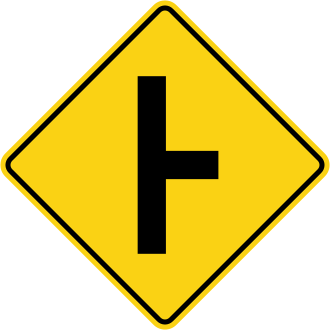 Side RoadA road joins from the side ahead.
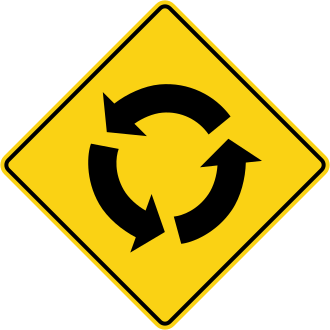 Roundabout AheadA traffic circle ahead. Yield to traffic already in it.
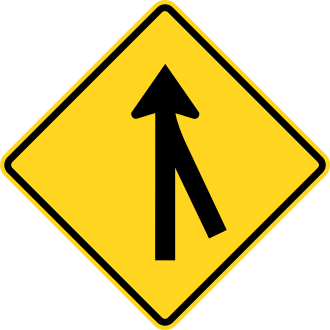 MergeTraffic merges from the side. Adjust speed and let them in.
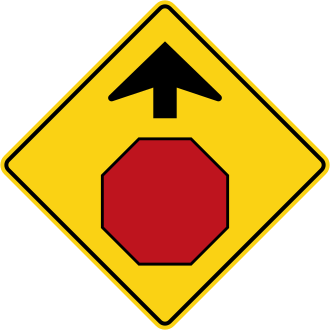 Stop AheadA stop sign is coming up. Prepare to stop.
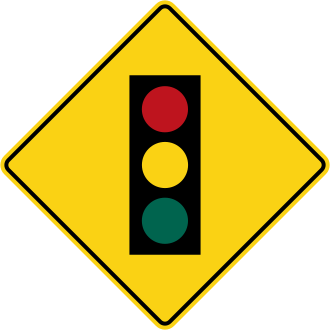 Signal AheadTraffic lights are coming up.
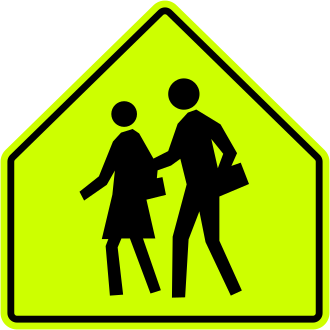 School ZoneA school is nearby. Watch for children and obey reduced limits.
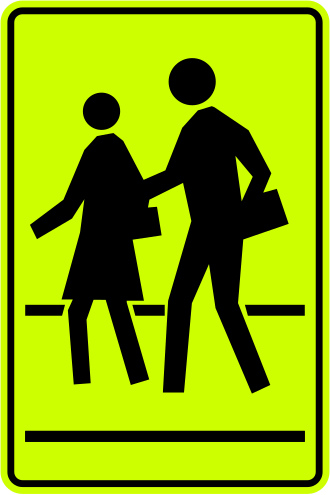 School CrossingChildren cross here. Be ready to stop.
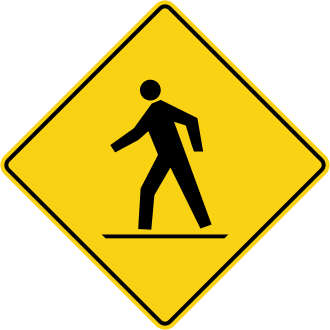 Pedestrian CrossingPeople cross here. Yield to them.
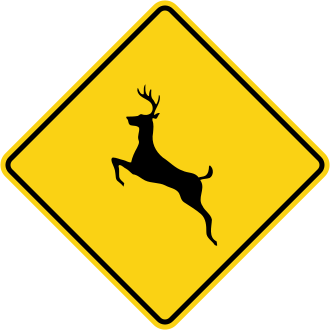 WildlifeDeer or wildlife may cross. Scan the roadsides.
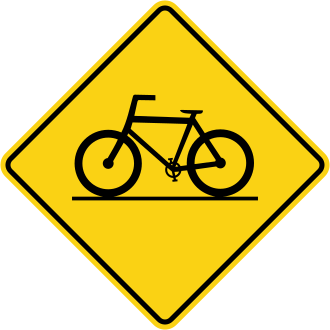 Bicycle CrossingCyclists may cross or share the road.
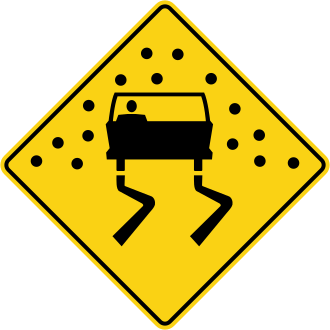 Slippery When WetThe road can be slippery. Slow down.
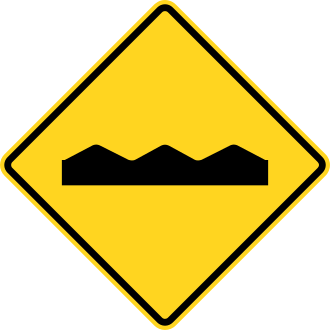 BumpA bump or uneven surface ahead.
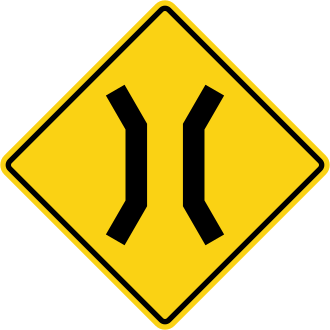 Narrow BridgeThe bridge ahead is narrow.
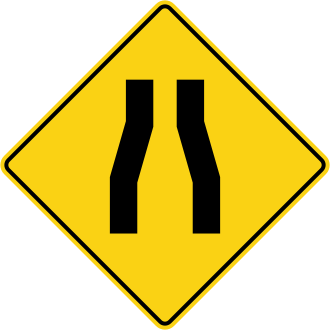 Road NarrowsThe pavement narrows ahead.
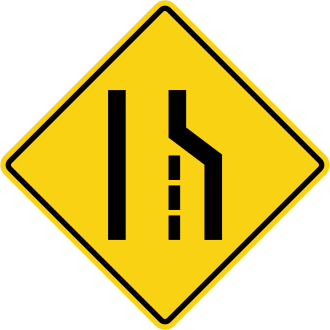 Right Lane EndsYour lane ends ahead. Merge over.
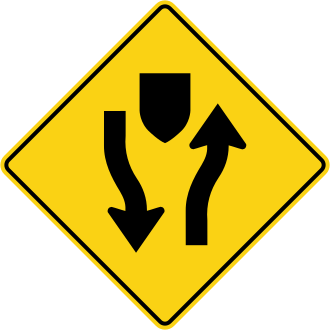 Divided Highway BeginsThe road splits with a median ahead.
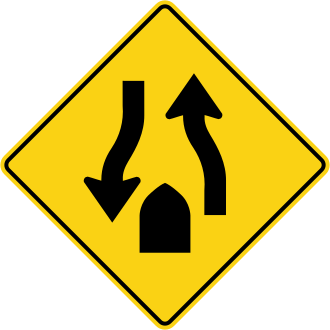 Divided Highway EndsTwo-way traffic resumes ahead.
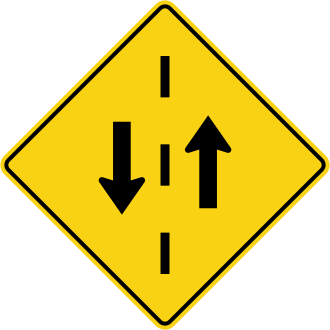 Two-Way TrafficYou're on or entering a two-way road.
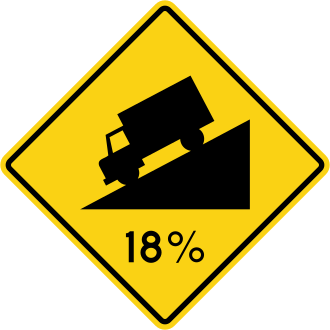 Steep HillA steep downgrade ahead. Gear down and check brakes.
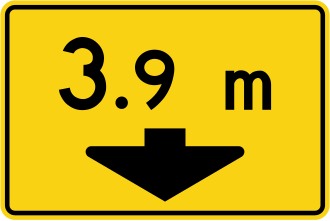 Low ClearanceMaximum height ahead. Tall vehicles beware.
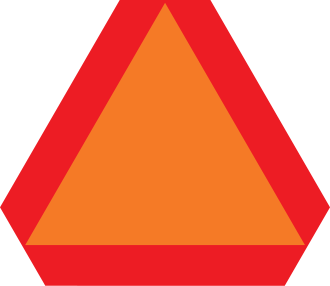 Slow-Moving VehicleOn a vehicle going under 40 km/h. Slow and pass with care.
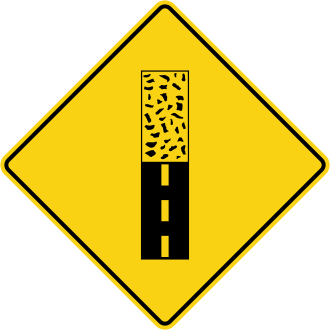 Pavement EndsPaved road changes to gravel ahead.
Temporary / construction signs: orange
Orange diamonds mean the same shape as a warning, but the hazard is temporary: a construction or maintenance zone. Fines are doubled in these zones when workers are present.
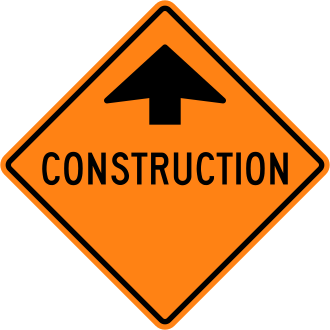 Construction AheadRoad work ahead. Slow down and watch for workers.
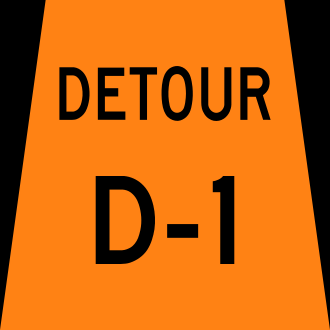 DetourFollow the marked alternate route.
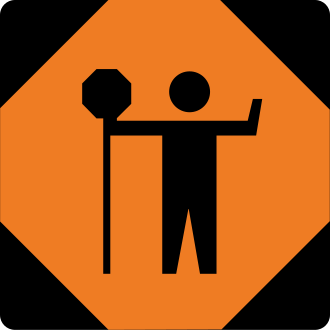 Flagperson AheadObey the traffic-control person's signals.
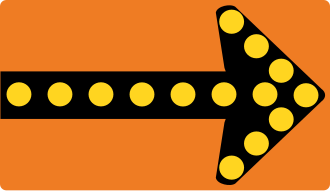 Lane ClosedA lane ahead is closed. Merge early.
 Survey CrewA survey crew is working on or near the road.
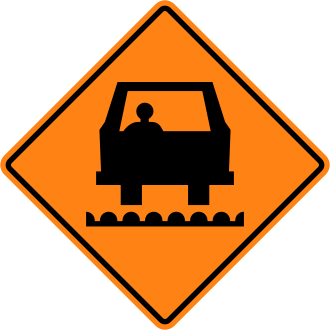 Grooved PavementMilled surface ahead. The ride may be rough and bikes should take care.
Railway, school buses & pedestrians
These come up often on the test, and getting them wrong on the road is genuinely dangerous, so they're worth knowing cold.
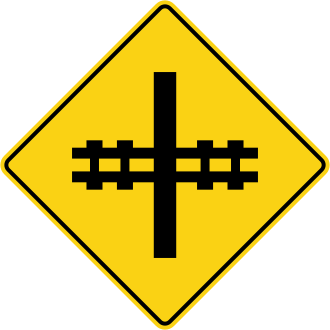 Railway Crossing AheadA railway crossing is coming up. Be ready to stop.
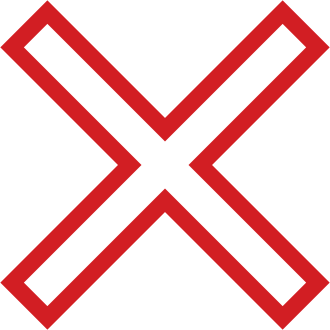 Railway CrossbuckMarks the crossing itself. Yield to trains.
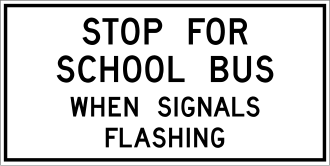 Stopped School BusStop when its upper red lights flash, from both directions on an undivided road.
 Divided-Road ExceptionOn a road split by a median, oncoming traffic need not stop for a school bus.
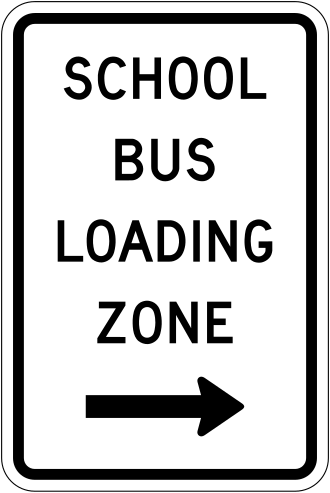 Bus Loading ZoneSchool buses load and unload here.
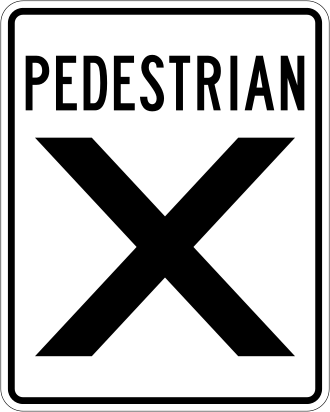 Pedestrian CrossoverStop and yield to people crossing. Don't pass another stopped vehicle.
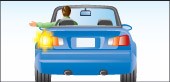 Hand Signal: LeftArm straight out = turning left.
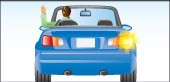 Hand Signal: RightArm up, bent at the elbow = turning right.
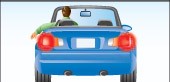 Hand Signal: StopArm down, bent at the elbow = slowing or stopping.
Information & direction signs
Green, blue and brown signs guide you, they don't give orders. Green is for directions and distances, blue for driver services, brown for recreation.
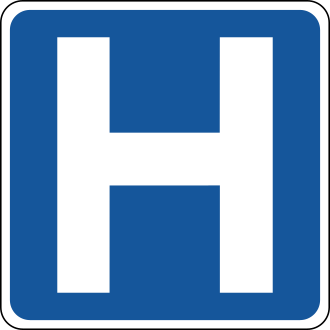 HospitalA hospital is nearby.
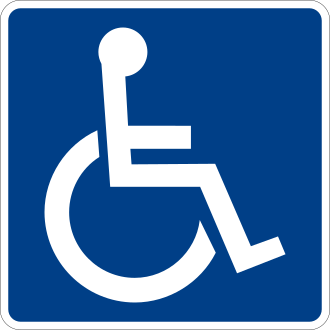 Accessible ParkingReserved for valid permit holders only.
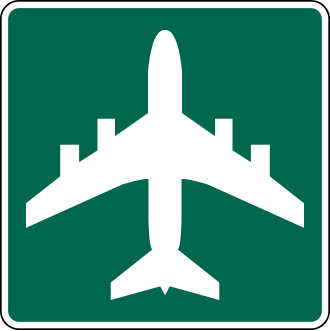 AirportDirects you to the airport.
 ServicesGas, food, lodging or a rest area ahead.
 DestinationDirections and distances to towns and routes.
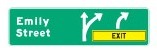 Exit Lane AheadGet into the correct lane for your exit.
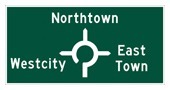 Roundabout GuideShows which lane to use for each exit.
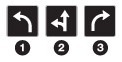 Lane DesignationShows which lane goes where at the intersection.
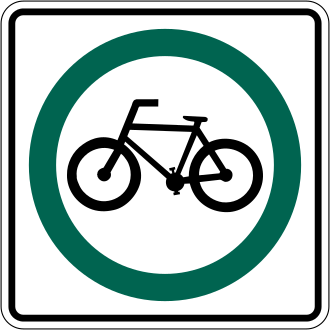 Bicycle RouteA designated cycling route.
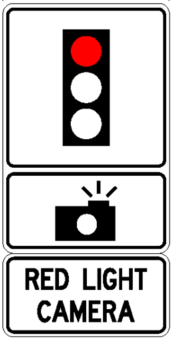 Red Light CameraCameras enforce red lights at this intersection.
How the G1 tests road signs
The sign half of the G1 shows you a sign (often just the picture, no words) and asks what it means or what you should do. A few things that trip people up:
- Shape and colour first. If you're unsure, decode the shape and colour first. It narrows the answer instantly (a yellow diamond can't be a "law you must obey," it's a warning).
- Watch yellow vs orange. The classic trick question, same diamond, different colour. Yellow = permanent hazard, orange = temporary construction.
- Know the unique shapes cold. Only the red octagon (Stop) and the downward red triangle (Yield) use those shapes, so you can identify them even from behind.
- Read the question fully. Watch for words like not, except and must.
The fastest way to lock these in is to see them in test format. Run our free Ontario G1 practice test in road-signs mode, and keep the G1 cheat sheet open. It lists every practice question with the correct answer and an explanation.
Frequently Asked Questions
Final thoughts
Bottom line: learn the shape-and-colour system, review the signs above, then test yourself until they're automatic. That covers the signs half of the G1.
At Rajput Driving School Windsor, signs are step one. When you're ready to get behind the wheel, our MTO-approved BDE course gets you eligible for your G2 sooner, and you don't need your G1 to start.