Road Signs (128)
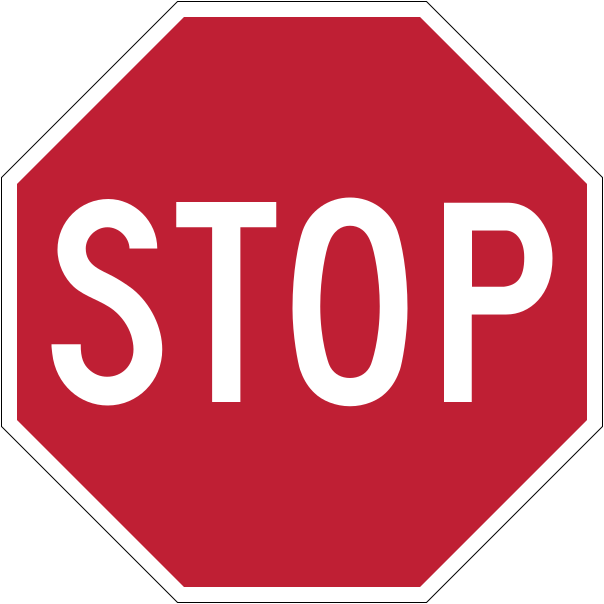
1. What does this sign mean?
- AThere is a stop sign ahead
- BSlow down and proceed with caution
- CSlow down and yield to approaching vehicles
- DStop and yield to approaching vehicles
Why: This is a stop sign. You must come to a complete stop and yield the right of way to approaching vehicles before you proceed.
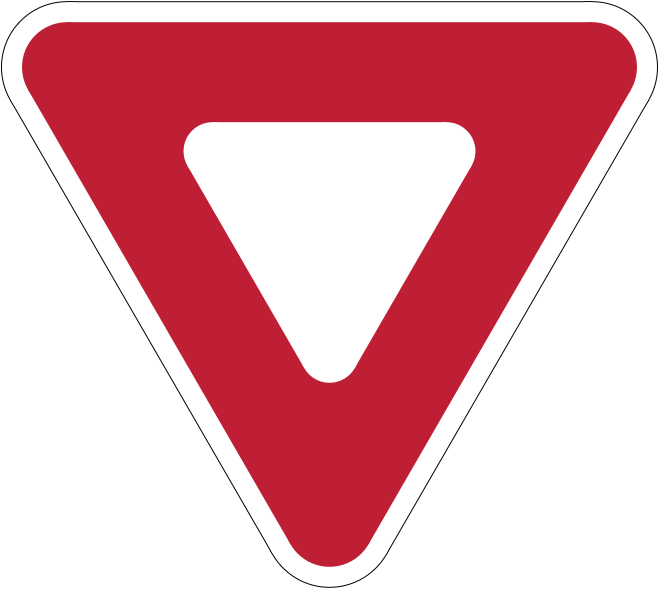
2. What does this road sign mean?
- AYou have the right of way
- BA railway crossing is ahead
- CYou must give the right of way
- DA school zone is ahead
Why: This is a yield sign. When you approach a yield sign, slow down and prepare to yield to pedestrians and approaching traffic. You may also have to stop for them, so be ready.
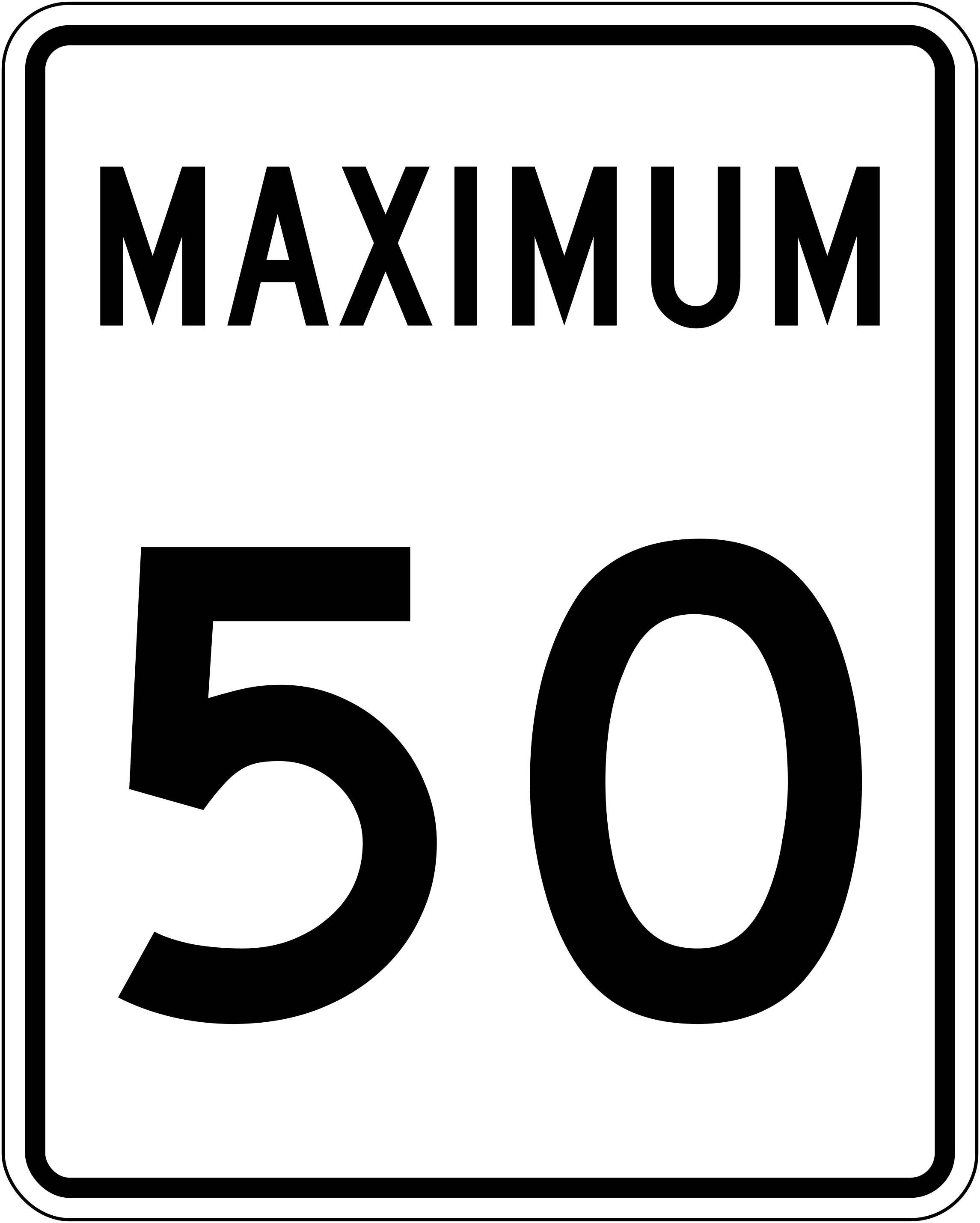
3. What does this sign tell you?
- AMinimum speed is 50 km/h
- BRecommended speed is 50 km/h
- CThe maximum legal speed is 50 km/h
- DSchool zone speed is 50 km/h
Why: A white rectangular sign reading MAXIMUM shows the maximum legal speed. You may not legally drive faster than the posted limit.
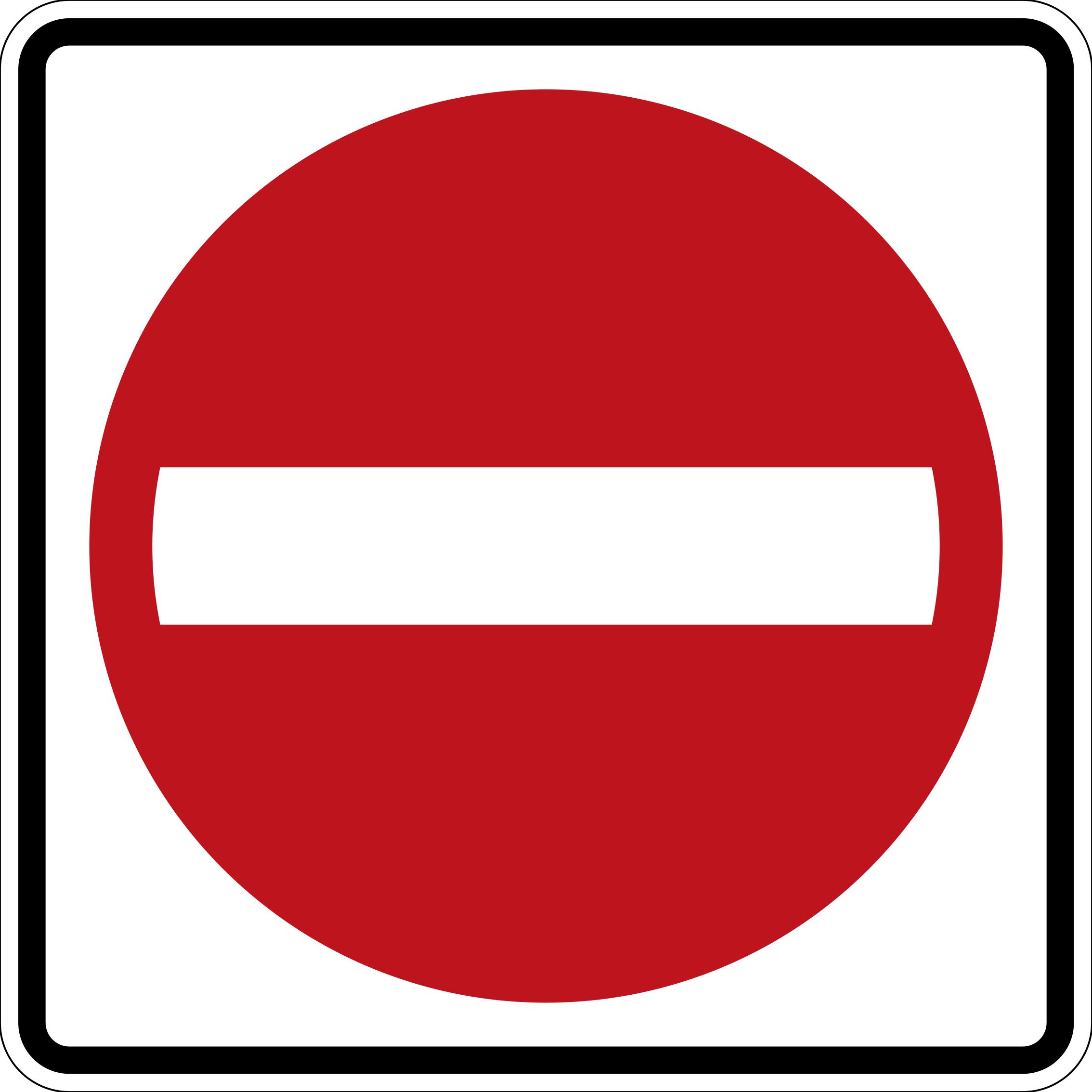
4. What does this road sign mean?
- ADo not enter
- BKeep left
- CKeep right
- DDo not pass
Why: This is a do not enter sign. It indicates that you cannot enter the roadway where the sign is posted. You will see such signs at roadway openings you are not to enter, or where you would be driving the wrong way on a one-way roadway, at exit ramps, in crossovers on divided roadways, and at numerous locations on one-way roads.
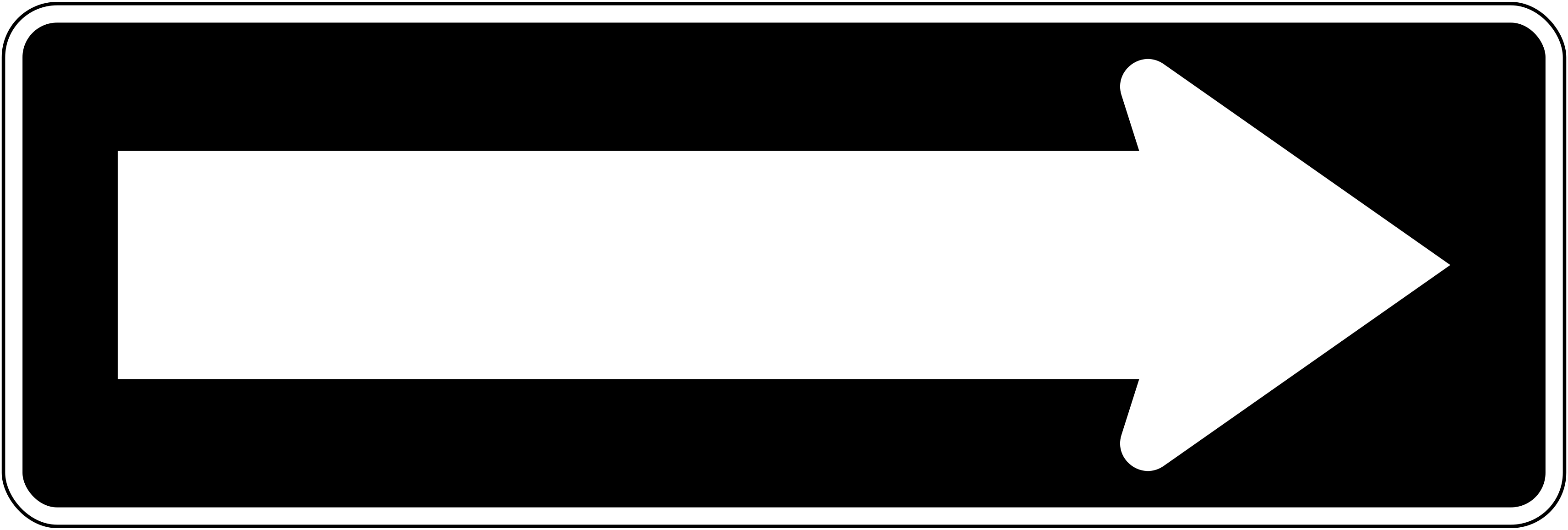
5. What does this sign mean?
- AKeep to the right of the traffic island
- BTraffic must travel in one direction only
- CVehicles in this lane must turn right
- DThere is a sharp bend or turn in the road ahead
Why: This is a one-way sign. On this street, traffic may travel only in the direction of the arrow.
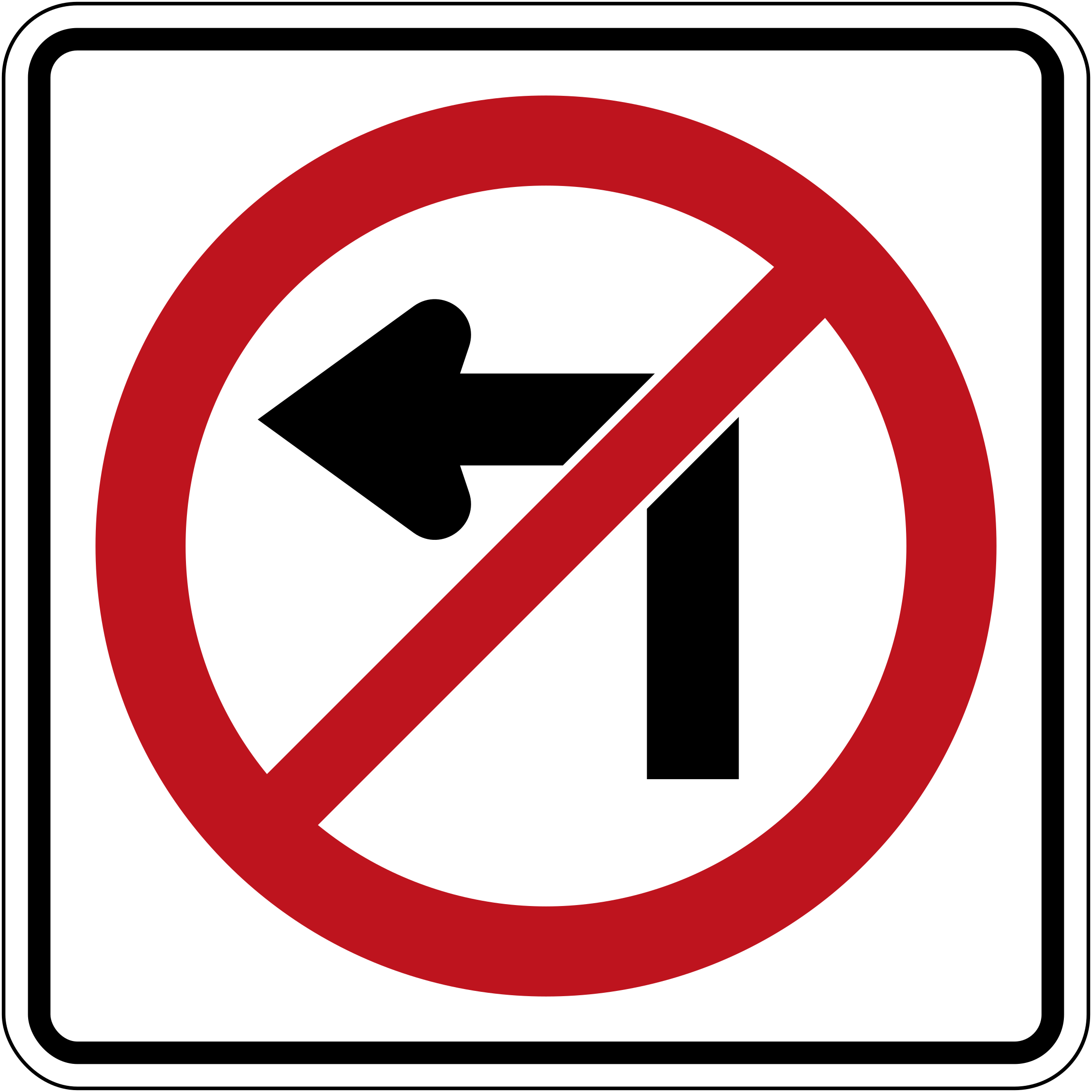
6. What does this road sign mean?
- AYou must turn left
- BYou must not turn left
- CYou must turn right
- DYou must not turn right
Why: A red slash inside a red circle means 'no'. This regulatory sign indicates that left turns are prohibited here.
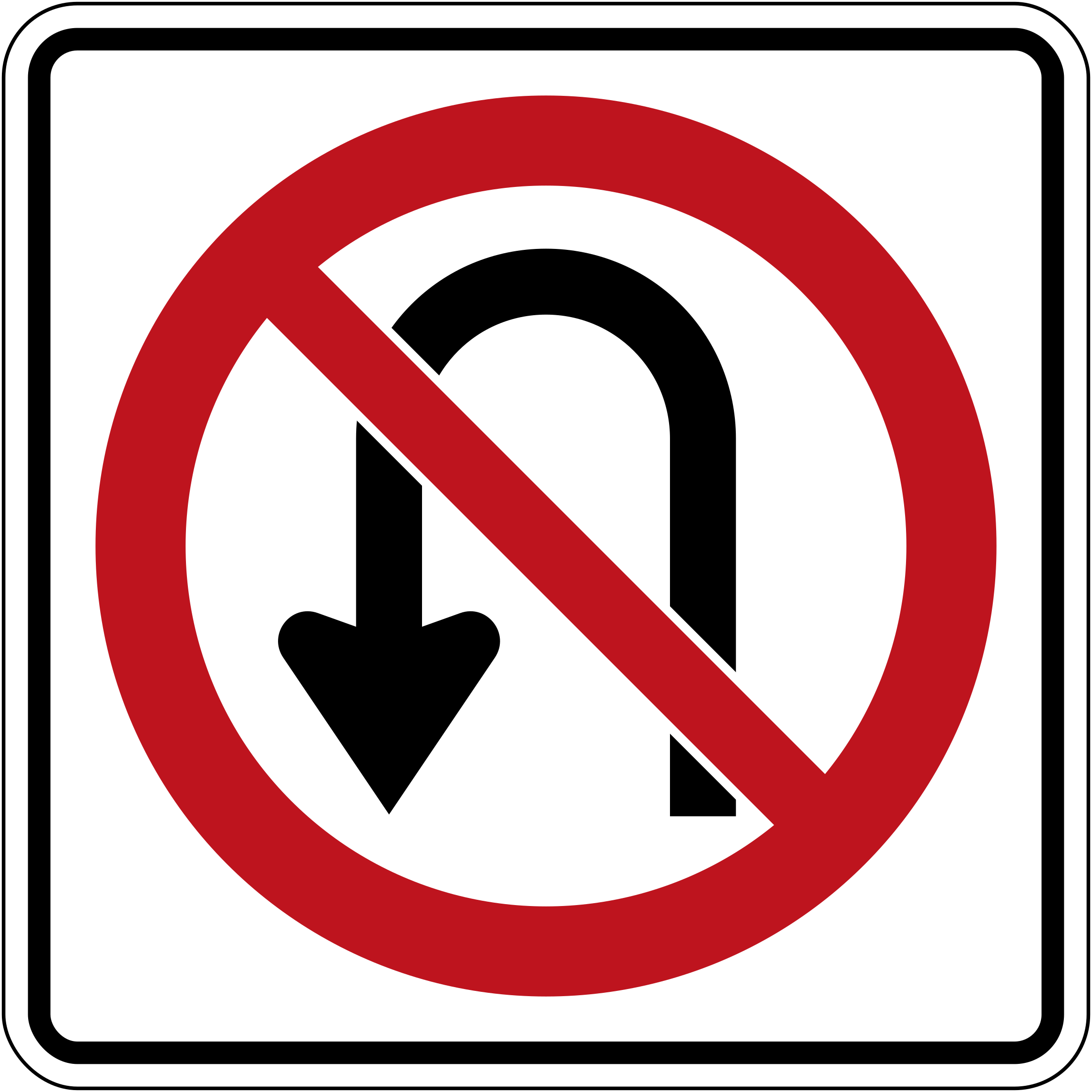
7. What does this road sign mean?
- AU-turns prohibited
- BLeft turns prohibited
- CU-turns allowed
- DRight turns prohibited
Why: A red slash inside a red circle means 'no'. This regulatory sign indicates that U-turns are prohibited here.
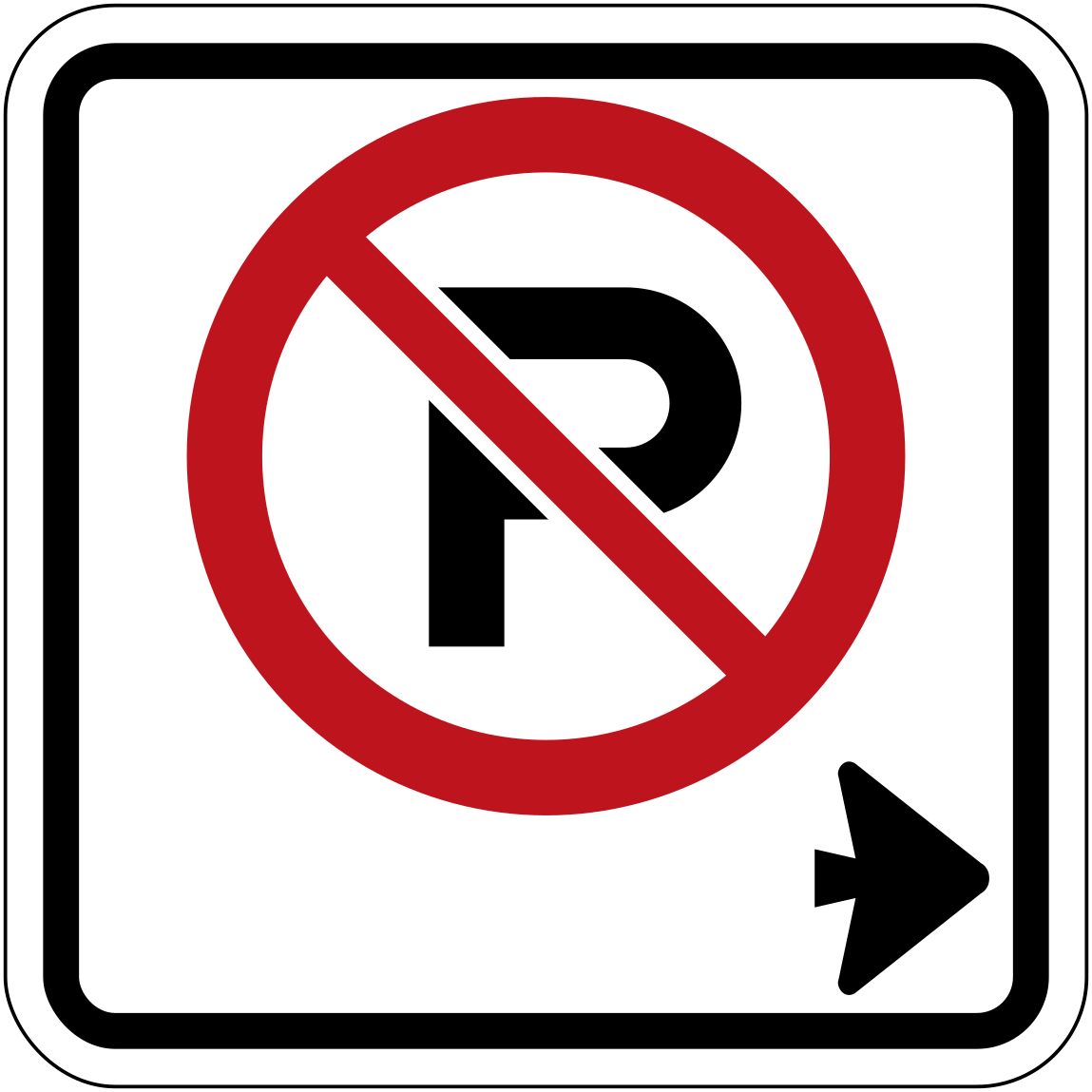
8. A 'No Parking' sign means:
- AYou may stop temporarily to load or unload passengers or merchandise
- BYou may not stop for any reason
- CYou may stop temporarily to load or unload merchandise but not passengers
- DYou may stop temporarily to load or unload passengers but not merchandise
Why: According to the Ontario Highway Traffic Act, 'No Parking' means you may stop only temporarily, to load or unload passengers or merchandise. 'No Standing' means you may stop only temporarily to load or unload passengers, but not merchandise. 'No Stopping' means you may not stop for any reason, not even temporarily, unless directed to by a traffic sign, signal or police officer.
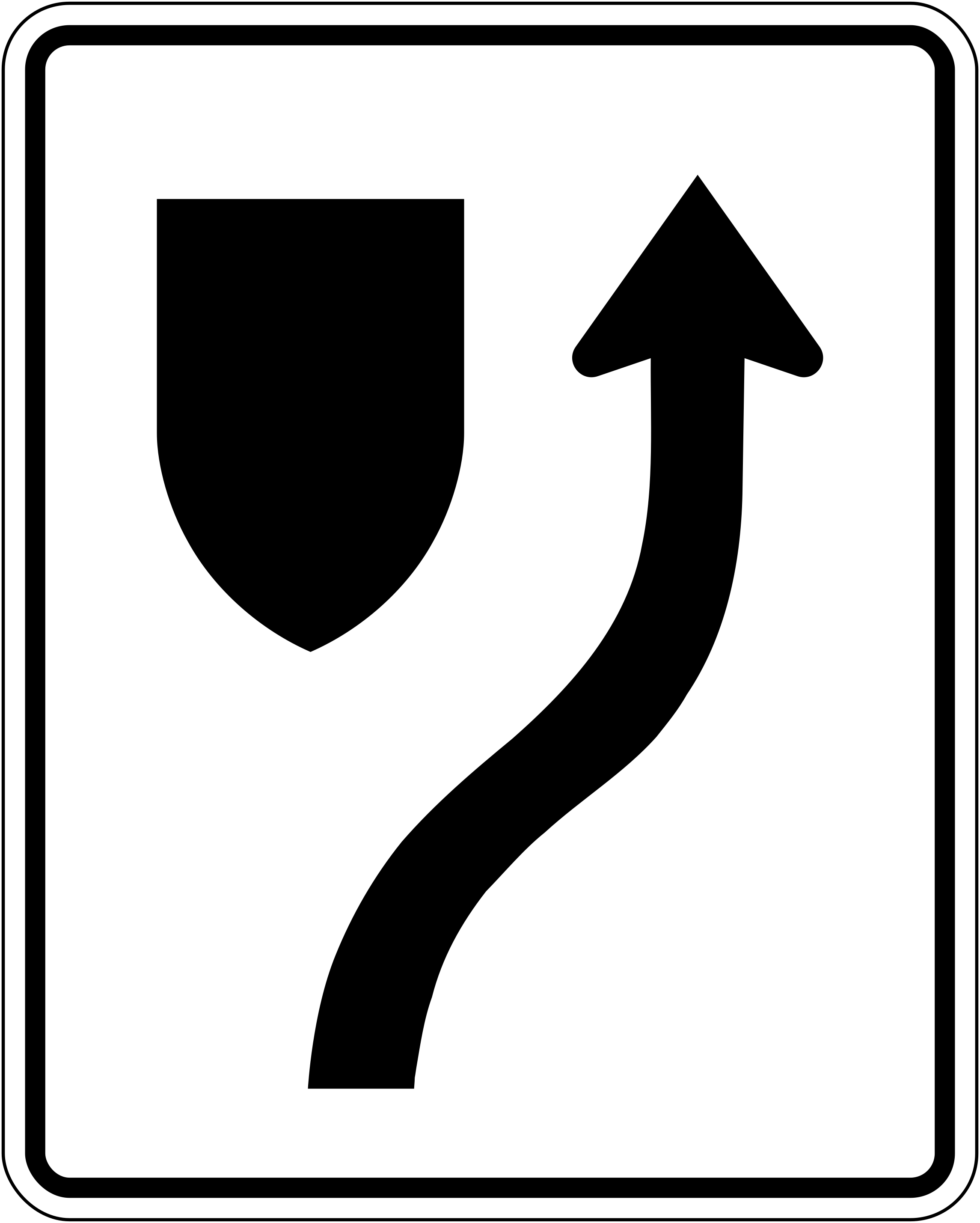
9. What does this sign mean?
- AThere's a winding road ahead
- BThe road turns right and then left
- CKeep right of the obstacle ahead
- DPass other traffic on the right
Why: This sign indicates a divider, traffic island or other obstacle ahead. Keep right of it.
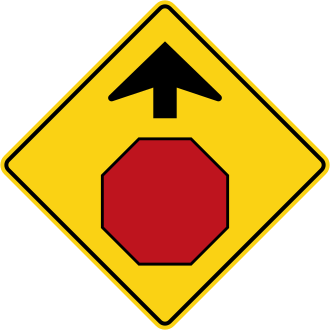
10. What does this road sign mean?
- ASlow-moving vehicles ahead
- BDead end street ahead
- CYield right of way
- DStop sign ahead
Why: This is a stop sign ahead road sign. Be prepared to stop at the stop sign.
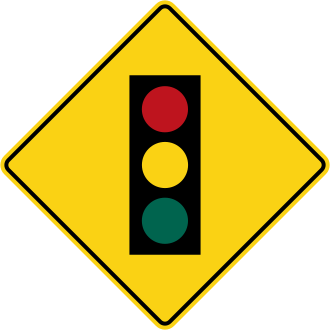
11. What does this road sign mean?
- AThere are no traffic signals on this road
- BThere is a stop sign ahead
- CThere is a traffic signal ahead
- DThere is someone directing traffic ahead
Why: This warning sign indicates that there is a traffic signal ahead. Be prepared to slow down and stop.
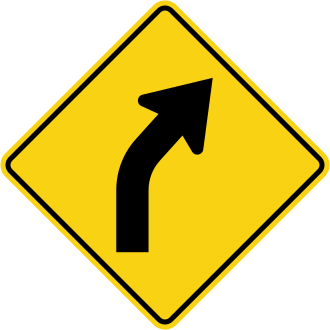
12. What does this road sign mean?
- AThere is a slight bend or curve in the road ahead
- BKeep right if there is faster traffic
- CThere is a sharp bend or curve in the road ahead
- DThis lane exits to the right
Why: This warning sign indicates a slight bend or curve in the road ahead.
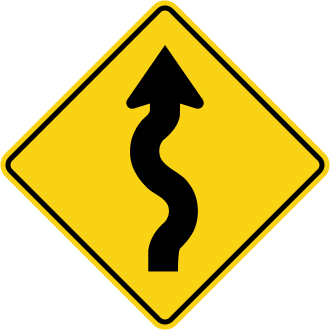
13. What does this road sign mean?
- AWinding road
- BHidden intersection ahead
- CRoad slippery when wet
- DNarrow road ahead
Why: This warning sign is a winding road ahead sign. A winding road is a road with at least three curves. Slow down and keep right.
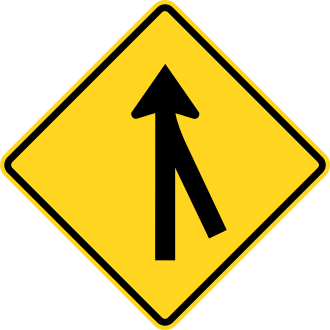
14. What does this road sign mean?
- AThere is merging traffic ahead
- BNo left turns are allowed
- CNo U-turns are allowed
- DThere is a hidden intersection ahead
Why: This is a merging traffic sign. Two roadways going in the same direction are about to join into one. Drivers on both roads are equally responsible for ensuring that traffic merges smoothly and safely.
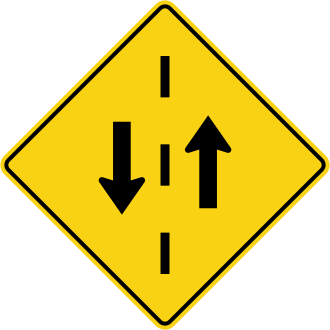
15. What does this road sign mean?
- AThe road is slippery when wet
- BDrive with caution at all times
- CShare the road with oncoming traffic
- DNo standing allowed here
Why: This sign indicates you are entering a two-way, undivided road. Keep right and watch for oncoming traffic.
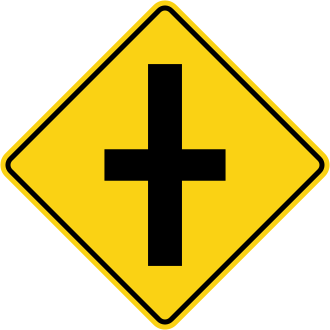
16. What does this road sign mean?
- AIntersection ahead
- BRailway crossing ahead
- CHidden intersection ahead
- DNarrow roadway ahead
Why: This sign warns that there is a crossroad intersection ahead. Slow down, scan left and right, and be ready to yield to cross traffic.
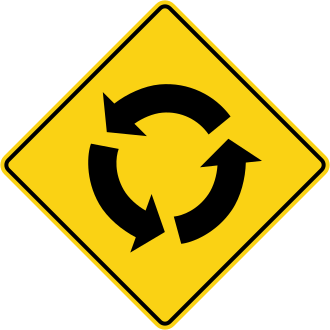
17. What does this road sign mean?
- AA highway interchange is ahead
- BKeep right
- CU-turns are permitted ahead
- DA roundabout is ahead
Why: This sign indicates that a roundabout is ahead (often with a distance tab, such as 300 m, below it). A roundabout is a circular intersection in which traffic circulates counterclockwise around a central island. Slow down and prepare to yield to the traffic already in the roundabout.
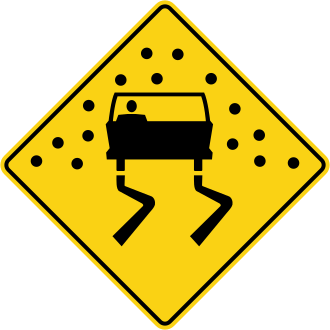
18. What does this sign mean?
- AThe pavement is slippery when wet
- BSlow down to prevent hydroplaning
- CThe paved surface ends ahead
- DThe pavement has been milled or grooved
Why: This sign means the pavement is slippery when wet. In wet weather, slow down and proceed with extra caution.
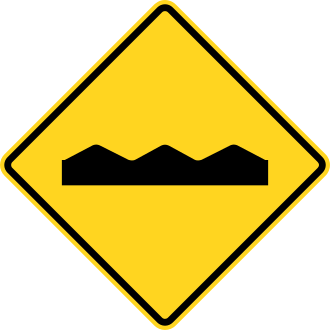
19. What does this road sign mean?
- AFactory ahead
- BBumpy or uneven pavement ahead
- CConstruction zone ahead
- DBridge or viaduct ahead
Why: This warning sign indicates bumpy or uneven pavement ahead. Slow down.
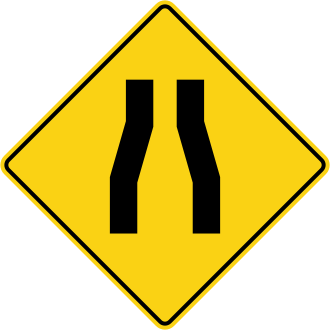
20. What does this road sign mean?
- AOne-way street ahead
- BNarrow roadway ahead
- CHidden intersection ahead
- DDivided highway ahead
Why: This sign indicates that the roadway narrows, without a reduction in the number of lanes. There will be less lane width available. Slow down, stay in your lane and watch for oncoming vehicles.
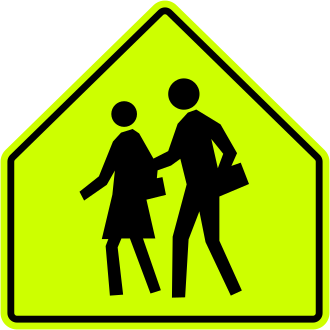
21. What does this road sign mean?
- ASchool zone
- BPlayground
- CPark ahead
- DPedestrian crosswalk
Why: This is a school zone sign. A school is nearby. Proceed with caution, because there may be school children around.
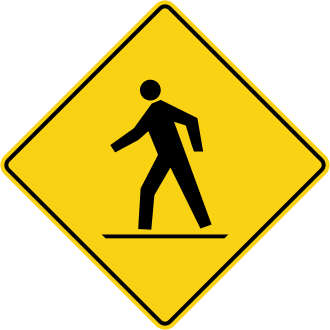
22. What does this sign mean?
- AA hiking trail
- BSchool zone
- CPedestrians ahead
- DPlayground zone
Why: This sign means that there may be pedestrians ahead. Watch for pedestrians and be prepared to share the road with them.
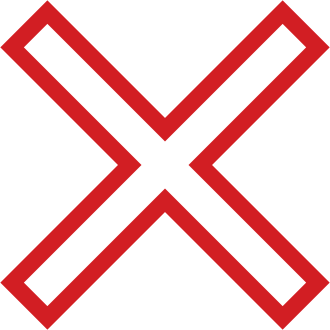
23. What does this sign mean?
- ARailway crossing
- BPedestrian crossing
- CDo not enter
- DUncontrolled intersection
Why: All railway crossings on public roads in Ontario are marked with large red and white crossbuck signs. When a train is approaching, you must stop and yield to the train. Remember, the train cannot yield to you.
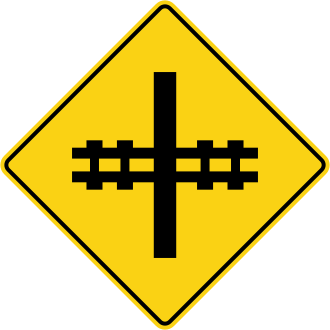
24. What does this road sign mean?
- ASide road near a railway ahead
- BA railway crossing ahead
- CPedestrian crosswalk ahead
- DIntersection ahead
Why: This warning sign indicates a railway crossing ahead. You must slow down and proceed only if it is safe.
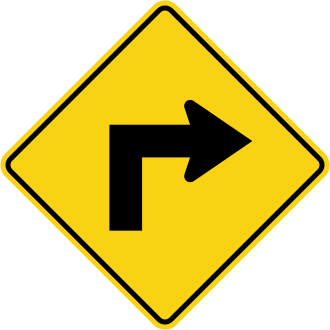
25. What does this road sign mean?
- AKeep right
- BThis road turns sharply right ahead
- CThis road turns slightly right ahead
- DTraffic must exit to the right
Why: This sign warns of a sharp bend or turn to the right in the road ahead. Slow down before you get to it.
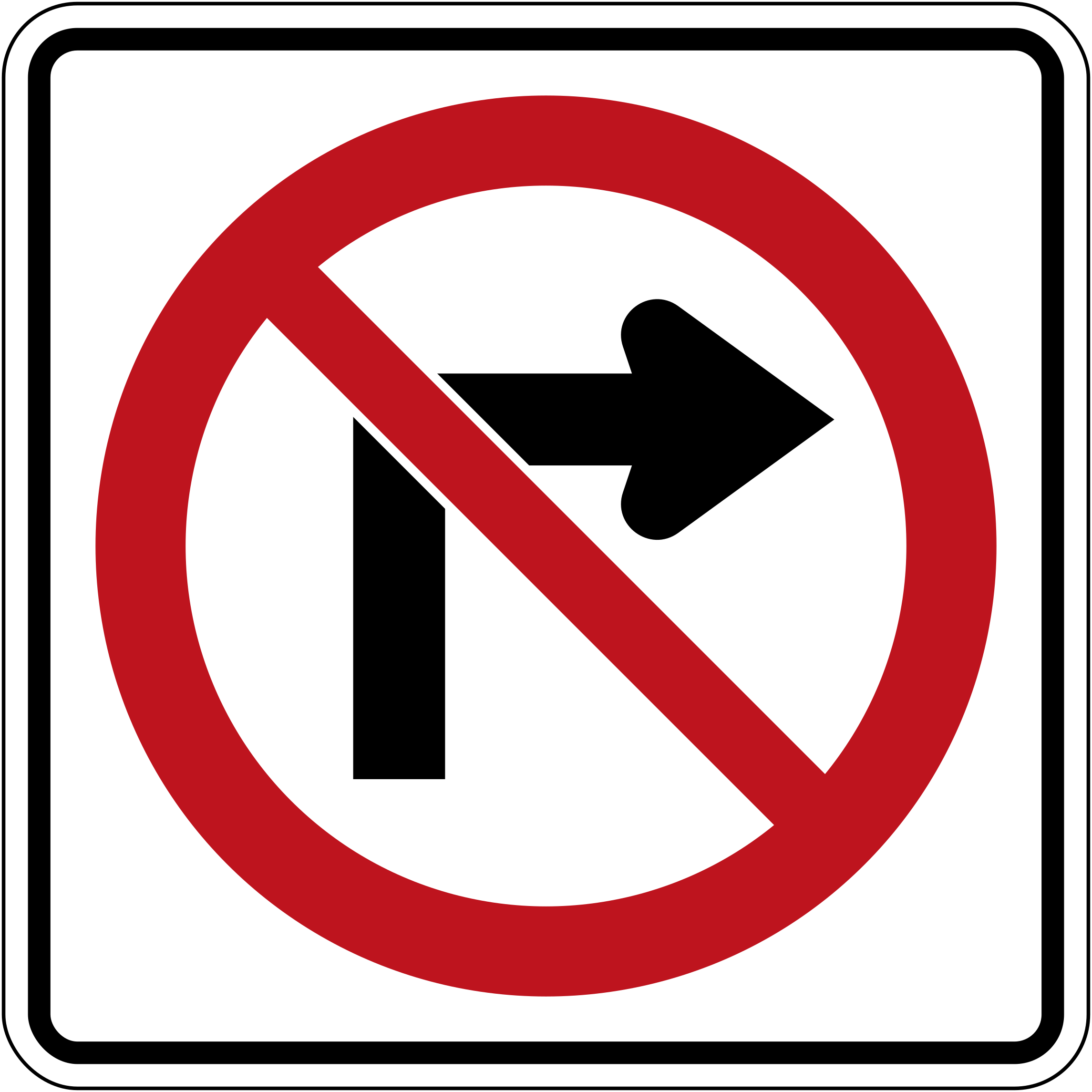
26. What does this sign prohibit?
- ARight turns
- BLeft turns
- CU-turns
- DThrough traffic
Why: A red circle and slash over a right-turn arrow means NO RIGHT TURN is allowed at this location.
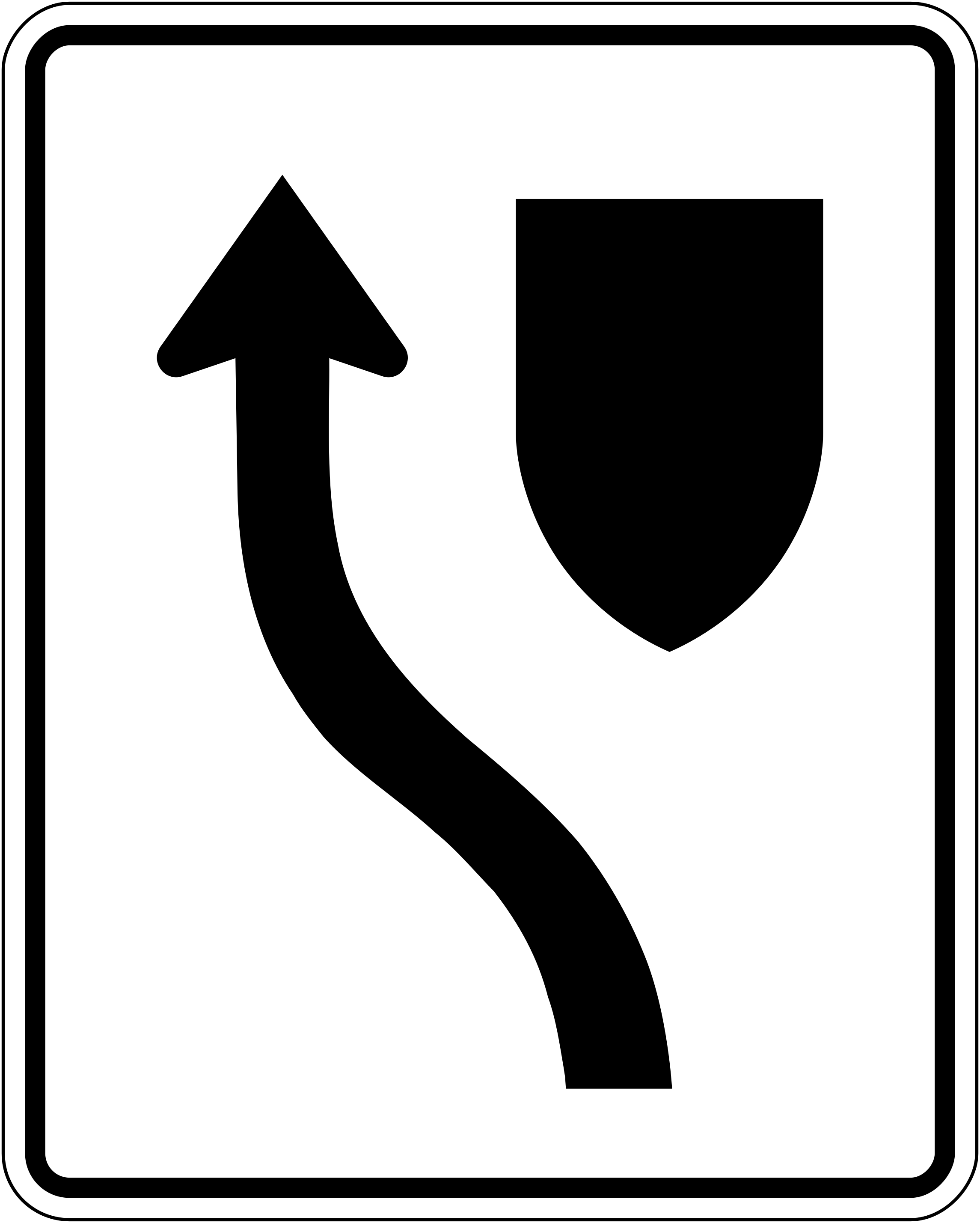
27. This sign tells you to:
- AKeep to the left of the median or obstacle ahead
- BTurn left only
- CMerge left
- DLeft lane ends
Why: A downward left-pointing arrow means KEEP LEFT, pass to the left of the traffic island, median or obstacle ahead.
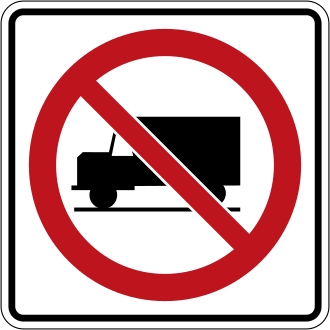
28. This sign means:
- ATruck route ahead
- BTrucks are not permitted on this road
- CTruck weigh station ahead
- DWatch for trucks
Why: A truck symbol inside a red circle and slash means TRUCKS PROHIBITED, heavy trucks may not use this road.
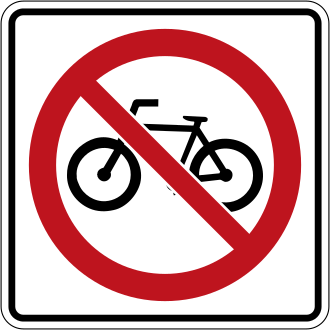
29. What does this road sign mean?
- ANo bicycles allowed on this road
- BNo parking
- CNo stopping
- DBicycles allowed on this road
Why: A red slash inside a red circle means 'no'. Bicycles are not allowed on this road.
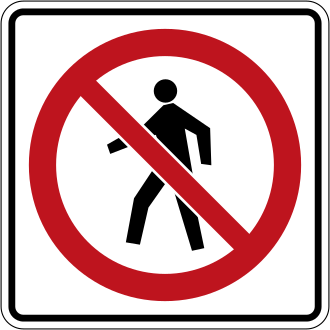
30. What does this road sign mean?
- ANo pedestrians allowed
- BNo children allowed
- CNo bicycles allowed
- DOnly dogs allowed
Why: A red slash inside a red circle means 'no'. This sign means that pedestrians are not allowed to use this section of the road.
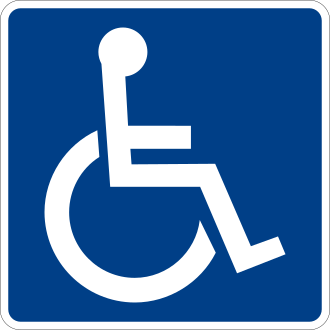
31. What does this sign mean?
- ARecreation area ahead
- BHospital ahead
- CRestroom availability
- DDisabled parking area
Why: This sign features the International Symbol of Access for persons with disabilities. The sign indicates that a person in a wheelchair may use this parking space.
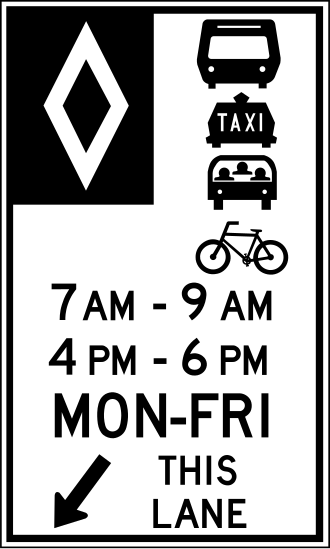
32. What does this sign mean?
- AOnly certain types of vehicles are allowed in this lane during the times and days posted
- BBuses are not allowed in this lane during the times and days posted
- CNo stopping is allowed during the times and days posted
- DDo not enter during the times and days posted
Why: This is a reserved lane sign. During certain times, a reserved or high-occupancy vehicle (HOV) lane is open only to such vehicles as buses, taxis and passenger vehicles with a specified minimum number of occupants.
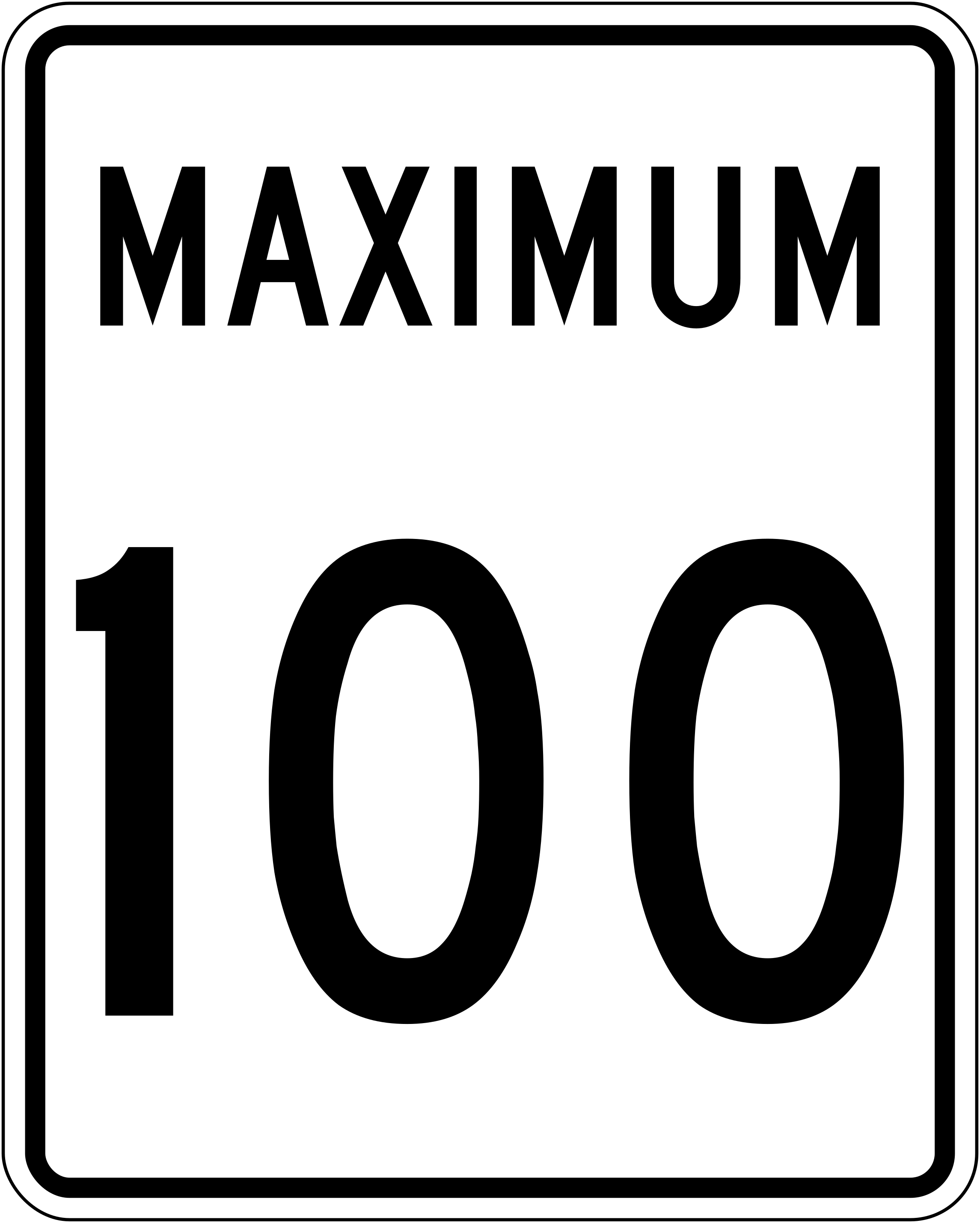
33. What does this road sign mean?
- AMaximum safe speed on the ramp
- BMaximum speed limit on the highway
- CA speed limit change ahead
- DMaximum safe speed for the curve
Why: This regulatory sign shows the maximum speed limit on the highway. You may not legally drive faster than the posted maximum.
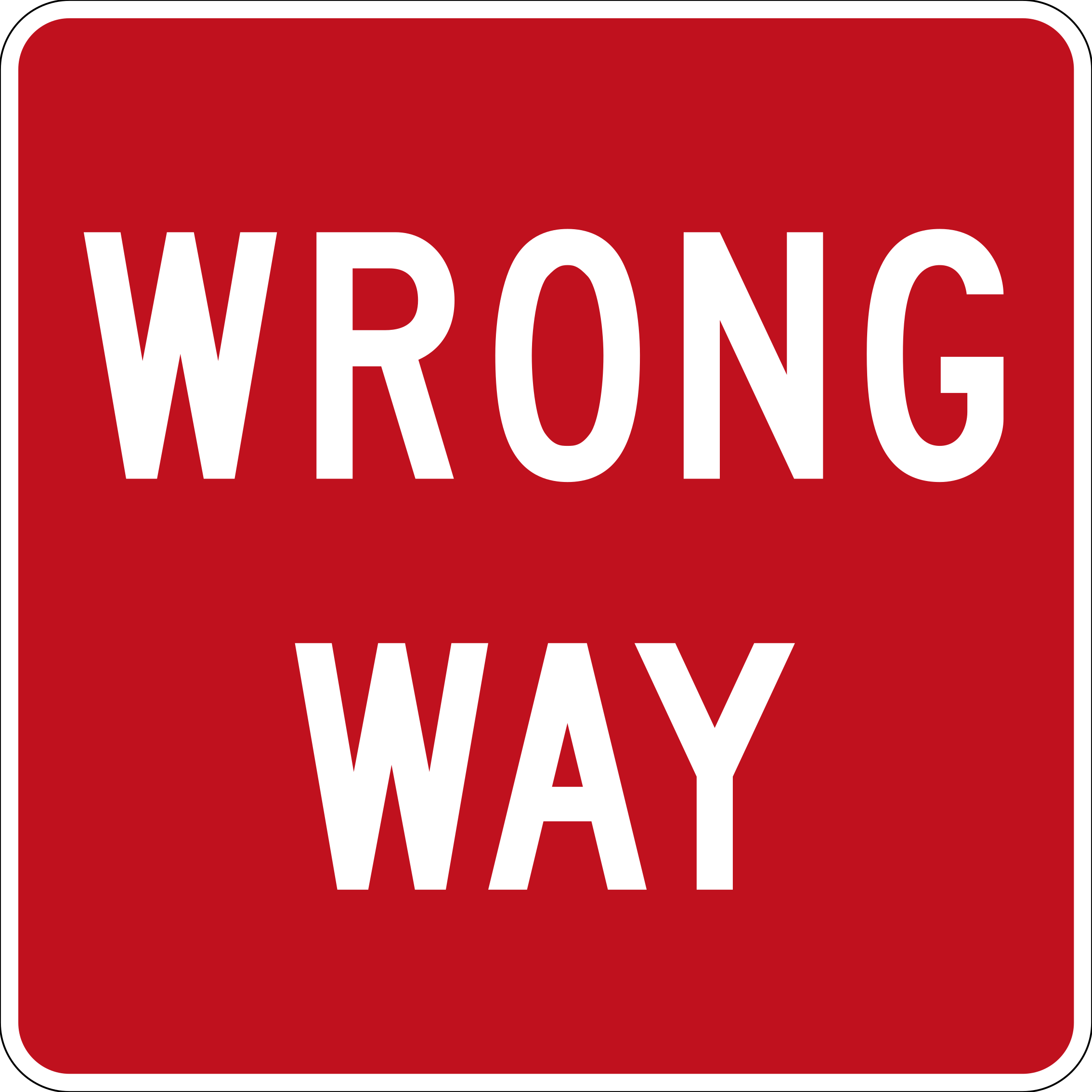
34. If this sign is facing you, it means:
- AYou have the right of way
- BYou are travelling the wrong way, stop and turn around safely
- CRoad ends ahead
- DOne-way traffic ahead
Why: WRONG WAY means you are driving against traffic (for example, the wrong way on a one-way street or ramp). Stop and turn around safely.
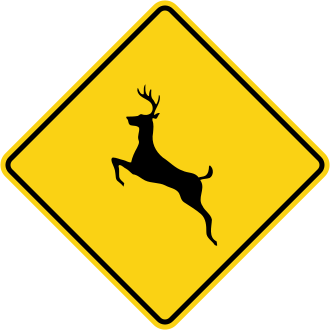
35. What does this road sign mean?
- ADeer regularly cross here
- BDo not honk at animals
- CThere is a zoo ahead
- DDeer are welcome
Why: This is a deer crossing road sign. Watch for deer and be prepared to stop for them.
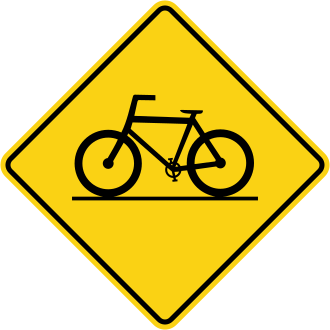
36. What does this road sign mean?
- ANo parking
- BNo left turns
- CBicycle crossing ahead
- DBicycles not allowed
Why: This warning sign indicates a bicycle crossing ahead. Watch for cyclists and be prepared to share the road with them.
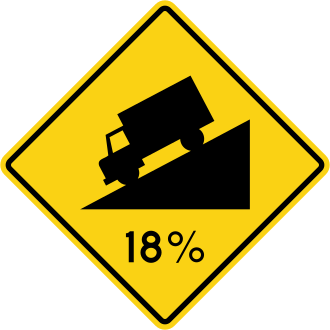
37. What does this road sign mean?
- ASafety check ahead
- BNo pavement 500 ft ahead
- CSteep hill ahead
- DBumpy road ahead
Why: This is a steep hill ahead road sign. Check your brakes. To reduce wear on your brakes, shift into a lower gear, even if your vehicle has an automatic transmission.
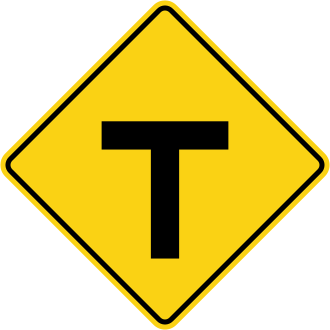
38. What does this sign mean?
- AThe road you are on ends ahead at a T-intersection
- BA bridge ahead
- CDivided highway ahead
- DRoundabout ahead
Why: A T symbol warns the road ahead ends at a T-intersection. Prepare to stop or yield and turn left or right.
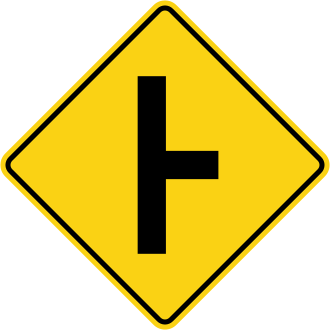
39. What does this road sign mean?
- AHidden intersection
- BRoad branching off ahead
- CNo left turns
- DMerging traffic ahead
Why: This is a road-branching-off-ahead road sign. This sign indicates a side road branching off to the right.
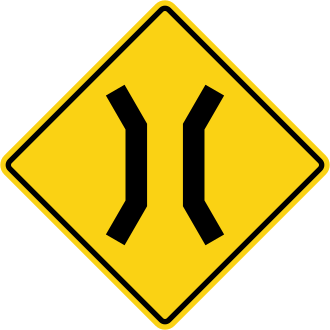
40. What does this road sign mean?
- APaved surface ends ahead
- BDivided roadway ahead
- CUnderpass ahead
- DNarrow bridge ahead
Why: This sign indicates that there is a narrow bridge ahead. The width of the road will be less than the part of the road you're currently driving on. Slow down at the narrow passage.
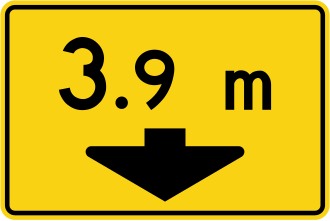
41. What does this road sign mean?
- ASchool zone ahead
- BUnderpass ahead
- CBumpy road ahead
- DPossible falling rocks ahead
Why: This sign indicates an underpass ahead, and shows the vertical clearance available. Know the height of your vehicle and do not proceed if it will not fit under the structure.
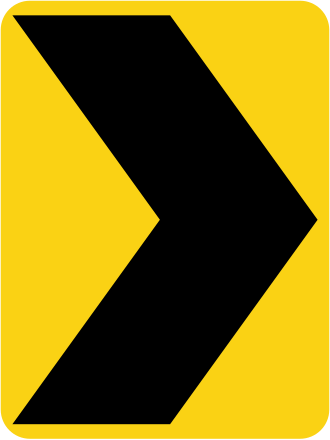
42. What does this road sign mean?
- AStay to the right of the centre island
- BKeep right
- CYou must turn right
- DThere is a sharp curve to the right
Why: Chevron (arrowhead) signs are posted in groups to guide drivers around sharp curves in the road.
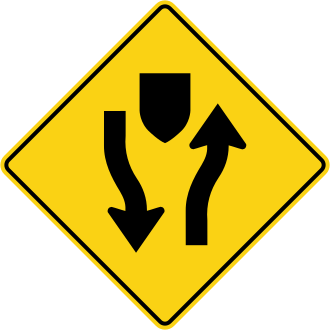
43. What does this sign mean?
- ADivided highway begins
- BDivided highway ends
- CTwo-way traffic
- DRoad under construction
Why: This warning sign indicates that the road ahead is divided by a median. Keep right of it.
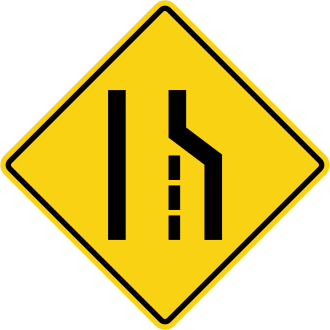
44. What does this road sign mean?
- AAcceleration lane ahead
- BNarrow passage ahead
- CLeft lane ends ahead
- DRight lane ends ahead
Why: This type of warning sign gives advance notice of a reduction in the number of lanes ahead. This particular sign indicates that the right lane ends ahead. All traffic in the right lane must merge left.
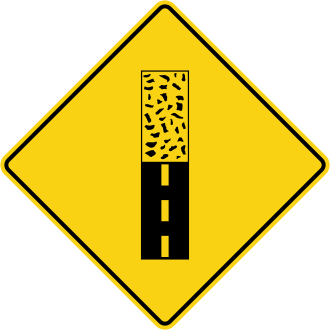
45. What does this road sign mean?
- ADivided roadway ahead
- BLow clearance underpass ahead
- CPavement ends
- DFalling rocks
Why: This warning sign indicates the end of the paved surface.
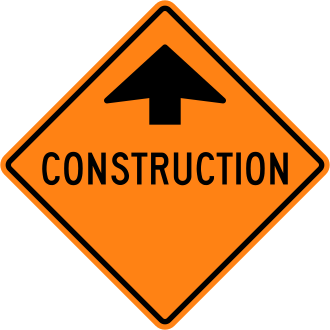
46. What does this construction sign mean?
- AThere is a road work operation ahead
- BThe pavement is milled or grooved
- CSlow down and obey the flagger's direction
- DThe flagger is off duty
Why: This orange temporary condition sign warns of a road work operation ahead. Slow down and obey all construction signs.
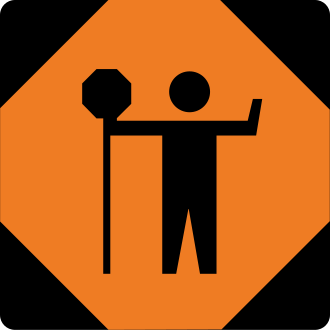
47. What does this road sign mean?
- ARoad work ahead
- BTraffic control person ahead
- CPedestrian area
- DSurvey crew working ahead
Why: This sign indicates a traffic control person ahead. A traffic control person, also known as a flag person, may direct traffic at construction or work zones by using hand signals and stop or slow paddles. Slow down and follow all directions of the traffic control person.
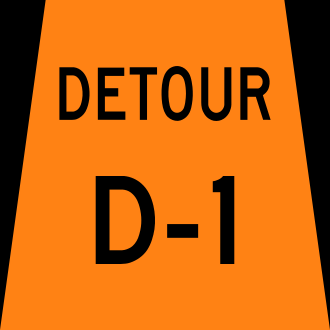
48. What does this sign mean?
- AThere is construction work 1 km ahead
- BKeep a certain distance away
- CFollow these signs until you return to your regular route
- DThis lane is closed ahead, merge into another lane
Why: This is a temporary condition sign. These signs warn of unusual temporary conditions such as road work zones, diversions, detours, lane closures or traffic control people on the road. This particular sign is a detour marker, keep following these markers until they return you to your regular route.
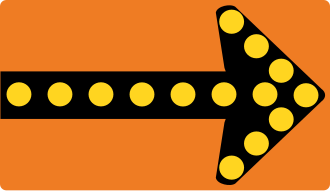
49. What does this sign mean?
- AYield to the left
- BRoad turns left
- CClosed lane
- DSlight bend or curve in the road ahead
Why: This sign means that there is a closed lane ahead. If you are in that lane, adjust your speed to merge with traffic in the lane indicated by the arrow.
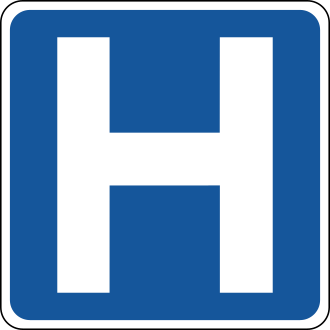
50. What does this road sign mean?
- AHotel
- BHeliport
- CHospital
- DHill
Why: Information signs are square signs. This information sign indicates a hospital nearby.
51. Before you can even read the words, a sign's shape and colour tell you its message. A red octagon always means:
- AYield
- BStop
- CCaution
- DConstruction
Why: Shape and colour identify a sign instantly, a red eight-sided (octagonal) sign is always STOP.
52. An orange sign indicates:
- AA permanent rule
- BA temporary condition such as construction or maintenance
- CA tourist attraction
- DA hospital
Why: Orange signs always indicate temporary conditions, construction, maintenance or survey work. Slow down and stay alert.
53. A green sign usually shows:
- AA prohibition
- BDirections, destinations or distances (permitted information)
- CA warning
- DA stop
Why: Green signs give directional information, destinations, distances and permitted movements.
54. This symbol indicates:
- AA temporary condition
- BA prohibition
- CA warning
- DInformation and direction
Why: A red circle with a slash through it means the activity shown inside the ring is not allowed.
55. Most warning signs (telling you about a hazard ahead) are:
- ARound and blue
- BYellow and diamond-shaped
- CRed and octagonal
- DGreen and rectangular
Why: Most warning signs are yellow diamonds. They alert you to a hazard or change in conditions ahead so you can slow down.
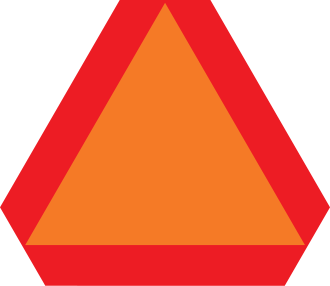
56. What does this sign mean?
- AA slow-moving vehicle
- BA vehicle carrying dangerous goods
- CAn emergency vehicle
- DA fast-moving vehicle
Why: This emblem on the rear of a vehicle identifies it as a slow-moving vehicle, one whose speed is 40 km/h or less. Slow-moving vehicles include farm equipment and some construction equipment. If you see this emblem on a vehicle you are following, slow down and be patient.
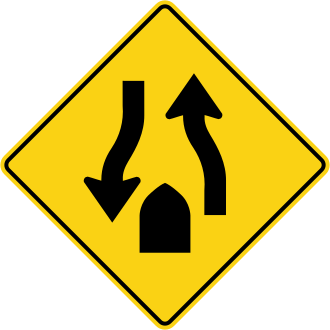
57. What does this road sign mean?
- ARoad under construction
- BDivided highway ends
- CNarrow bridge ahead
- DDivided highway ahead
Why: This warning sign means the divided highway ends. Keep right and watch for oncoming vehicles.
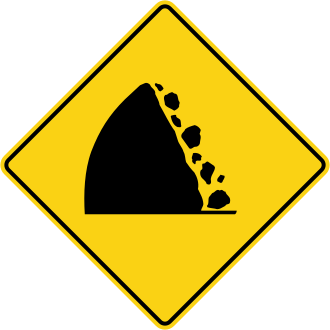
58. What does this road sign mean?
- ANo trucks allowed
- BPossible falling rocks ahead
- CPassing not allowed
- DSteep hill ahead
Why: This is a watch-for-falling-rocks road sign. Drive with extra caution and be prepared to avoid a collision.
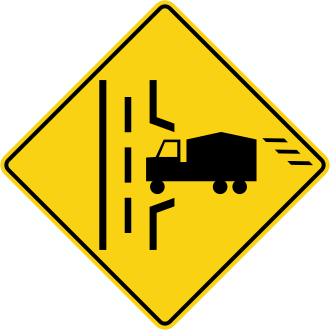
59. What does this road sign mean?
- ANo trucks allowed
- BSlow down for trucks
- CTruck entrance ahead on the right
- DTruck route
Why: This sign indicates an upcoming truck entrance on the right. Be prepared to yield to trucks entering the roadway.
60. Signs that are blue with white symbols generally give you:
- AWarnings about hazards
- BTraffic laws you must obey
- CInformation about services for drivers, such as fuel, food or hospitals
- DConstruction zone instructions
Why: Blue signs point out services and facilities for travellers, gas, food, lodging, hospitals and similar. They inform, they don't warn or set rules.
61. A sign is completely covered in snow, but you can see it is a downward-pointing triangle. It is a:
- AStop sign
- BYield sign
- CSchool zone sign
- DWarning sign
Why: Each major sign type has a unique shape exactly so you can recognize it even when it's unreadable. Only the yield sign is a triangle pointing down, just as only the stop sign is an octagon.
62. A sign with a green circle indicates:
- AA truck route
- BA permissive sign
- CA prohibitory sign
- DA route for large trucks
Why: A regulatory sign with a green circle is a permissive sign. It means you may or must do the activity shown inside the circle.
63. Vertical white rectangular signs with black letters or symbols (such as MAXIMUM 50) are:
- AWarning signs, they suggest caution
- BRegulatory signs, they state laws you must obey
- CInformation signs, they are advisory only
- DTemporary condition signs
Why: White rectangular signs with black text are regulatory signs. They tell you what the law requires (like maximum speeds) and you can be charged for disobeying them.
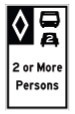
64. What does this road sign mean?
- ATwo lanes will merge into one
- BTwo or more occupants must be in the vehicle to use this lane
- CTwo lanes are closed ahead
- DThis is a highway with two express lanes
Why: This type of sign indicates that the lane is a high-occupancy vehicle (HOV) lane. This particular sign indicates that only buses and vehicles with two or more occupants may use this lane. There are a couple of exceptions, plug-in hybrid and full battery electric vehicles with a green licence plate may use the lane regardless of the number of occupants, and motorcyclists may also use the lane even when riding alone.
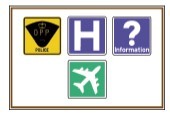
65. Information signs like these show you:
- ATraffic laws you must obey
- BOff-road facilities such as hospitals, airports, police or information centres
- CConstruction zones ahead
- DParking restrictions
Why: Information signs show off-road facilities such as hospitals, airports, universities or carpool lots. Watch for the symbol that matches the service you need.
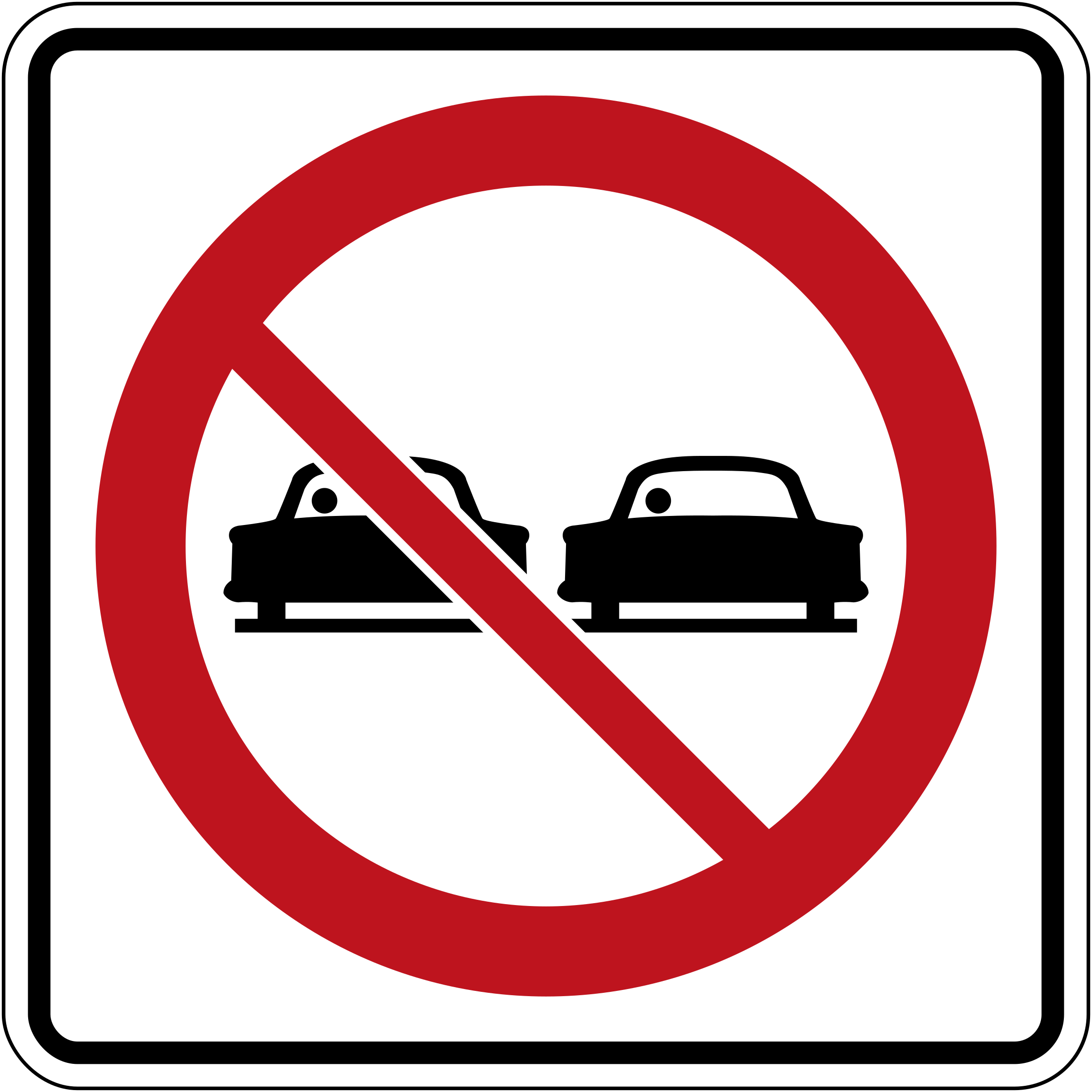
66. What does this road sign mean?
- ANo passing
- BNo stopping
- CNo parking
- DNo trucks
Why: A red slash inside a red circle means 'no'. This regulatory sign means that cars and other vehicles should not pass.
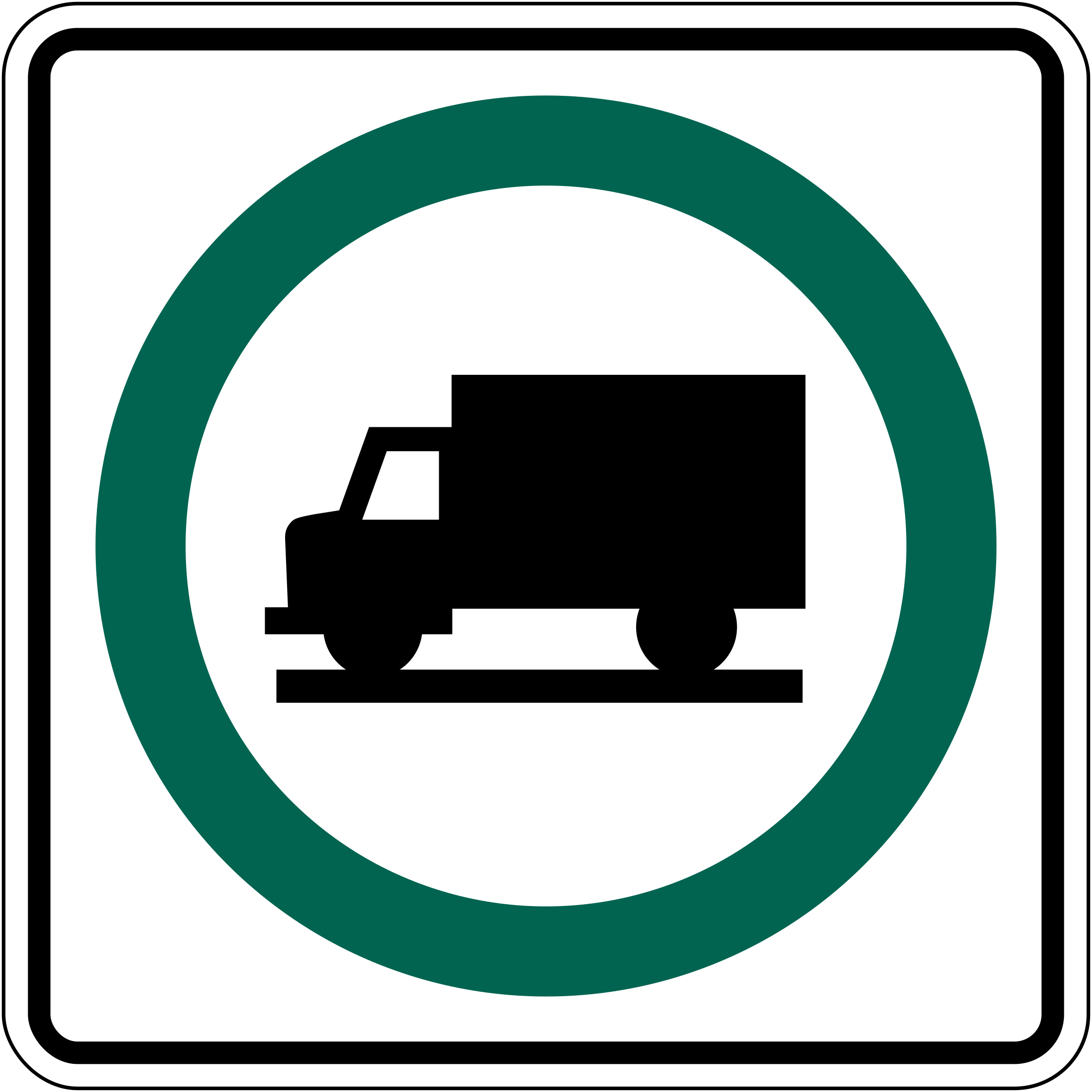
67. A truck symbol inside a green circle means:
- ANo trucks beyond this point
- BTrucks are permitted on this route
- CTruck inspection station ahead
- DSlow-moving trucks ahead
Why: A green circle means the activity shown is allowed, here, that heavy trucks may use this route. The same truck symbol in a red circle with a slash would mean trucks are prohibited.
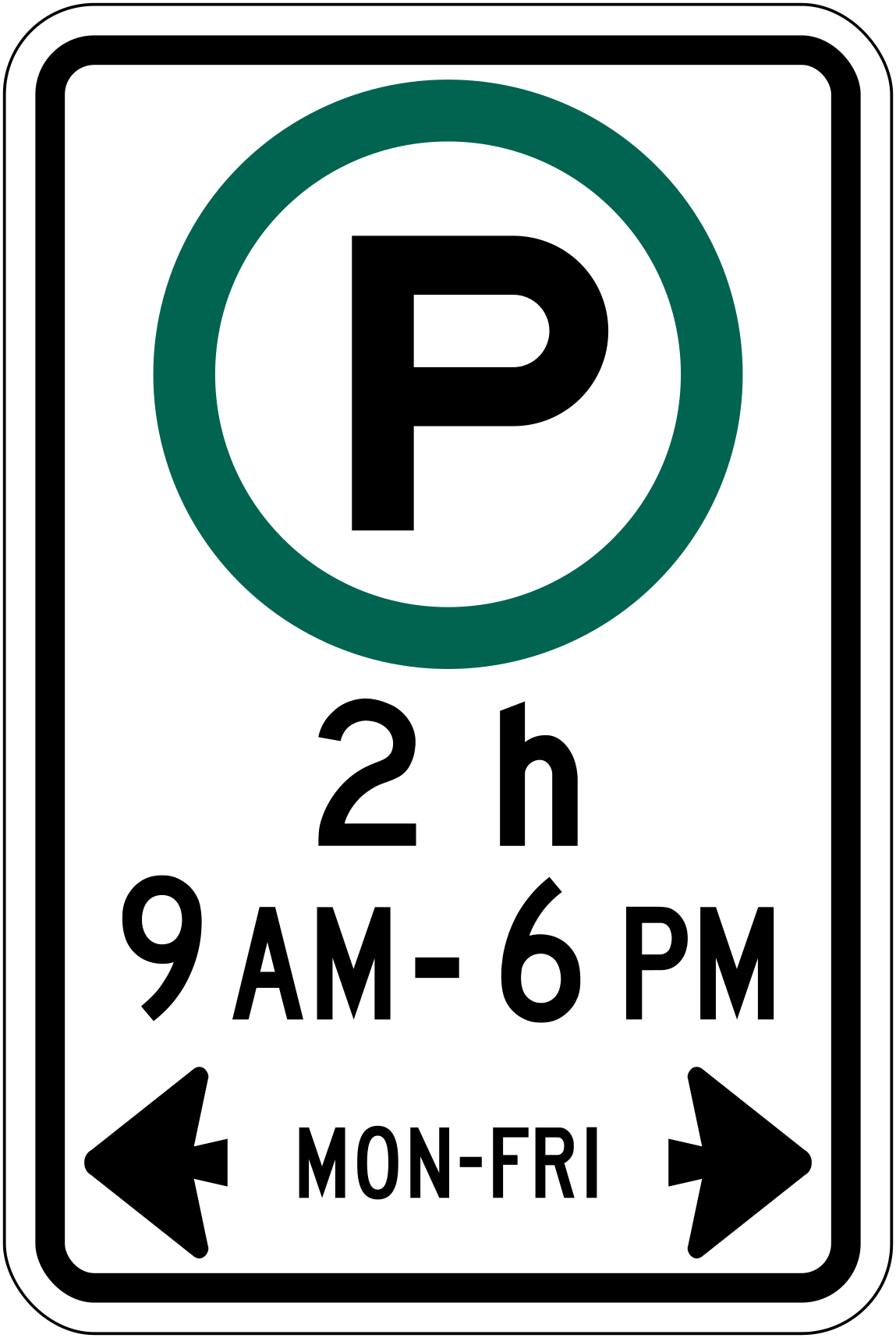
68. What does this road sign mean?
- ANo parking at any time
- BYou may not park in the designated area during the posted times
- CYou may park in the designated area during the posted times
- DOnly weekend parking is allowed
Why: A green circle indicates permission. You may park in the designated area during the posted times.
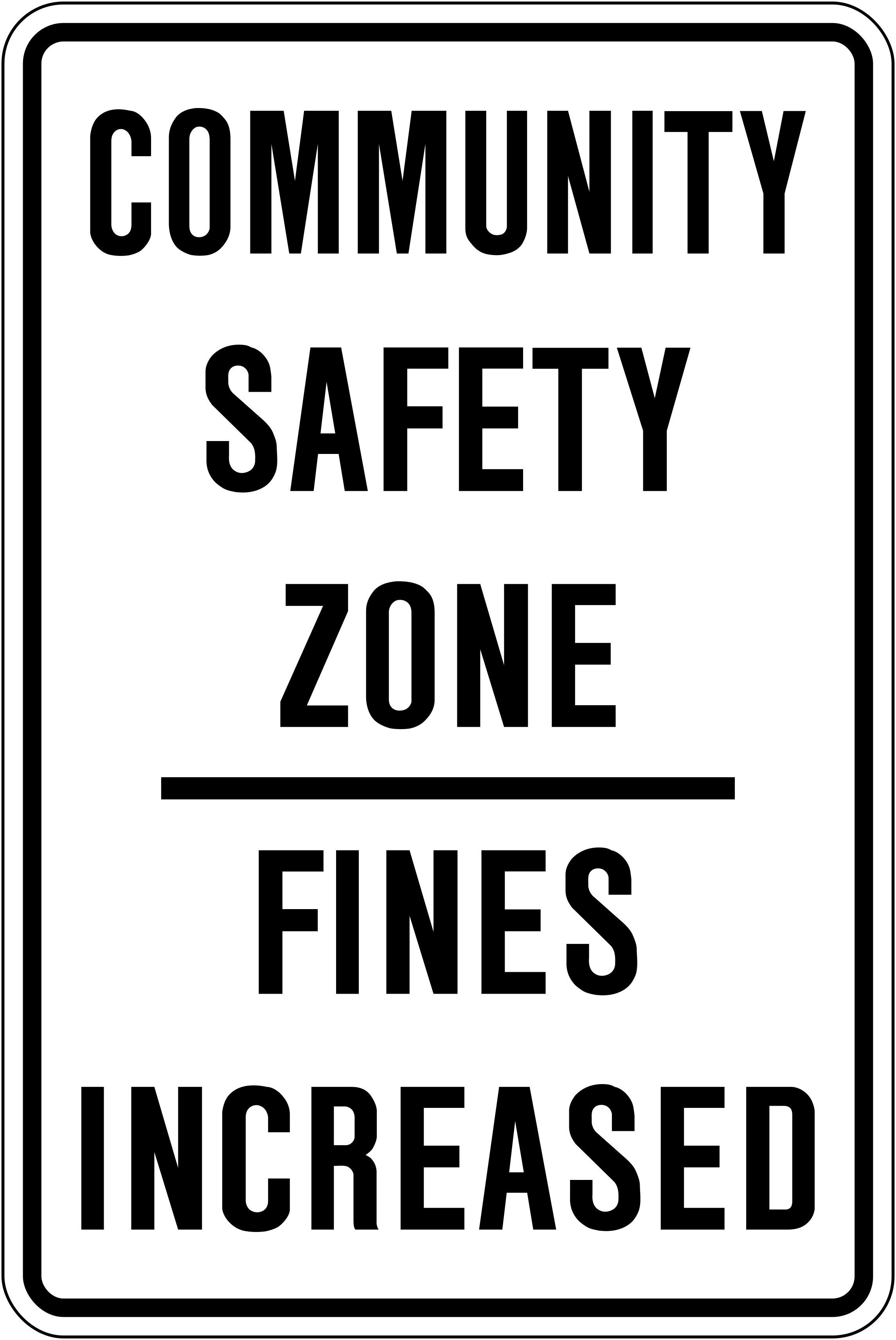
69. What does this road sign mean?
- AThis is a high-crime area
- BDo not enter this area
- CBe more aware of pedestrians and your speed in this area
- DIt is safe to enter this area
Why: This sign indicates a community safety zone, an area where, according to the community, speeding or aggressive driving poses a special risk to pedestrians. Traffic offences committed within this zone are subject to increased fines. Obey all speed limits and drive carefully.
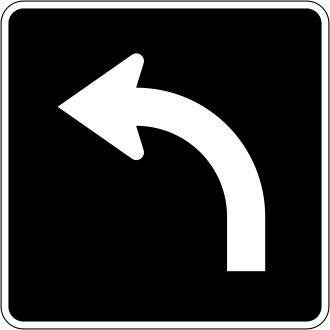
70. This sign posted over or beside a lane means:
- ALeft turns are prohibited
- BTraffic in that lane must turn left
- CThe road curves left ahead
- DPass only on the left
Why: Lane designation signs tell you what movement a lane must make. Here, vehicles in the lane may only turn left, get out of the lane early if you want to go straight.
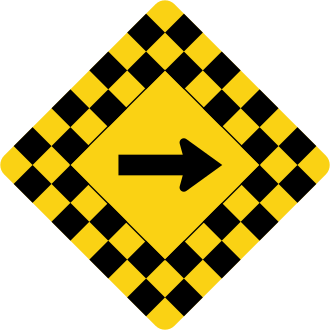
71. What does this road sign mean?
- AThere is a playground to the right
- BDanger, the road ends ahead
- CTake a detour
- DDanger, there is a sharp turn ahead
Why: This sign warns of a sudden turn in the road ahead, in the direction shown by the arrow. Slow down and proceed with care.
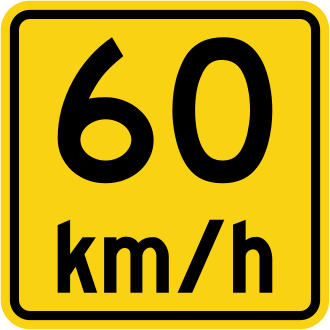
72. What does this road sign mean?
- AMaximum speed limit at night
- BMaximum safe speed on the shoulder
- CMaximum safe speed for a curve
- DRecommended speed in a construction zone
Why: Posted under a curve warning sign, this sign shows the maximum safe speed for the curve.
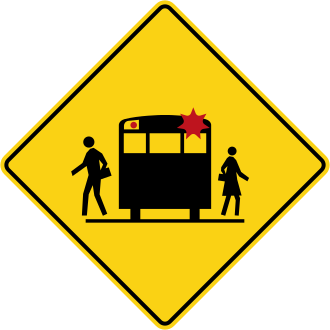
73. What does this road sign mean?
- AHidden intersection ahead
- BHidden bus bay ahead
- CHidden school bus stop ahead
- DSchool zone ahead
Why: This warning sign means that there is a hidden school bus stop ahead. School buses stop with flashing red lights there. Slow down, drive with extra caution, and watch for children and a school bus with flashing red lights.
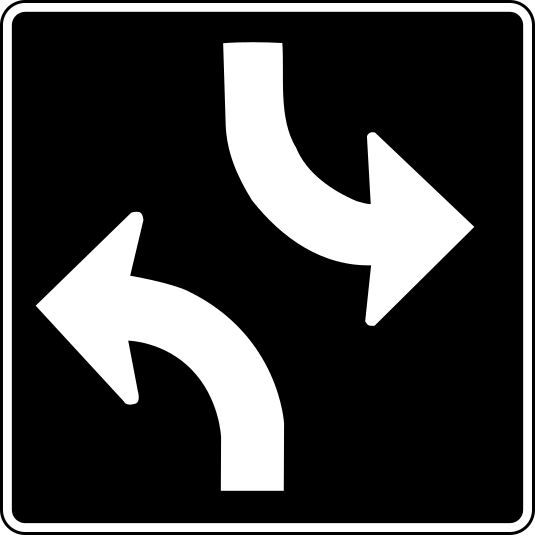
74. What does this sign mean?
- AThe highway ends ahead
- BYou must move into the right-hand lane
- CYou may exit if you remain in the right-hand lane
- DThis is a two-way left-turn lane
Why: This is a lane in the centre of the roadway that can be used by vehicles travelling in either direction to make left turns.
75. Which road sign is five-sided (a pentagon)?
- AThe stop sign
- BThe yield sign
- CThe school zone sign
- DThe railway crossing sign
Why: The five-sided shape is reserved for school signs. Stop is the octagon, yield is the downward triangle, and the railway crossbuck is the X, each shape is unique on purpose.
76. You see this sign and children are nearby. What should you do?
- AContinue at the regular speed limit
- BSlow down, obey any reduced school-zone limit, and be ready to stop
- CHonk to warn the children
- DChange lanes away from the sidewalk
Why: In a school zone with children present, slow down, follow the posted school-zone speed, and watch for children who may dart out, be ready to stop.
77. What should you do when you see this sign?
- ASpeed up to make the light
- BBe prepared to slow down and stop at the traffic lights ahead
- CStop immediately at the sign
- DTurn around, the road is closed
Why: Traffic lights are ahead, often hidden by a curve or hill. Adjust your speed so you can stop smoothly if the light is red when it comes into view.
78. You are driving a loaded vehicle and see this sign. What should you do?
- AShift to a lower gear and avoid riding the brakes down the hill
- BPut the vehicle in neutral to save fuel
- CSpeed up before the hill
- DUse the parking brake going down
Why: On a steep downgrade, a lower gear lets the engine help slow the vehicle. Constant braking overheats the brakes and they can fade, exactly when you need them most.
79. You see this sign and it has just started to rain. You should:
- ABrake hard to test the surface
- BSlow down, increase your following distance, and steer and brake gently
- CDrive in the oncoming lane
- DSpeed through the slippery section quickly
Why: This section gets slippery when wet. Reduce speed, leave extra room, and keep every input (steering, braking, accelerating) slow and smooth.
80. What should you do when you see this sign?
- AStop and wait at the sign
- BSlow down, look both ways and listen, be prepared to stop at the crossing ahead
- CSpeed up to cross before any train
- DHonk before crossing
Why: A railway crossing is ahead. Slow down, scan both directions, listen for a train, and be ready to stop, never try to beat a train across.
81. You see this sign at dusk. What should you do?
- ATurn on your hazard lights
- BSlow down and scan both roadsides, if an animal appears, brake firmly in a straight line
- CHonk continuously to scare animals away
- DDrive in the centre of the road
Why: Deer are most active near dawn and dusk and often travel in groups. Slow down, watch the road edges, and if one steps out, brake hard in a straight line rather than swerving into other dangers.
82. Your vehicle is taller than the height shown on this sign. You should:
- ADrive through slowly
- BLet some air out of the tires
- CNot proceed, find another route
- DDrive through in the centre of the road
Why: The sign shows the maximum height that can pass safely. If your vehicle or load is taller, it will strike the structure, turn around and use a different route.
83. You see this sign and then a flag person ahead. You must:
- ATreat their signals as suggestions
- BObey the flag person's directions, they have the same authority as a traffic sign or signal
- CPass them slowly on the left
- DWait only if other cars wait
Why: A traffic-control person's directions are legally binding. Slow down, be patient, and stop or proceed exactly as they signal.
84. This sign shows your lane is closed ahead. You should:
- ASpeed to the front of the line and force your way in
- BSignal and merge into the open lane early and smoothly, alternating with other traffic
- CDrive on the shoulder past the closure
- DStop in your lane and wait
Why: Move over as soon as it is safe, and take turns merging with the vehicles already in the open lane. Courteous, early merging keeps the zone moving and safe.
85. What should you do when you see this sign?
- ASlow down, there will be less room ahead, with traffic closer on both sides
- BChange to the left lane
- CStop before the narrow section
- DSound your horn through the narrow section
Why: The road ahead is narrower than the section you are on. Slow down, keep right, and be ready for oncoming traffic passing closer than usual.
86. You see this sign on a two-way road. You should:
- ACross the bridge quickly before oncoming traffic
- BSlow down, keep well to the right, and be prepared to yield on the bridge
- CHonk before crossing
- DStop on the bridge to check clearance
Why: The bridge ahead is narrower than the road. Slow down, hug your side, and if a wide vehicle is coming the other way, be ready to wait your turn.
87. What should you do when you see this sign?
- AChoose either side of the island
- BKeep to the right of the median or island ahead
- CStop before the divider
- DTurn around, wrong way
Why: A divided road begins ahead, traffic in each direction is separated by a median. Stay to the right of it, the left side carries oncoming traffic.
88. What should you do when you see this sign?
- ASlow down before the first curve and keep a steady, reduced speed through the series of curves
- BBrake hard in each curve
- CMaintain highway speed and steer firmly
- DUse your hazard lights through the curves
Why: Several curves are coming one after another. Get your braking done before the first one, braking hard mid-curve is a common cause of skids.
89. What should you do when you see this sign?
- ASpeed up through the intersection
- BCover your brake and scan left and right for traffic crossing ahead
- CAlways stop at the crossroad
- DHonk as you pass through
Why: An intersection is ahead, vehicles may cross or turn onto your road. Ease off the gas, cover the brake, and check both directions as you approach.
90. What should you do when you see this sign?
- APrepare to stop, the road you are on ends ahead and you must turn left or right
- BMerge with traffic from the left
- CContinue straight through
- DYield only to trucks
Why: Your road ends at a T ahead. Slow down, signal, and yield to traffic on the through road before turning left or right.
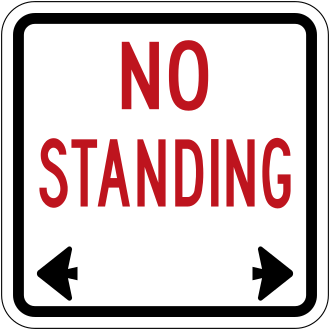
91. What does this road sign mean?
- AYou may stop temporarily to load or unload merchandise but not passengers
- BYou may not stop for any reason
- CYou may stop temporarily to load or unload passengers but not merchandise
- DYou may stop temporarily to load or unload passengers or merchandise
Why: According to the Ontario Highway Traffic Act, 'No Standing' means you may stop only temporarily to load or unload passengers, but not merchandise. No standing signs are often posted at bus stops and taxi stands.
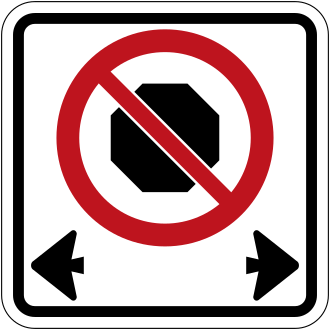
92. What does a pair of these signs mean?
- ADo not park in the area between the signs
- BDo not stop in the area between the signs except to load or unload passengers or merchandise
- CDo not stop in the area between the signs
- DDo not stand in the area between the signs
Why: This is a no stopping sign. It means that you're not allowed to stop here, even for a moment. These signs are typically used in pairs or groups.
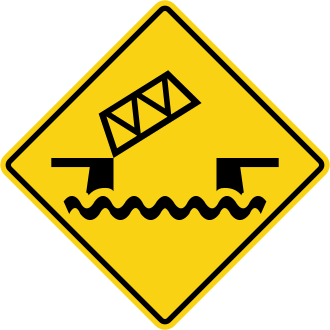
93. What does this road sign mean?
- AHotel
- BMovable bridge ahead
- CNarrow road ahead
- DAirport
Why: The bridge lifts or swings open to allow boats to pass. Slow down and prepare to stop in case the bridge is open.
94. At night you see a large flashing arrow board pointing left over the road. It means:
- ATurn left at the next intersection
- BYour lane is closed ahead, merge safely in the direction of the arrow
- CA left curve is ahead
- DOncoming traffic is detoured into your lane
Why: Flashing arrow boards mark construction and maintenance closures. The lane you're in is ending, signal and move over in the direction the arrow points, as early as you safely can.
95. This road sign means that parking is permitted:
- AFor electric vehicles
- BFor all vehicles
- COnly for vehicles with very young child passengers
- DOnly for vehicles displaying a valid accessible parking permit
Why: This sign features the International Symbol of Access for persons with disabilities. It is posted where parking is permitted only for vehicles displaying a valid accessible parking permit.

96. What does this road sign mean?
- AYou may not turn left on the red light
- BThere is no road on the right side of the intersection
- CYou may not turn right on a green light
- DYou may not turn right on a red light
Why: This is a no right turn on red sign. Where this sign is posted, you may not turn right on the red light.
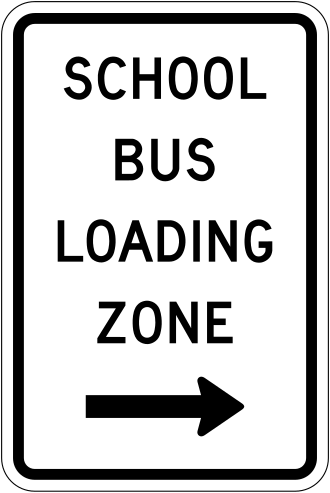
97. What does this road sign mean?
- AYou may park here
- BSchool buses load or unload in this area by turning on the flashing red lights and extending the stop arm
- CYou must be driving a school bus to enter this area
- DSchool buses load or unload in this area without using the flashing red lights or the stop arm
Why: This sign marks a loading zone for school buses. In this area, school buses load or unload passengers without using the flashing red lights or the stop arm.
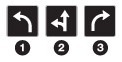
98. This road sign indicates:
- AYou must not enter this area
- BYou may drive in any direction from any lane
- CYou may not turn here
- DThe direction of travel for each lane
Why: These signs, above the road or as a pavement marking, tell drivers in each lane the direction in which they must travel.
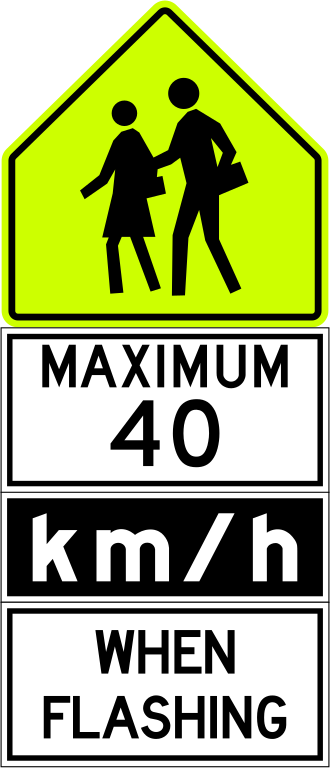
99. What does this road sign mean?
- AThis is a pedestrian crosswalk
- BThe speed limit is 40 km/h at all times
- CDuring school hours, when the yellow lights are flashing, the speed limit is 40 km/h
- DThis is a playground
Why: During school hours, when the yellow lights are flashing, the speed limit is 40 km/h.
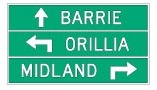
100. What does this road sign mean?
- ASchool zone
- BProvincial park
- CDetour
- DDirections to cities and towns
Why: Green direction signs show directions and distances to cities, towns and other destinations.
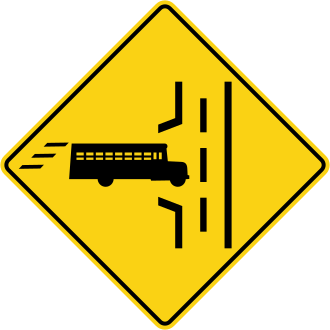
101. What does this road sign mean?
- AA hidden school bus stop
- BBus entrance ahead on the right
- CTruck entrance ahead on the right
- DHidden driveway ahead
Why: This sign indicates an upcoming bus entrance on the right. Vehicles should be prepared to yield to buses entering the roadway.
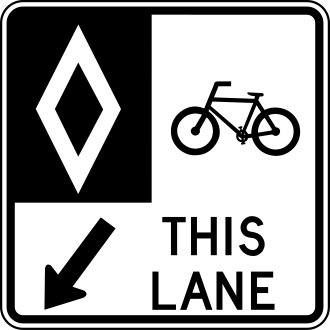
102. What does this road sign mean?
- AThis lane is for buses only
- BThis lane is for bicycles only
- CThis lane is not for bicycles
- DThis lane is for trucks only
Why: A diamond symbol indicates a reserved lane, a lane in which only certain kinds of vehicles may legally travel. This particular sign means that only bicycles may travel in this lane.

103. What does this sign mean?
- AWatch for pedestrians and be prepared to share the road with them
- BThere is road work ahead
- CA traffic control person is ahead, drive slowly and watch for instructions
- DA survey crew is working on the road ahead
Why: This sign is seen at construction zones where survey crews may be working. Proceed with caution.
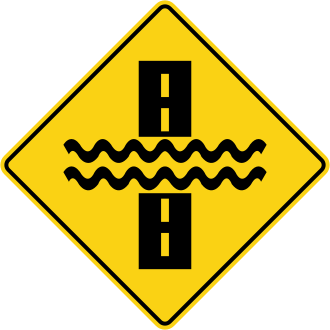
104. What does this road sign mean?
- AThere may be water flowing over the road
- BThere is a movable bridge ahead
- CDo not enter
- DThere is a construction zone ahead
Why: This sign warns that there may be water flowing over the road. Slow down and drive with caution.
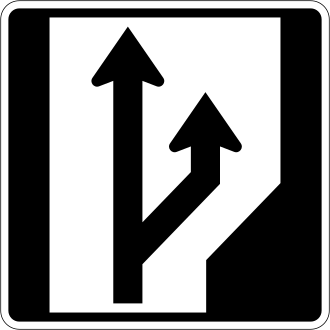
105. What does this sign mean?
- AA road is branching off ahead
- BThere is a passing lane ahead
- CThere is a slight bend or curve in the road ahead
- DKeep right of the traffic island
Why: This sign means there is a passing lane ahead. Stay in the right lane except when passing on the two-lane sections where climbing or passing lanes are provided.
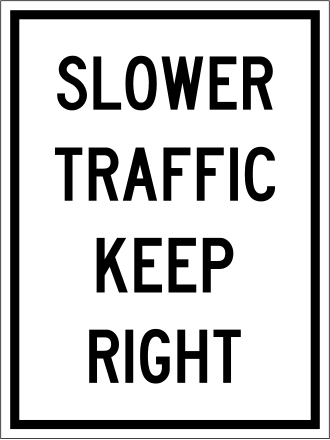
106. What does this road sign mean?
- ASlower traffic must turn right
- BSlower traffic must keep right
- CThe right lane is for faster traffic
- DSlow down when you are in the right lane
Why: This sign is usually posted on multi-lane roadways. It means just what it says, slower traffic should stay in the rightmost lane, except when turning left or avoiding an obstruction or other hazard.
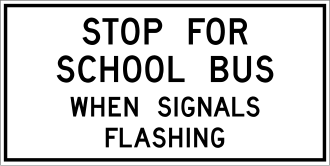
107. What does this road sign mean?
- AYou must stop for a school bus if your turn signals are flashing
- BYou must stop for a school bus if its red signals are flashing
- CYou may pass a school bus if its red signals are flashing
- DYou must stop for a school bus if the traffic lights are flashing
Why: You must stop for a school bus when its red signals are flashing, whether you are behind it or approaching it from the front.
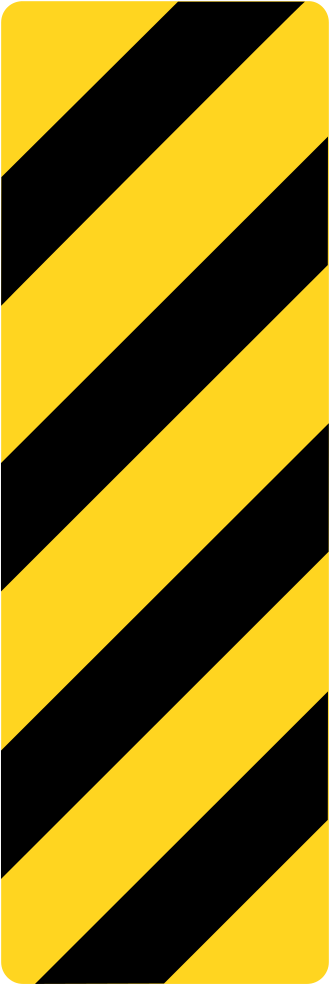
108. What does this sign mean?
- AYou may stop and rest here
- BDrive to the right of the sign
- CDrive to the left of the sign
- DThere is a playground ahead
Why: This is a hazard marker sign. The downward lines indicate the side on which you may bypass the hazard, in this case, to its right.
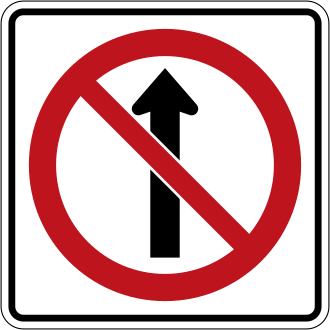
109. What does this road sign mean?
- AGoing straight is not allowed
- BRight turns are not allowed
- CLeft turns are not allowed
- DGoing straight is allowed
Why: A red slash inside a red circle means 'no'. This regulatory sign indicates that going straight is prohibited here.
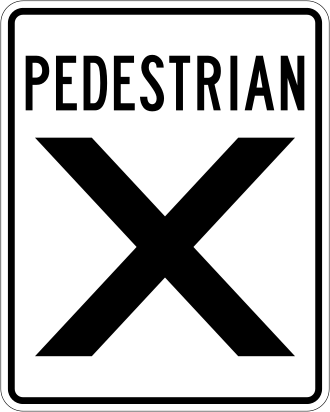
110. What does this road sign mean?
- AThis is a pedestrian crossover
- BThis is a construction zone
- CUneven pavement is ahead
- DThis is a school zone
Why: Be prepared to stop and yield the right of way to pedestrians. You may not pass within 30 m of a pedestrian crossover.
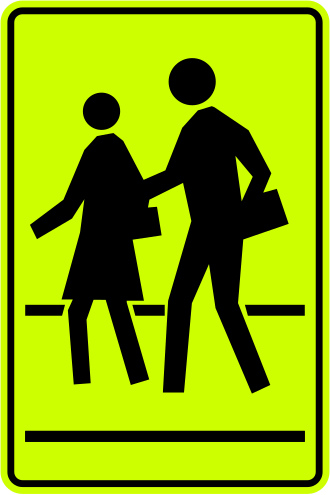
111. What does this road sign mean?
- APassing is not allowed
- BThis is a wheelchair crossing
- CWatch for people with disabilities
- DA school crossing is ahead
Why: This warning sign is a school crossing ahead road sign. Follow the directions of the crossing guard or school safety patroller.
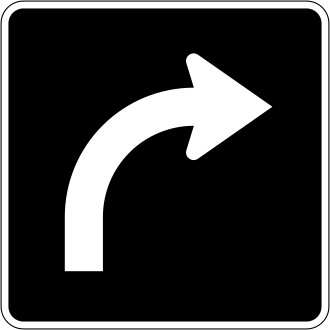
112. What does this road sign mean?
- AAll turns are allowed
- BYou must turn right
- CYou may not park between here and the corner
- DRight turns are allowed
Why: This is a right turn only sign. You must turn right from this lane.
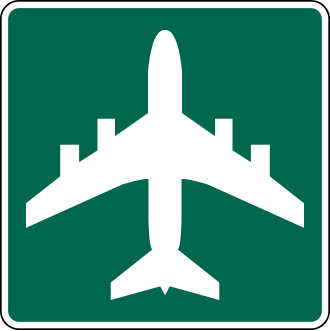
113. What does this road sign mean?
- AThis is a route to an airport
- BThis is a landing area for helicopters
- CAirplanes fly low overhead
- DAirplanes land on this road
Why: Information signs are square signs. This information sign indicates that an airport is ahead.
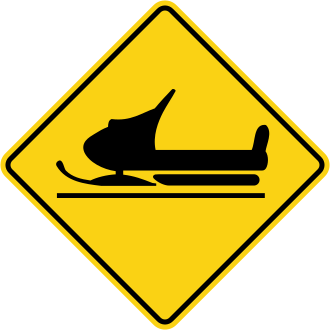
114. What does this road sign mean?
- AThere is a snowmobile repair shop ahead
- BThere is snowmobile parking ahead
- CSnowmobiles cross this road ahead
- DSnowmobiles are not allowed ahead
Why: This warning sign indicates that snowmobiles cross this road ahead.
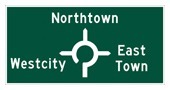
115. What does this sign mean?
- AIt indicates an upcoming railway crossing
- BIt shows directions to nearby towns or cities
- CIt shows distances to towns or cities
- DIt shows the exits on the upcoming roundabout and where they will take you
Why: After you pass this sign and approach the roundabout, you should also encounter a roundabout warning sign.
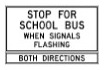
116. What does this sign mean?
- AWhen a school bus stops with its red lights flashing and its stop sign arm swung out, you must stop at any point before reaching the bus
- BWhen a school bus stops with its red lights flashing and its stop sign arm swung out, you may proceed if you are on the opposite side of the road
- CWhen a school bus stops with its red lights flashing and its stop sign arm swung out, you must slow down to 25 km/h and proceed with caution
- DWhen a school bus stops with its red lights flashing and its stop sign arm swung out, you must stop at least 20 m from the bus
Why: When a school bus stops with its red lights flashing and its stop sign arm swung out, you must stop at least 20 m from the bus. Remain stopped until the stop sign arm is retracted and the red lights stop flashing. The only exception is if the bus is stopped on the opposite side of a divided highway, in that case you don't have to stop for it.
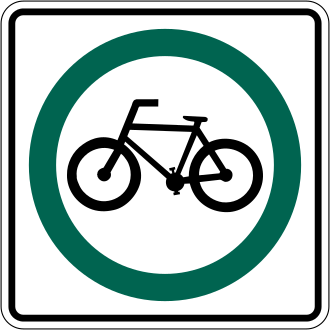
117. What does this road sign mean?
- AThis lane is for bicycles only
- BThis road is an official bicycle route
- CNo pedestrians are allowed on this road
- DThere is a bicycle crossing ahead
Why: This road is an official bicycle route. Watch for cyclists and be prepared to share the road with them.

118. What does this sign mean?
- AThis is a pedestrian crossover, be prepared to stop and yield the right of way to pedestrians
- BThere is a railway crossing ahead, be alert for trains
- CThere is a hazard close to the edge of the road, the downward lines show the side on which you may safely pass
- DVehicles cannot change lanes into or out of a high-occupancy vehicle (HOV) lane in this area
Why: Vehicles cannot change lanes into or out of a high-occupancy vehicle (HOV) lane in this area.
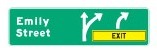
119. What does this sign mean?
- AYou may exit if you remain in the right-hand lane
- BYou must not drive in the right-hand lane under any circumstances
- CYou must exit if you remain in the right-hand lane
- DThis is the end of the highway, you must move into the right-hand lane
Why: If you don't want to exit this roadway, move out of the right-hand lane.
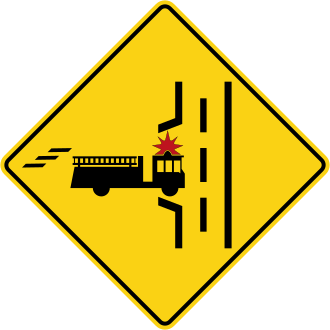
120. What does this road sign mean?
- AFire truck entrance ahead on the right
- BTruck entrance ahead on the right
- CBus entrance ahead on the right
- DNone of the above
Why: This sign indicates an upcoming fire truck entrance on the right. Prepare to yield to fire trucks entering the roadway.
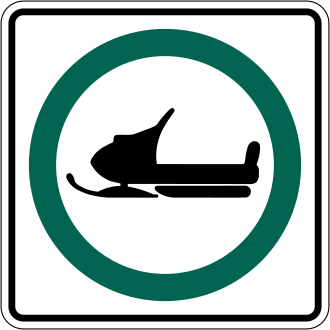
121. What does this road sign mean?
- AThere is a snowmobile repair shop ahead
- BOnly snowmobiles may park here
- CSnowmobiles may use this road
- DSnowmobiles may not use this road
Why: A green circle indicates permission. This regulatory sign means that snowmobiles may use this road.
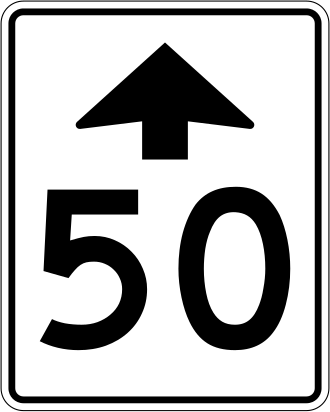
122. What does this road sign mean?
- ASpeed limit changes to 50 km/h ahead
- BEnd of a 50 km/h zone
- CSpeed limit for rural school zones
- DMaximum speed of 50 km/h from this sign to the next one
Why: This regulatory sign indicates that there is a speed limit change ahead. Be prepared to slow down to the posted speed, which begins where you see another speed limit sign without the word 'ahead'.
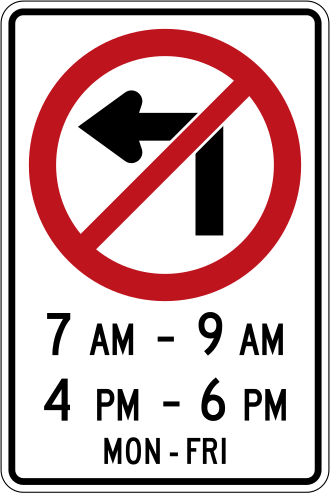
123. What does this sign mean?
- ADo not turn left except during the times shown
- BDo not turn left
- CDo not turn left during the times shown
- DDo not make a U-turn except during the times shown
Why: A red slash inside a red circle means 'no'. This sign means that left turns are prohibited during the times shown on the sign, in this case, from 7 to 9 a.m. and from 4 to 6 p.m., Monday to Friday.
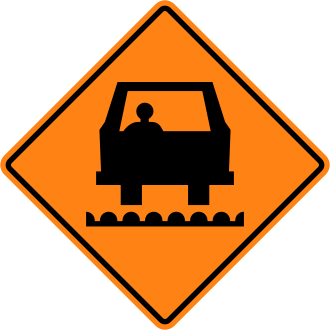
124. What does this road sign mean?
- ABridge crossing ahead
- BGravel road ahead
- CMilled or grooved pavement ahead
- DNone of the above
Why: This sign means that the pavement has been milled or grooved. Your vehicle's stopping ability may be affected, so obey the speed limit and drive with extra caution. Motorcyclists may experience reduced traction on these surfaces.

125. What does this road sign mean?
- AThere is a concealed side road ahead that you may not see in time
- BThe road you are on ends ahead at a T-intersection
- CDrivers on the side road ahead cannot see traffic clearly, so one may pull out in front of you
- DTraffic from the right merges into your lane ahead
Why: This is the hidden intersection sign. The arrow marks the through road, the one with the right of way, and that is the road you are on. Watch the direction of the word "hidden": it does not mean the side road is hidden from you. It means you are hidden from the driver waiting at the stop or yield sign on the side road, because their view of your approach is blocked. Slow down, cover the brake, and be ready for a vehicle to pull out.
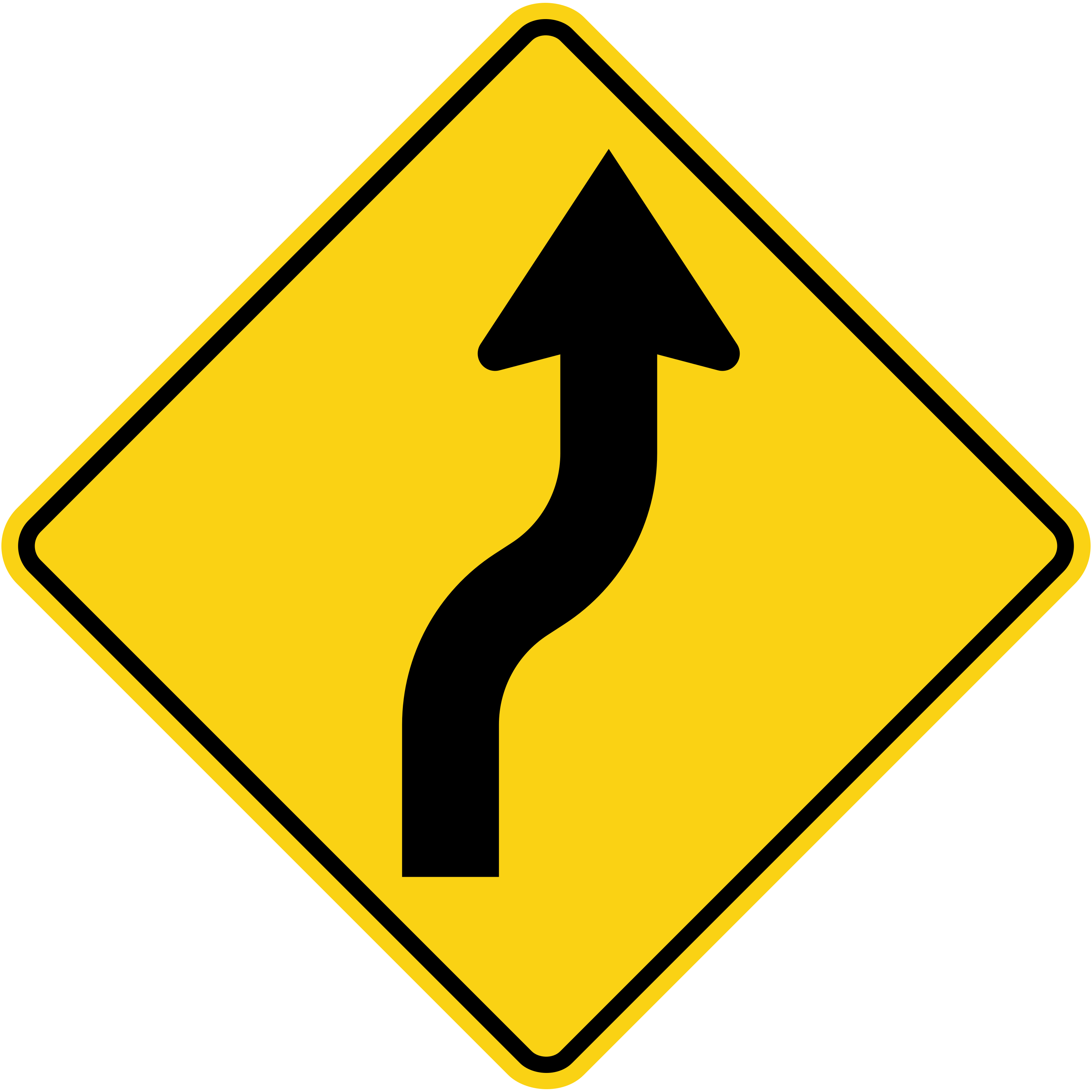
126. What does this road sign mean?
- ARoad ahead turns left then right
- BNarrow road ahead
- CIntersection ahead
- DRoad ahead turns right then left
Why: This sign indicates a double curve ahead. The road ahead first turns right, then left.
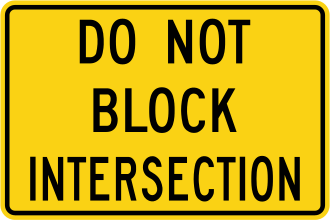
127. What does this road sign mean?
- ABe cautious of pedestrians
- BDo not block the intersection
- CWatch for traffic signals
- DDo not slow down
Why: The do not block intersection sign warns you not to enter the intersection if traffic is blocked beyond it, because you might end up blocking the intersection for the cross traffic. This warning sign is rectangular rather than diamond-shaped because of its relatively long text.
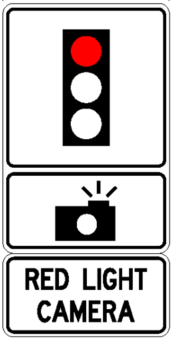
128. What does this road sign mean?
- AVehicles that stop at this red light will be photographed
- BThere are police officers at this intersection
- CYou must stop for a red light at this intersection
- DVehicles that don't stop at this red light will be photographed
Why: This intersection is monitored with a red light camera. The camera photographs vehicles that run a red light here, and their owners may be cited. The ticket goes to the vehicle's registered owner no matter who was driving, and no demerit points are issued.
Rules of the Road (239)
1. Unless otherwise posted, the maximum speed limit in cities, towns and villages is:
- A40 km/h
- B60 km/h
- C30 km/h
- D50 km/h
Why: Where there are no posted speed limits, the maximum speed is 50 km/h in cities, towns and villages, and 80 km/h elsewhere.
2. Unless otherwise posted, the maximum speed limit outside cities, towns and built-up areas is usually:
- A60 km/h
- B70 km/h
- C80 km/h
- D100 km/h
Why: On most roads outside built-up areas the default limit is 80 km/h unless a sign shows a different speed.
3. As a G1 driver, your blood-alcohol level while driving must be:
- AUnder 0.05
- BUnder 0.08
- CZero
- DUnder 0.02
Why: Ontario has zero tolerance for novice (G1/G2) and young drivers. Your blood-alcohol level must be zero.
4. A flashing green light at an intersection where left and right turns are permitted means:
- AYou may go straight
- BYou may turn left
- CYou may turn right
- DAll of the above
Why: When you face a flashing green light, or a left-pointing green arrow and a green light, you may turn left, go straight ahead or turn right from the proper lane. This is called an advanced green light, because oncoming traffic is stopped at a red light. Pedestrians must not cross on a flashing green light unless a pedestrian signal tells them to.
5. If the signal light changes from green to yellow (amber) as you approach an intersection, what should you do?
- AContinue through the intersection without slowing or stopping
- BSpeed up to get past the yellow light before it turns red
- CStop, if a stop cannot be made safely, proceed with caution
- DSound your horn to warn pedestrians and other drivers that you do not intend to stop
Why: Never speed up in an attempt to get past the yellow light before it turns red.
6. You are approaching an intersection with a flashing red light. You must:
- AProceed with caution
- BChange lanes
- CMake a U-turn
- DCome to a complete stop, and proceed only when it's safe
Why: A flashing red light means the same as a stop sign, come to a complete stop, and proceed only when it's safe.
7. When you hold a G1 licence, you may NOT drive:
- AWith a passenger in the back seat
- BBetween midnight and 5 a.m.
- COn any city street
- DIn the rain
Why: G1 drivers may not drive between midnight and 5 a.m. They also need a qualified accompanying driver in the front seat at all times.
8. A level one (class G1) learner driver may practice driving under the supervision of a licensed driver who has at least ________ of driving experience.
- A2 years
- B3 years
- C5 years
- D4 years
Why: A G1 learner driver may practice driving under the supervision of a driver who holds a valid class G or higher licence, has a blood alcohol concentration of less than 0.05%, and has at least four years of driving experience. This accompanying driver must be the only passenger in the front seat.
9. A G1 driver may drive on a 400-series highway only when:
- ATraffic is light
- BAccompanied by a licensed driving instructor
- CIt is daytime
- DNever under any condition
Why: G1 drivers may not drive on 400-series highways or other high-speed expressways unless their accompanying driver is a licensed driving instructor.
10. The two-second rule is used to determine:
- AHow fast you can react to obstacles
- BHow fast you are travelling
- CWhether you are following at a safe distance
- DHow much gas you will save
Why: A safe following distance is at least two seconds behind the vehicle you are following. This lets you see around the vehicle ahead and gives you enough space to stop suddenly if necessary. To estimate the time, wait until the rear end of the vehicle in front of you passes any fixed point on the roadway, such as a road sign. As you count to yourself the elapsed time in seconds, the front of your car should pass the same point no less than two seconds later.
11. A school bus with flashing red signal lights is stopped ahead of you. What does the law require you to do when meeting or overtaking the bus?
- ARemain stopped until the bus proceeds or the red signal lights stop flashing
- BIt does not matter, as long as you sound your horn
- CSlow down and pass with care
- DWait for approaching vehicles to pass
Why: Whenever you approach a stopped school bus with its upper alternating red lights flashing, you must stop for it, regardless of whether you are behind the bus or approaching it from the front. The only exception is if the school bus is stopped on the opposite side of a roadway divided by a median strip.
12. When a right turn on a red signal light is permitted, what must you do before entering the intersection and making the turn?
- ASignal and stop
- BSlow down and proceed with caution
- CStop, then edge into traffic
- DSignal and slow down
Why: Before you turn, you must signal your intention well in advance, and at a red light you must come to a complete stop. Then make the turn so as not to interfere with other traffic, including pedestrians.
13. When driving on a two-way street, you hear the siren of an approaching emergency vehicle. What does the law require you to do?
- ASignal the driver to pass
- BContinue at the same speed
- CSpeed up and get out of the way
- DPull to the right as far as possible and stop
Why: Pull to the right as far as possible and stop. Remain stopped until the emergency vehicle has passed, don't worry, other drivers will do the same.
14. When passing a stopped emergency or tow vehicle with its lights flashing, the 'move over' law requires you to:
- AHonk as you pass
- BSlow down and, on a multi-lane road, move over to leave a lane of space if it is safe
- CStop completely
- DMaintain your speed
Why: Slow down and proceed with caution. On a road with more than one lane in your direction, move into another lane to leave space if you can do so safely.
15. When you are in a roundabout:
- AYou can change lanes
- BDrive in a counterclockwise direction
- CDrive in a clockwise direction
- DYou can stop
Why: When you are in a roundabout, keep right of the central island and drive in the counterclockwise direction until you reach your exit. Don't pass large vehicles or change lanes, and don't stop inside the roundabout except if necessary to avoid a collision.
16. In Ontario, when must you turn on your headlights?
- ABetween half an hour before sunset and half an hour after sunrise, and at any other time you cannot see clearly for a distance of 150 m
- BBetween half an hour after sunset and half an hour before sunrise, and at any other time you cannot see clearly for a distance of 150 m
- CBetween dusk and dawn, and at any other time you cannot see clearly for a distance of 150 m
- DBetween sunset and sunrise, and at any other time you cannot see clearly for a distance of 150 m
Why: You must turn your headlights on between half an hour before sunset and half an hour after sunrise, and whenever fog, snow or rain keeps you from clearly seeing people or vehicles less than 150 m away.
17. You may not park within ________ of a fire hydrant.
Why: Do not park within 3 m of a fire hydrant, on or within 100 m of a bridge, or within 6 m of a public entrance to a hotel, theatre or public hall when it is open to the public.
18. At a pedestrian crossover (crossover lines and signs), drivers must:
- ASlow down and weave around pedestrians
- BStop and yield the whole crossover to pedestrians, and not pass another vehicle stopped there
- CProceed if the pedestrian is on the far side
- DSound the horn to warn pedestrians
Why: Stop and yield to pedestrians at a crossover, let them cross the entire road, and never pass a vehicle stopped for a pedestrian crossover.
19. To get your vehicle out of a skid, you should:
- ASteer in the direction you want to go
- BSteer straight ahead
- CApply the brakes hard
- DSteer in the opposite direction of the skid
Why: Straighten out your steering wheel slowly. Don't turn your steering wheel in different directions while trying to correct the skid, work on one direction at a time. If you've oversteered and the vehicle slides in the opposite direction, repeat the same procedure. Always steer in the direction you want to go.
20. Using a cell phone while driving:
- AIncreases the risk of a collision
- BIs acceptable
- CShould be avoided, but it isn't illegal
- DIs a good way to multitask
Why: Using a cell phone while driving takes the driver's attention away from the task of driving and increases the risk of a collision. In Ontario, it is illegal to use a hand-held cell phone while you are driving.
21. If a fully licensed driver accumulates 15 or more demerit points on his or her record, the driver's licence will be suspended for:
- A60 days
- B90 days
- C30 days
- D14 days
Why: A fully licensed driver whose record reaches 15 or more demerit points has their licence suspended for 30 days. The driver must surrender their licence to the Ministry of Transportation, if they fail to do so, they may lose it for up to two years.
22. When changing lanes on a multi-lane highway, a driver should:
- ACheck the mirrors and signal
- BUse the horn
- CActivate the emergency signals
- DMove into the new lane as fast as possible
Why: Before changing lanes, the driver should make sure it is safe by checking the mirrors and doing a shoulder check to check the blind spot. Then the driver should signal and move gradually into the new lane.
23. You are on a two-lane road. There is a solid yellow line next to a broken yellow line in the centre of the road. The solid yellow line is on your side of the road. Which of the following statements is true?
- APass only when no traffic is in sight
- BIt is safe to pass
- CIt is unsafe to pass
- DIt is safe to pass in the daytime
Why: A solid line at the left of your lane means it is unsafe to pass. A broken line at the left of your lane means you may pass if the way is clear.
24. Everyone in the vehicle must:
- AWear a seat belt only on the highway
- BWear a properly fastened seat belt (or be in a correct child seat) at all times
- CWear a seat belt only in the front seats
- DWear a seat belt only if under 18
Why: The driver and every passenger must wear a properly adjusted seat belt or use an appropriate child car seat/booster. The driver is responsible for passengers under 16.
25. When approaching a yellow (school bus) light on a school bus that is NOT yet stopped, you should:
- ASpeed up to get past it
- BSlow down and prepare to stop, it is about to load or unload children
- CIgnore it until the red lights flash
- DPass on the left immediately
Why: Flashing amber lights mean the bus is about to stop to load or unload children. Slow down and be ready to stop for the flashing red lights.
26. While driving at night, if you meet an oncoming vehicle with blinding bright lights, what should you do?
- ALook at the headlights of the approaching vehicle
- BOpen and shut your eyes rapidly
- CLook to the right edge of the roadway
- DTurn on your high-beam headlights
Why: To reduce glare, don't look directly at the headlights of oncoming traffic. Instead, look to the right edge of the roadway. To cut glare from the rear, adjust your rear-view mirror or use a day/night mirror. Reduce your speed until your eyes have recovered from the glare.
27. Never change lanes in traffic without:
- AGiving the proper signal and looking to make sure that the lane change can be performed safely
- BLooking into the rear-view mirror only
- CBlowing your horn and looking to make sure that the lane change can be performed safely
- DGiving the proper signal and slowing down
Why: Before changing lanes, you must always give the proper signal and look to make sure the move can be made safely. First check your mirrors, then look over your shoulder to check your blind spots.
28. Hydroplaning occurs during heavy rain, when a vehicle's tires ride up on the water on the roadway. To help prevent hydroplaning, you should:
- AEnsure that the tires of your vehicle are inflated to the proper tire pressures
- BEnsure that the tires on your vehicle have good tread depth
- CSlow down when driving in the rain
- DDo all of the above
Why: At higher speeds on a wet road, your tires may lose their grip on the road and ride like skis on the film of water. This is called hydroplaning. It is more likely to happen if your tires are worn or underinflated.
29. At an intersection with stop signs in all directions (a four-way stop), the right-of-way goes to:
- AThe largest vehicle
- BThe driver who stops first, if two stop together, the one on the right goes first
- CWhoever arrives fastest
- DThe vehicle turning left
Why: At an all-way stop, the first vehicle to stop goes first. If two stop at the same time, the vehicle on the right has the right-of-way.
30. If you miss your exit on an expressway, what should you do?
- AMake a U-turn
- BStop on the shoulder and check your map
- CBack up if there are no other vehicles around
- DTake the nearest exit
Why: If you miss your exit on an expressway, do not stop, back up, or attempt to make a U-turn, you will increase your risk of being hit by another vehicle. Instead, get off the highway at the next exit and find a way to get back.
31. When driving in heavy fog, you should use:
- AYour parking lights and high-beam headlights
- BHigh-beam headlights
- CLow-beam headlights
- DParking lights
Why: If there is a fog warning, delay your trip until it clears if possible. If you must drive in fog, use your low-beam headlights, high beams reflect off the moisture droplets in the fog, making it harder to see. You may also use fog lights if your vehicle is equipped with them. Your parking lights are for parking, not driving.
32. Before reversing (backing up) your vehicle, you should:
- ARely only on your mirrors
- BTurn your body and look back through the rear window, and check all around first
- CSound your horn and reverse
- DOpen your door and lean out
Why: Check all around the vehicle, then turn your head and look back over your shoulder through the rear window as you reverse slowly.
33. Why is it necessary to look over your shoulder when changing lanes?
- AIt will help you see who is driving
- BYour mirrors always have blind spots
- CIt is good exercise for your neck
- DAll of the above are valid reasons
Why: There will always be blind spots, no matter how you adjust your mirrors. Therefore, when changing lanes, you must also look over your shoulder to check your blind spot in the direction of the lane change.
34. If you are involved in an accident in which someone is injured, you must:
- AReport the accident to the Ministry of Transportation within 48 hours
- BReport the accident to the Ministry of Transportation immediately
- CReport the accident to the police immediately
- DReport the accident to the police within 48 hours
Why: If you are involved in an accident in which someone is injured, or there is more than $5,000 worth of damage to vehicles or property, you must report the accident to the police immediately.
35. What is the main purpose of the graduated licensing system (G1, G2, G)?
- ATo raise more money in fees
- BTo let new drivers gain skills and experience in stages under lower-risk conditions
- CTo slow down the licensing process for no reason
- DTo limit how many people can drive
Why: Graduated licensing eases new drivers in over at least 20 months, building experience under conditions with extra rules so they learn safely.
36. For a fully licensed driver, it is a criminal offence to drive with a blood-alcohol concentration (BAC) at or over:
Why: 0.08 (80 mg of alcohol in 100 mL of blood) is the criminal limit. The 'warn range' of 0.05–0.079 also brings immediate penalties. Novice and young drivers must be at zero.
37. Ontario's zero blood-alcohol rule applies to:
- AOnly G1 drivers
- BAll novice (G1/G2) drivers and every driver aged 21 and under
- COnly drivers under 18
- DOnly commercial drivers
Why: Zero tolerance for alcohol (and drugs) applies to all novice drivers (G1/G2) and to every driver aged 21 and under, regardless of licence class.
38. Driving while impaired by cannabis or other drugs is:
- ALegal if you feel fine
- BOnly a problem with alcohol
- CJust as illegal as driving impaired by alcohol
- DAllowed for medical users
Why: Drug-impaired driving (including legal or medical cannabis and some prescription drugs) is treated as seriously as alcohol impairment, with the same penalties.
39. If a level one (class G1) or level two (class G2) driver accumulates nine or more demerit points within a two-year period, his or her licence will be suspended for:
- A15 days
- B1 year
- C60 days
- D30 days
Why: A level one (G1) or level two (G2) driver who reaches nine or more demerit points within two years has their licence suspended for 60 days. The driver must surrender their licence to the Ministry of Transportation, failing to do so can mean losing it for up to two years.
40. How long do demerit points stay on your driving record?
- A6 months
- B1 year
- C2 years from the offence date
- DPermanently
Why: Demerit points remain on your record for two years from the date of the offence.
41. A child can stop using a booster seat once they are at least 8 years old, 145 cm (4'9") tall, OR weigh at least:
- A20 kg
- B36 kg (80 lb)
- C50 kg
- Dany weight
Why: A child may move from a booster seat to a seat belt after reaching any one of: 8 years old, 145 cm tall, or 36 kg (80 lb).
42. A driver is responsible for requiring their passengers to buckle up:
- AOnly those passengers over 18 years of age
- BOnly those passengers under 16 years of age
- COnly those passengers in the front seat
- DOnly those passengers who are 16 years of age or older
Why: In Ontario, the driver is legally responsible for making sure every passenger under 16 years of age is properly buckled up or in the correct child seat.
43. Driving 40 km/h or more over a limit below 80 km/h (or 50 km/h over on faster roads) can be charged as stunt/racing, which can bring:
- AOnly a small fine
- BAn immediate roadside licence suspension and vehicle impoundment
- CA warning
- DNo penalty on a first offence
Why: Excessive speeding counts as stunt driving, police can immediately suspend your licence and impound your vehicle at the roadside, on top of heavy fines and possible jail.
44. In a community safety zone, traffic fines are:
- AThe same as elsewhere
- BReduced
- CIncreased (often doubled)
- DWaived
Why: Fines for traffic offences are increased (often doubled) in community safety zones, which are areas near schools, parks and seniors' residences.
45. You must NOT pass another vehicle when:
- AThe road is straight and clear
- BYou cannot see far enough ahead to pass safely (hills, curves) or a solid line is on your side
- CTraffic is light
- DYou are in a hurry
Why: Never pass where you can't see oncoming traffic (near hills, curves, intersections or railway crossings) or where a solid line is on your side of the centre.
46. What should you do when the driver of another vehicle signals that he or she intends to pass your vehicle?
- ASignal the other driver to remain behind you
- BMove to the right side of your lane and do not increase your speed
- CMove to the left to block the passing vehicle
- DMove to the right side of your lane and increase your speed
Why: If the driver of another vehicle signals that he or she intends to pass your vehicle, help that driver pass you safely. Move to the right side of your lane and do not increase your speed until the passing vehicle has passed your vehicle. In fact, be prepared to slow down to help the passing driver get in front of you more quickly, to prevent a collision.
47. At an intersection with no signs or lights, if two vehicles arrive at about the same time, who has the right of way?
- AThe faster vehicle
- BThe vehicle on the left
- CThe vehicle on the right
- DThe larger vehicle
Why: At an uncontrolled intersection, yield to whoever arrived first, if you arrive together, the vehicle on the right has the right of way.
48. If two vehicles approach an uncontrolled intersection from opposite directions at the same time, one going straight while the other is turning left, which vehicle has the right of way?
- AThe one turning left has the right of way
- BBoth have the right of way
- CBoth vehicles should stop first and then proceed
- DThe one going straight has the right of way
Why: If two vehicles approach an uncontrolled intersection from opposite directions at the same time, one going straight while the other is turning left, the vehicle going straight has the right of way.
49. When pulling out of a private driveway or parking lot onto a road, you must:
- ATake the right of way
- BYield to all traffic on the road and pedestrians on the sidewalk
- CHonk and go
- DStop only for cars
Why: Vehicles entering a road from a driveway or lot must yield to all traffic on the road and to pedestrians on the sidewalk.
50. If you fail to stop for a stopped school bus whose red lights are flashing, you will face which of the following penalties for a first offence?
- AA fine of up to $500 and 4 demerit points
- BA requirement to retake your road tests
- CA one-year jail sentence
- DA fine of up to $2,000 and 6 demerit points
Why: If you fail to stop for a stopped school bus whose red lights are flashing, you will be fined $400 to $2,000 and receive six demerit points if this was your first offence. For each subsequent offence, you will be fined $1,000 to $4,000, receive six demerit points, and possibly be sentenced to jail for up to six months.
51. You are approaching a railway crossing. The crossing signals are warning that a train is approaching. What should you do?
- AIncrease your speed and cross the tracks as quickly as possible
- BStop at least 2 m from the nearest rail
- CSlow down and proceed with caution
- DStop at least 5 m from the nearest rail
Why: When approaching a railway crossing at which the crossing signals are warning of an approaching train, you must stop at least 5 m (15 ft) from the nearest rail. Before proceeding across the tracks, wait until the signal lights stop flashing and the crossing gates, if any, have risen. Never try to race a train to a railway crossing, a train cannot yield the right of way to you.
52. Before driving across railway tracks in slow or heavy traffic, you should make sure:
- AThe car behind is close
- BThere is room for your whole vehicle on the far side so you won't stop on the tracks
- CYou can beat any train
- DThe radio is off
Why: Never enter a crossing unless there is space for your entire vehicle on the other side. Stopping on the tracks is deadly.
53. Parking is NOT allowed:
- AOn a quiet residential street
- BOn a crosswalk, within 3 m of a fire hydrant, or blocking a driveway
- CIn a marked parking lot
- DBeside a curb
Why: You may not park on or near crosswalks, within 3 m of a fire hydrant, in front of driveways, on bridges, or anywhere you block traffic or sightlines.
54. If your brakes fail:
- AApply the parking brake gently but firmly
- BPump the brake pedal
- CTurn on your emergency flashers
- DDo all of the above
Why: If your brakes fail, try pumping the brake pedal to temporarily restore hydraulic brake pressure. Also downshift into a lower gear and use the engine braking effect to slow your vehicle. If these methods don't work, apply the parking brake gently but firmly while holding the release button, and be prepared to release it if the wheels lock.
55. If one of your tires suddenly blows out while you're driving, what should you do?
- ABring the vehicle to a stop off the road
- BTake your foot off the gas pedal
- CConcentrate on steering
- DDo all of the above
Why: If one of your tires blows out while you're driving, do not brake right away, braking could cause you to lose control. Instead, focus on steering, take your foot off the gas pedal to slow down, and bring your vehicle to a full stop off the road.
56. If your right wheels drop off the roadway, what is the best way to get back onto the roadway?
- AApply the brakes to reduce your speed
- BSteer hard to the left
- CApply the brakes and steer hard to the left
- DTake your foot off the gas pedal, let your vehicle slow down, and gently steer back onto the roadway
Why: If your right wheels drop off the road, do not make a sharp turn. Instead, take your foot off the gas pedal and let your vehicle slow down, then gently steer back onto the roadway.
57. If your accelerator (gas pedal) sticks down, you should:
- APump it and hope
- BShift to neutral, brake, steer off the road, then turn off the engine once stopped
- CSwitch off the engine while moving fast
- DKeep driving and ignore it
Why: Shift to neutral to cut power, brake and steer to the shoulder, then turn off the engine after stopping. Don't switch it off at speed, you can lose steering and braking assist.
58. In Ontario, when driving at night, you must dim your headlights:
- AWhenever you are within 60 m of an oncoming vehicle, or within 150 m of a vehicle you are following
- BWhenever you are within 400 m of another vehicle
- CWhenever you are within 150 m of another vehicle
- DWhenever you are within 150 m of an oncoming vehicle, or within 60 m of a vehicle you are following
Why: In Ontario, you must dim your headlights to low beam whenever you are within 150 m of an oncoming vehicle, or within 60 m of a vehicle you are following. These rules apply to all roads, including divided ones. Bright lights can reflect off the other vehicle's mirrors and blind the driver.
59. Overdriving your headlights at night is dangerous because:
- AYou cannot stop within the distance that you can see ahead
- BIt can drain the car battery
- CYour headlights are too bright
- DYou are driving too fast
Why: Your headlights illuminate the road ahead for a certain distance. If your stopping distance is greater than that, you may not be able to stop in time to avoid a hazard that your headlights just illuminated. For example, low-beam headlights have about a 45 m range, but at 80 km/h your stopping distance is about 60 m.
60. Black ice is most likely to form first on:
- AOpen, sunny roads
- BBridges, overpasses and shaded areas
- CGravel roads
- DHilltops only
Why: Bridges, overpasses and shaded spots freeze first because cold air reaches them from above and below. Slow down on them in cold, damp weather.
61. If a snow squall causes a whiteout and you can't see, the safest action is to:
- ASpeed up to get through it
- BStop in your lane
- CPull completely off the road, turn on your hazard lights, and wait
- DTurn off all lights and keep driving
Why: Get well off the road, turn on your hazard lights, and wait for conditions to improve. Stopping in a travel lane risks a rear-end collision.
62. A properly adjusted head restraint (headrest) helps prevent:
- AEye strain
- BWhiplash and neck injury in a collision
- CGlare
- DDrowsiness
Why: Set the head restraint level with the back of your head to reduce whiplash and neck injury, especially in a rear-end crash.
63. Under-inflated or worn (bald) tires:
- AImprove grip
- BReduce control and increase the risk of hydroplaning and blowouts
- CSave fuel
- DHave no real effect
Why: Keep tires properly inflated and treaded. Low or bald tires reduce grip and control and make hydroplaning and blowouts more likely.
64. When passing a cyclist, you must leave at least ________ of space between your vehicle and the cyclist.
Why: When passing a cyclist, allow at least one metre of space between your vehicle and the cyclist, where possible. If the lane is too narrow to share, change lanes to pass the cyclist.
65. When getting out of your car on a busy street, you should open your door:
- AAfter making the proper signals
- BWhen you are sure that it can be done safely
- CWhen you turn on your four-way flashers
- DAt any time
Why: When getting out of your car on a busy street, you should open your door only when it can be done safely. Before opening the door, watch for approaching vehicles, including motorcycles and bicycles.
66. Large trucks and buses have big blind spots ('no-zones'). You should:
- ADrive close behind them
- BLinger beside them
- CAvoid their blind spots, don't tailgate, and pass promptly on the left
- DCut in front sharply
Why: If you can't see the truck driver's mirrors, they can't see you. Stay out of the no-zones, don't tailgate, and don't cut in front sharply.
67. A pedestrian using a white cane or guide dog:
- AMust wait for all cars
- BHas the right of way, you must stop and yield
- CCan be passed slowly
- DMust use a crosswalk only
Why: A white cane or guide dog signals a pedestrian who is blind or has low vision. They have the right of way, stop and let them cross.
68. To move from G1 to G2, you must pass a road test after holding G1 for:
- A3 months
- B12 months, or 8 months with an approved BDE course
- C24 months
- D1 month
Why: You can take the G1 road test after 12 months, or after 8 months if you complete an MTO-approved Beginner Driver Education course.
69. A G2 driver aged 19 or younger who has 6 months or less of driving experience may carry ________ unrelated passengers aged 19 or younger between midnight and 5 a.m.
Why: A G2 driver aged 19 or younger who has only 6 months or less of driving experience may carry only one unrelated passenger aged 19 or younger between midnight and 5 a.m. If the G2 driver has more than six months of driving experience, he or she may carry up to three. These restrictions do not apply if the G2 driver is accompanied by a fully licensed driver in the front seat, and there is no restriction on the number of family members.
70. While driving, a level two (class G2) driver must not have a blood alcohol concentration greater than:
Why: Level one and level two drivers must have a BAC of zero when driving. New drivers caught drinking and driving will receive an immediate roadside suspension and can also be charged under the Criminal Code.
71. If you become very tired while driving, you should:
- AStop and rest
- BDrive faster to your destination
- COpen your windows to allow fresh air in the car
- DDrink coffee
Why: If you become very tired while driving, you should always stop and rest.
72. If someone is tailgating you, what should you do?
- APull over to let the tailgater pass
- BMove into another lane when it's safe to do so
- CIncrease your following distance behind the vehicle in front of you
- DDo any of the above
Why: If you're being tailgated, let the tailgater pass you. Increase your following distance behind the vehicle in front of you, this reduces the chance that you will have to stop or slow down suddenly, which might result in your getting rear-ended. On a multi-lane road, change lanes to let the tailgater pass, on a two-lane road, you may have to pull over. Never speed up in an attempt to appease the tailgater, no speed is too fast for some tailgaters.
73. Before making a U-turn, you must be sure that:
- ANo one is watching
- BIt is not prohibited by a sign and you can see clearly in both directions with no hazards
- CYou are at a red light
- DYou are on a curve
Why: Only make a U-turn where it is legal (no sign forbidding it), never on a curve or hill or near an intersection where you can't see approaching traffic clearly.
74. On a roadway where traffic is moving in both directions, in what position must you be before making a left turn?
- ATo the right of, and as close to, the centre line of the roadway as possible
- BIn any position, as long as you signal
- CClose to the right-hand side of the roadway
- DClose to the left-hand side of the roadway
Why: To make a left turn, signal well before the turn and move into the left-most lane that is going in your direction. On a two-way road, this is the lane that is just to the right of the yellow lane markings.
75. To make a right turn, you should:
- ASwing wide from the left lane
- BBe in the right lane close to the curb and turn into the right lane
- CTurn from the centre lane
- DSignal only after turning
Why: Signal early, move close to the right curb, and turn into the right-hand lane of the road you enter.
76. In rain, snow or fog, your following distance should be:
- AShorter
- BThe same two seconds
- CIncreased to three or more seconds
- DOne second
Why: Increase your following distance to at least three or four seconds (or more) in poor weather, because stopping distances grow.
77. In a hard stop with anti-lock brakes (ABS), you should:
- APump the brakes
- BApply firm, steady pressure and steer, do not pump
- CBrake very gently
- DUse only the parking brake
Why: With ABS, press the brake firmly and steadily and steer around hazards. The system prevents lock-up, pumping reduces its effectiveness.
78. The recommended hand position on the steering wheel is about:
- A12 o'clock with one hand
- B9 and 3 o'clock with both hands
- C6 o'clock with one hand
- DBoth hands at the top
Why: Picture the wheel as a clock and place both hands at 9 and 3 o'clock. Two hands in this balanced position give you the most steering control.
79. Before leaving your vehicle parked on the right side of the street facing a downgrade, you should:
- ASet your parking brake only
- BTurn your front wheels to the left and set your parking brake
- CTurn your front wheels to the right and set your parking brake
- DLeave your front wheels parallel to the curb
Why: When parking facing downhill, point your front wheels toward the curb. If the brakes fail, the curb will block the vehicle from rolling downhill. If there is no curb, point your front wheels toward the edge of the roadway, if the brakes fail, the vehicle will roll off the roadway, not into traffic.
80. When a school crossing guard steps onto the road holding a stop sign, you must:
- ADrive around them
- BStop and stay stopped until they and the children have left the road
- CSound your horn
- DSlow to 40 km/h and pass
Why: Stop and remain stopped while a crossing guard is on the road, until they and the children have safely returned to the curb.
81. When entering a freeway from an on-ramp, you should:
- AStop at the end of the ramp
- BUse the acceleration lane to match the speed of traffic, then merge into a gap
- CMerge as slowly as possible
- DCross all lanes at once
Why: Build up to the speed of freeway traffic in the acceleration lane, signal, find a gap, and merge smoothly. Don't stop unless traffic forces you to.
82. To leave a freeway, you should:
- ABrake hard in the through lane
- BSignal, move into the exit/deceleration lane, then slow down
- CSlow right down in the fast lane
- DStop and reverse if you miss the exit
Why: Signal early, move into the exit lane, and do your slowing there, not in the through lanes of fast-moving traffic.
83. 'Covering the brake' (holding your foot just over the brake pedal) is useful when:
- ACruising on the open highway
- BApproaching a hazard such as an intersection, crosswalk or parked cars
- CParking
- DNever
Why: Covering the brake near possible hazards shortens your reaction time so you can stop sooner if you need to.
84. Which of these is a driving distraction you should avoid?
- AScanning the road ahead
- BEating, grooming, or programming a GPS while the vehicle is moving
- CChecking your mirrors
- DWatching for pedestrians
Why: Anything that takes your eyes, hands or mind off driving (eating, grooming, texting, setting a GPS) is a distraction. Set up before you drive.
85. As your speed doubles, the distance needed to brake to a stop:
- AStays the same
- BRoughly doubles
- CRoughly quadruples (about four times)
- DIs cut in half
Why: Braking distance grows with the square of speed, double your speed and it takes about four times the distance to stop. Slowing down has a big safety payoff.
86. When backing up (reversing), the safest practice is to:
- AUse only the backup camera
- BCheck all around first, then turn and look back through the rear window while reversing slowly
- CReverse quickly to be done
- DRely on your mirrors only
Why: Check all around, then turn your head and look back through the rear window, reversing slowly. Cameras and mirrors both have blind spots.
87. At an intersection where there is a flashing amber (yellow) traffic light, you must:
- AContinue at the same speed
- BStop if you're making a left turn
- CStop if you're making a right turn
- DSlow down and proceed with caution
Why: A flashing amber (yellow) traffic light means slow down and proceed with caution.
88. What does a red signal light with a green arrow mean?
- AYou may turn in the direction of the arrow
- BStop and wait for the green light before turning in the direction of the arrow
- CStop and wait for a green light, the green arrow is a signal for pedestrians
- DStop, and then you may turn in the direction of the arrow
Why: A red light with a green arrow means you may proceed in the direction of the arrow with caution, after yielding to pedestrians and any vehicles still in the intersection.
89. In Ontario, you may turn LEFT on a red light only when:
- ATurning from a one-way road onto another one-way road, after a complete stop, when the way is clear
- BNo police are present
- CTurning onto any quiet street
- DNever, left turns on red are always illegal
Why: Unless a sign prohibits it, you may turn left on a red light from a one-way road onto a one-way road, after coming to a complete stop and yielding to traffic and pedestrians.
90. On a pedestrian signal, the white 'walking person' symbol means:
- APedestrians must wait
- BPedestrians may begin to cross
- CThe crosswalk is closed
- DVehicles may drive through the crosswalk
Why: The walking-person symbol tells pedestrians they may start crossing. The flashing or steady orange hand means do not start to cross, but anyone already crossing may finish.
91. Your light turns green, but pedestrians are still in the crosswalk. You must:
- AHonk so they hurry
- BDrive around them slowly
- CLet them finish crossing safely before you proceed
- DProceed, you have the right of way
Why: A green light doesn't cancel a pedestrian's right to finish crossing. Wait until they are safely out of your path before moving.
92. At some intersections, a signal shows a white vertical bar. This means:
- AAll traffic may proceed straight
- BTransit vehicles (buses, streetcars) may go, other traffic must obey its regular signals
- CThe signal is out of order
- DPedestrians may cross diagonally
Why: A white vertical bar is a transit priority signal. It lets buses and streetcars move first, while everyone else waits for their normal green light.
93. A red X lit above your highway lane means:
- AExit ahead
- BDo not drive in that lane
- CThe lane is for trucks only
- DReduce speed in that lane
Why: Lane-control signals, a red X means the lane is closed to you, move out of it safely as soon as you can. A green arrow means the lane is open.
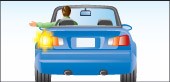
94. This driver is using a hand signal. The driver intends to:
- ASlow down or stop
- BSpeed up
- CTurn left
- DTurn right
Why: This driver intends to turn left. The left arm held straight out the window is the hand signal for a left turn.
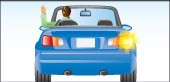
95. This driver is using a hand signal. The driver intends to:
- ATurn right
- BTurn left
- CSpeed up
- DSlow down or stop
Why: Hand signals can be used instead of your car's regular turn or brake signals. This driver intends to turn right.
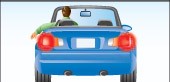
96. This driver is using a hand signal. The driver intends to:
- ATurn right
- BSlow down or stop
- CSpeed up
- DTurn left
Why: This hand signal indicates that the driver intends to slow down or stop. This hand signal is the equivalent of the brake lights on the driver's vehicle.
97. A streetcar has stopped to take on or discharge passengers where there is no safety zone. What does the law require you to do before passing the streetcar?
- APass on the left side when the way is clear
- BStop 2 m behind the rear doors where passengers are getting on or off, and proceed only when it's safe to do so
- CSound your horn and pass with caution
- DStop behind the rear of the streetcar and then proceed when it's safe to do so
Why: Stop at least 2 m behind the rear doors where passengers are getting on or off, and proceed only when it is safe to do so.
98. Yellow lines painted on a road separate:
- ATraffic moving in opposite directions
- BTraffic moving in the same direction
- CBicycle lanes from car lanes
- DParking spaces
Why: Yellow lines divide traffic travelling in opposite directions, white lines divide lanes going the same way. Knowing this helps you instantly read any road.
99. A broken yellow line on your side of the roadway means that you may:
- ANot pass
- BPass only under ideal driving conditions
- CPass if the way is clear
- DPass only during daylight hours
Why: A broken yellow line on your side of the roadway means that you may pass if the way is clear. A solid yellow line on your side means that you are not allowed to pass.
100. A double solid yellow centre line means:
- APassing is allowed for the faster lane only
- BNo vehicle may pass in either direction
- CThe left lane is closed
- DA turning lane begins
Why: Double solid yellow lines mean visibility is too limited to pass safely, crossing them to overtake is not allowed in either direction.
101. A centre lane marked on both sides with solid-and-broken yellow lines and left-turn arrows is:
- AA passing lane for fast traffic
- BA two-way left-turn lane, enter it only just before turning left
- CA bus-only lane
- DAn emergency lane
Why: A two-way left-turn lane is shared by traffic from both directions for left turns only. Enter it shortly before your turn, never use it to travel or pass.
102. How close to a pedestrian crossover may you pass another vehicle?
- AYou may pass if no pedestrians are visible
- BWithin 10 m
- CYou may not pass any vehicle within 30 m of a pedestrian crossover
- DThere is no rule about passing near crossovers
Why: Passing is forbidden within 30 metres of a pedestrian crossover. A vehicle ahead may be hiding a pedestrian you can't see, or may be about to stop for one.
103. How closely may you follow a fire truck responding to an alarm?
- ATwo car lengths
- BNo closer than 150 m
- CAs long as you don't pass it
- DNo closer than 30 m
Why: It is illegal to follow within 150 metres of a fire vehicle responding to an alarm. Emergency vehicles stop and turn unpredictably, stay well back.
104. Parking on a curve or near the top of a hill is not allowed unless your vehicle can be seen by other drivers from at least:
- A30 m away in each direction
- B60 m away in each direction
- C125 m away in each direction
- D10 car lengths away
Why: Never park where approaching drivers can't see your vehicle from at least 125 metres in both directions, on curves, hills or anywhere sightlines are short.
105. If your vehicle breaks down on a freeway, you should:
- AStop in your lane and turn on your hazard lights
- BSignal, pull as far onto the right shoulder as possible, turn on your hazard lights, and keep everyone away from traffic
- CGet out and flag down passing cars
- DReverse along the shoulder to the nearest exit
Why: Get fully onto the shoulder, switch on your hazard lights, and exit on the side away from traffic if you must get out. Never stand behind or beside your vehicle near live lanes.
106. Your vehicle stalls on a railway crossing and a train is approaching. You should:
- AKeep trying to restart the engine
- BPush the vehicle off the tracks yourself
- CGet everyone out immediately and walk quickly toward the train, at an angle away from the tracks
- DStay inside with seatbelts fastened
Why: Get out right away. Walking toward the oncoming train (angled away from the tracks) keeps you clear of the debris, which gets thrown forward when the train hits the vehicle.
107. After driving through deep water, your brakes feel weak. You should:
- APump the gas pedal
- BDrive slowly and apply gentle brake pressure until the brakes dry and grip normally
- CStop immediately wherever you are
- DTurn the engine off and on
Why: Wet brakes grab poorly. Test them after deep water, and dry them by braking gently and repeatedly while driving slowly until they respond normally.
108. Cruise control should NOT be used:
- AOn long highway trips
- BOn wet, icy or slippery roads
- CDuring daylight hours
- DAt speeds over 80 km/h
Why: On slippery roads cruise control can keep applying power as your tires lose grip, making a skid worse. Drive with your foot in control in rain, snow and ice.
109. Letting your engine run inside a closed garage is dangerous because:
- AIt wastes fuel
- BExhaust contains carbon monoxide, a colourless, odourless gas that can kill
- CIt overheats the engine
- DIt drains the battery
Why: Carbon monoxide in exhaust gas has no colour, smell or taste, and is deadly in enclosed spaces. Never run the engine in a closed garage, and get fresh air if you feel drowsy while driving.
110. If your headlights suddenly go out at night, you should:
- ABrake hard to a stop in your lane
- BTry the switch and high/low beam lever, if they stay out, use your signal or hazard lights and pull off the road safely
- CKeep driving, your eyes will adjust
- DFollow another car's tail lights closely
Why: Try the headlight switch and dimmer first. If the lights won't come back, use whatever lights work to stay visible and get off the road as safely as you can.
111. As a G1 or G2 driver, the number of passengers you carry must never be more than:
- ATwo
- BFour
- CThe number of working seatbelts in the vehicle
- DThere is no limit
Why: A condition of every novice licence, each person in the vehicle must have their own working seatbelt. No belt available means that passenger can't ride.
112. If you are driving slower than most of the traffic on a multi-lane road, you should:
- AUse the left lane
- BKeep to the right lane
- CUse any lane you like
- DTurn on your hazard lights
Why: Slower traffic keeps right. The left lane is for passing and faster traffic, blocking it frustrates drivers and causes risky passing.
113. A city bus in a marked bus bay turns on its left signal to re-enter traffic. You must:
- ASpeed up to get past it first
- BYield and allow the bus to merge back into your lane when it is safe
- CHonk to warn the bus
- DStop completely behind the bus bay
Why: Ontario law requires drivers to yield to a bus signalling its return to traffic from a marked bus bay. Slow down and let it in.
114. If you approach several snow plows clearing a freeway, you should NOT:
- AWait for the plows to allow traffic to safely pass
- BTry to pass between them
- CKeep a safe distance behind them
- DWait until it is safe before passing
Why: On freeways, several snow plows may be staggered across the road, clearing all lanes at the same time by passing a ridge of snow from plow to plow. Do not try to pass between them, there is not enough room to pass safely, and the ridge of wet snow can throw your vehicle out of control. Snow removal vehicles on public roadways are equipped with flashing blue lights that can be seen from a distance of 150 m.
115. An approaching private car is flashing a green light. The driver is likely:
- AA taxi accepting fares
- BA volunteer firefighter responding to an emergency, yield as a courtesy
- CAn impaired driver
- DA driving instructor
Why: In Ontario, a flashing green light on a private vehicle identifies a volunteer firefighter heading to an emergency. You aren't legally forced to yield, but you should as a courtesy.
116. If you want to pass a motorcycle, you should:
- ATurn on your high-beam headlights before you pass
- BPass it the same way that you would pass a car
- CUse half of the motorcycle's lane to pass
- DHonk your horn before you pass
Why: Motorcyclists often need to pull to the left or right side of their lane to avoid dangerous road conditions. Do not take this as an invitation to pass in the same lane. If you want to pass a motorcycle, do so by changing lanes.
117. When following a motorcycle, you should:
- AFollow closer, since motorcycles are small
- BLeave extra following distance, especially in rain or on rough or gravel surfaces
- CFollow exactly one car length behind
- DDrive beside it instead
Why: Motorcycles can stop very quickly and may swerve or fall on poor surfaces. Give them more space than you would a car, more again in bad weather.
118. An infant weighing less than 9 kg (20 lb) must travel in:
- AA rear-facing child seat
- BA forward-facing child seat
- CA booster seat
- DAn adult's lap with the seatbelt around both
Why: Babies under 9 kg must ride in a rear-facing infant seat, which supports the head and neck in a sudden stop. Never hold a child on your lap in a moving vehicle.
119. A child weighing 9–18 kg (20–40 lb) may ride in:
- AThe front seat with a regular seatbelt
- BA forward-facing child seat secured with a tether strap
- CNo restraint, if the trip is short
- DA booster seat only
Why: Children 9–18 kg may use a forward-facing child seat anchored with a tether strap (rear-facing longer is even safer). Booster seats come later, at 18–36 kg.
120. If you change your name or address, you must notify the Ministry of Transportation within:
- A14 days
- B30 days
- C45 days
- D6 days
Why: If you change your name or address, you are required to notify the Ministry of Transportation within 6 days. You will also need a new licence.
121. What documents may a police officer require a motor vehicle owner to produce?
- AThe motor vehicle ownership document, if he or she is operating a motor vehicle
- BA valid driver's licence
- CA liability insurance card, if the motor vehicle is insured
- DAll of the above
Why: A police officer may require a motor vehicle owner to produce a liability insurance card, vehicle ownership documents, and a valid driver's licence.
122. A novice driver who is convicted of distracted driving will face which of the following penalties for a third offence?
- AA fine, licence suspension and six demerit points
- BA fine, licence cancellation and removal from the graduated licensing system
- CA fine, licence suspension and three demerit points
- DLicence cancellation and removal from the graduated licensing system, but no fine
Why: A novice driver convicted of distracted driving receives no demerit points. Instead, first offence, a fine of up to $1,000 and a 30-day licence suspension, second offence, a fine of up to $2,000 and a 90-day suspension, third offence, a fine of up to $3,000, licence cancellation and removal from the graduated licensing system, which means beginning the GLS over again to obtain a new licence.
123. A G2 driver aged 19 or younger who has more than 6 months of driving experience may carry ________ unrelated passengers aged 19 or younger between midnight and 5 a.m.
Why: A G2 driver aged 19 or younger who has only 6 months or less of driving experience may carry only one unrelated passenger aged 19 or younger between midnight and 5 a.m. If the G2 driver has more than six months of driving experience, he or she may carry up to three unrelated passengers. These restrictions do not apply if the G2 driver is accompanied by a fully licensed driver sitting in the front seat. There is no restriction on the number of family members that the G2 driver may carry.
124. When parking facing UPHILL beside a curb, turn your front wheels:
- ASharply toward the curb
- BAway from the curb, then let the vehicle roll back gently until the tire rests against the curb
- CStraight ahead
- DIt makes no difference
Why: Facing uphill with a curb, turn the wheels toward the road and roll back so the curb blocks the tire. If the brakes let go, the curb stops the car. Facing downhill, turn them toward the curb instead.
125. When parking on a hill where there is NO curb, turn your front wheels:
- AToward the edge of the road, so the vehicle would roll away from traffic
- BToward the centre of the road
- CStraight ahead
- DEither way, as long as the parking brake is set
Why: With no curb to catch a rolling vehicle, aim the front wheels toward the shoulder (uphill or downhill) so a runaway car leaves the road instead of crossing into traffic. Always set the parking brake too.
126. When leaving a roundabout, you should:
- AStop before exiting
- BSignal right as you pass the exit just before the one you want
- CSignal left
- DNever signal inside a roundabout
Why: Signal your exit, as you pass the exit before yours, turn on your right signal so drivers waiting to enter know you are leaving the circle.
127. When approaching an intersection, you notice the roadway beyond the intersection is blocked with traffic. What should you do?
- ASound your horn to warn traffic ahead to move on
- BKeep as close as possible to the car ahead
- CProceed slowly into the intersection until traffic ahead moves on
- DStop before entering the intersection, and wait until traffic ahead moves on
Why: If the roadway beyond the intersection is blocked with traffic, don't proceed into the intersection, because you might block the intersection for other vehicles. Instead, stop before entering the intersection and wait until traffic ahead moves on.
128. Hazard (four-way) flashers should be used when:
- ADriving in heavy rain
- BYour vehicle is broken down or stopped on the side of the road, to warn other drivers
- CParking illegally for a quick errand
- DDriving slowly in a school zone
Why: Hazard lights warn others that your stopped vehicle is a hazard, use them during a breakdown on the shoulder. They are not a pass for illegal parking.
129. In a construction zone where workers are present, fines for speeding are:
- AThe same as usual
- BDoubled
- CWaived if traffic is light
- DReplaced by warnings
Why: Speeding fines double in construction zones when workers are present. Slow to the posted limit and obey flag persons, they have the same authority as a signal.
130. A truck ahead signals a right turn but first swings out to the left. You should:
- APass it quickly on the right
- BStay back, long trucks swing wide to turn right, and the right side becomes a crush zone
- CHonk so it straightens out
- DPass on the left immediately
Why: Long vehicles often swing left to make a tight right turn. Never slide up the right side of a truck that's signalling right, the trailer will sweep across that space.
131. After passing a large truck, you should return to your lane:
- AAs soon as you clear its front bumper
- BOnly when you can see the whole front of the truck in your rear-view mirror
- CImmediately, with a quick lane change
- DWhenever the truck honks
Why: Trucks need far more distance to stop than cars. Wait until the truck's entire front shows in your mirror before moving back in, so you leave it safe space.
132. If you are approaching an intersection at which the traffic lights are not working, you should:
- AYield to the traffic to your right
- BTreat it as if there were all-way stop signs
- CSlow down and proceed with caution
- DStop until no other vehicles are approaching, and then go
Why: If the traffic lights at an intersection aren't working, treat the intersection as if it had all-way stop signs. That is, come to a complete stop, yield according to the rules for all-way stop signs, and then proceed with extreme caution into the intersection.
133. A lane along the curb is marked with a solid white line and bicycle symbols. Drivers:
- AMay use it to pass slower cars
- BMay not drive or park in it, and should cross it only when turning, after yielding to cyclists
- CMay park in it outside rush hour
- DMay use it whenever no bikes are visible
Why: That is a bicycle lane, reserved for bikes. Cross it only to turn or to enter/leave a driveway, and check carefully for cyclists before you do.
134. At a railway crossing, a train has passed, but the lights are still flashing and the gates are not fully up. You should:
- ADrive through quickly before the gates close again
- BStay stopped, another train may be coming on a second track
- CDrive around the gates carefully
- DHonk and proceed
Why: Signals that keep operating after a train passes usually mean a second train is coming, often on another track. Wait until the lights stop and the gates rise completely.
135. School buses and other buses carrying passengers must, at railway crossings:
- ASlow down only
- BStop, look and listen at every crossing, so be prepared when you're following one
- CCross without stopping if the lights are off
- DUse a different route
Why: Buses stop at all railway crossings, even when no train is near. If you're behind a bus, expect the stop and leave room, don't pass it at the crossing.
136. When turning left onto a road with several lanes, you should finish the turn in:
- AWhichever lane is emptiest
- BThe lane just to the right of the centre line, then change lanes later if you need to
- CThe far right lane
- DThe shoulder
Why: Turn into the nearest lane available for your direction, for a left turn, the lane just right of the centre line. Move over afterward with a proper lane change.
137. Which of the following statements about parking lights is true?
- AYou can use your parking lights when driving on a well-lit street
- BYou can use your parking lights when driving in heavy fog
- CYou should use your parking lights only for parking
- DYou can use your parking lights at any time
Why: Parking lights are only for parking. In dim light, use your headlights, not your parking lights.
138. If the traffic signal light facing you is red and you intend to go straight through the intersection, what must you do?
- AStop, yield to pedestrians and then proceed with caution
- BSlow down and then proceed when the way is clear
- CStop and then proceed when the way is clear
- DStop, and then proceed only when the signal turns green and the way is clear
Why: When the traffic light is red, you must stop. Proceed only when the signal turns green and the way is clear.
139. At an intersection, when the signal light is green, which of the following has the right of way over all others?
- APedestrians crossing with the light
- BVehicles turning left
- CPedestrians crossing against the light
- DVehicles turning right
Why: When the signal light is green, pedestrians crossing with the light always have the right of way over all others.
140. At an intersection, the traffic light is red, but a police officer motions you to go through. What should you do?
- AStop and make sure that the police officer really wants you to go through
- BTell the police officer that the light is red
- CGo through
- DWait for the light to turn green
Why: When police officers are directing traffic, you must follow their directions, even if it means disregarding some of the usual driving rules. For example, you should go past a red light if a police officer directs you to do so.
141. You are turning right on a green light and pedestrians are crossing the street you're turning into. You must:
- ATurn behind them quickly
- BYield and let them cross before completing your turn
- CHonk so they speed up
- DTurn in front of them if they are slow
Why: Pedestrians crossing with the light have the right of way over turning vehicles. Wait until your path is clear before turning.
142. Parked cars block your view at an intersection. You should:
- APull out quickly to claim the right of way
- BStop, then edge forward slowly until you can see clearly before entering
- CHonk and proceed
- DReverse and find another route
Why: When your sightline is blocked, creep forward a little at a time until you can see approaching traffic, never commit to crossing blind.
143. A school bus with flashing red lights is stopped on the other side of a road divided by a median. You are approaching from the opposite direction. You must:
- AStop, as on any road
- BSlow down and proceed with caution, only traffic travelling behind the bus must stop when a median separates you
- CStop and wait for the lights to stop flashing
- DChange lanes and pass quickly
Why: On a road divided by a median, oncoming traffic is not required to stop for a school bus, but traffic behind the bus must. Without a median, BOTH directions must stop.
144. Fire hoses are stretched across the road at an emergency scene. You may:
- ADrive over them slowly
- BNot drive over them unless a firefighter or police officer directs you to
- CDrive over them only with snow tires
- DDrive over them if no one is looking
Why: It is illegal to drive over an unprotected fire hose. Crushing a charged hose can cut off water to firefighters, wait or take another route unless directed across.
145. When descending a long, steep hill, how should you control your speed?
- AShift into neutral
- BShift into a lower gear
- CKeep applying the brakes
- DTurn off the ignition
Why: If you keep applying the brakes to control your speed on a steep descent, the brakes may fade and become less effective. Instead, just before starting the descent, release the gas pedal and downshift into a lower gear, even with an automatic transmission. This generates a braking effect, known as engine braking, to slow the vehicle. Apply the brakes only when engine braking is insufficient or you want to stop.
146. Roads are usually MOST slippery:
- AAfter hours of steady rain
- BDuring the first few minutes of rain, when water mixes with oil and dust on the surface
- COn hot, dry afternoons
- DOnly below freezing
Why: When rain begins, it floats the oil and grime on the pavement before washing it away, that first stretch is the greasiest. Slow down as soon as rain starts.
147. Before driving after a snowfall, you should clear snow and ice from:
- AJust the windshield
- BThe windshield and driver's window
- CAll windows, mirrors, lights, the roof and your licence plates
- DNothing, the defroster will handle it
Why: You need to see and be seen on every side. Snow left on the roof or hood can slide onto your windshield, or fly off into the car behind you.
148. Your vehicle has airbags. Do you still need to wear your seatbelt?
- ANo, airbags replace seatbelts
- BYes, airbags work together with seatbelts and do not replace them
- COnly passengers without airbags need belts
- DOnly on highways
Why: Always buckle up, even in a seat with an active airbag. Airbags cushion a crash, but the seatbelt is what holds you in position so the airbag can actually protect you.
149. The safest place in the vehicle for children under 13 is:
- AThe front passenger seat
- BThe back seat, properly buckled or in the correct child seat
- COn an adult's lap
- DWherever they prefer
Why: The back seat keeps children away from front airbags and the most common crash forces. Buckle them in the correct restraint for their size.
150. Drinking alcohol while also taking medication or other drugs:
- ACancels out the effects of both
- BCan multiply the impairing effects of each
- CIs safe if the medication is over-the-counter
- DOnly matters with prescription drugs
Why: Alcohol combined with other drugs (including many common medicines) can impair you far more than either alone. Never mix them with driving.
151. The only thing that makes an impaired person sober enough to drive is:
- AStrong coffee
- BA cold shower
- CFresh air and exercise
- DTime
Why: Your body eliminates alcohol at a fixed rate, and nothing speeds it up. Coffee and cold showers make an alert-feeling impaired driver, not a sober one.
152. Prescription and over-the-counter medicines (like cold or allergy pills):
- ANever affect driving
- BCan cause drowsiness and impair driving, check the label or ask your doctor or pharmacist
- COnly matter if taken with food
- DAre only a problem at night
Why: Many everyday medicines slow your reactions or make you drowsy. Read the warning label, and don't drive if the medicine affects you.
153. Before any vehicle can be driven on Ontario roads, it must have:
- AA car alarm
- BValid insurance, driving without it brings heavy fines
- CWinter tires
- DA dash camera
Why: Insurance is compulsory in Ontario. Driving (or letting your vehicle be driven) without it carries fines in the thousands of dollars.
154. Letting a friend who has no licence drive your car is:
- AAllowed if you sit beside them
- BAn offence, both the driver and you, as the owner, can be charged
- CAllowed on quiet streets
- DAllowed for short trips
Why: Only licensed drivers may drive, and owners who knowingly hand over their keys to an unlicensed driver share the liability.
155. You have just moved to Ontario from another province or country. You may drive on your existing licence for up to:
- A1 week
- B30 days
- C60 days, while you apply for an Ontario licence
- D1 year
Why: New Ontario residents may use their out-of-province licence for 60 days. After that, you need an Ontario licence to keep driving.
156. The minimum age to get a G1 licence in Ontario is:
Why: You can apply for a G1 at 16, after passing a vision test and the knowledge test on signs and rules of the road.
157. Before taking the full G road test, you must normally hold your G2 licence for at least:
- A6 months
- B12 months
- C24 months
- DThere is no minimum
Why: Level Two lasts at least 12 months before you can take the G road test for full privileges.
158. The graduated licensing process (G1 to full G) takes at least how long to complete?
- A12 months
- B20 months
- C3 years
- D5 years
Why: With the minimum 12 months at G1 (8 with an approved BDE course) and 12 months at G2, the fastest path to a full G licence is 20 months.
159. Police signal you to pull over (or you reach a RIDE spot-check). You must:
- AStop only if you think you did something wrong
- BPull over and stop, failing to stop for police is a serious offence
- CSlow down but keep driving
- DDrive to your home first, then talk
Why: When police signal you to stop, you must pull over safely and stop. Fleeing or failing to stop brings severe penalties, including licence suspension and possible jail.
160. If you are convicted of careless driving, you will receive six demerit points, and you may also face:
- AA jail sentence of up to six months
- BLicence suspension for up to two years
- CA fine of up to $2,000
- DAll of the above
Why: Careless driving is a serious offence. Police can charge drivers with careless driving if they have not been paying full attention to their driving. If convicted, you will get six demerit points, and you may be fined up to $2,000 and sentenced to up to six months in jail. In some cases, your licence may be suspended for up to two years.
161. Failing to stop for a stopped school bus with its red lights flashing carries:
- A2 demerit points
- B4 demerit points
- C6 demerit points, plus a large fine
- DNo demerit points, only a fine
Why: Passing a flashing school bus is six demerit points and a fine in the hundreds to thousands of dollars, children's lives are on the line.
162. Following another vehicle too closely (tailgating) carries:
- ANo demerit points
- B2 demerit points
- C4 demerit points
- D6 demerit points
Why: Following too closely is a four-point offence, and the leading cause of rear-end collisions. Keep at least two seconds back.
163. Failing to remain at the scene of a collision you were involved in carries:
- A3 demerit points
- B5 demerit points
- C7 demerit points, plus possible criminal charges
- DNo demerit points
Why: Leaving a collision scene is seven demerit points under the Highway Traffic Act and can also be a criminal offence. Always stop, help, and exchange information.
164. Passing another vehicle on the right side:
- AIs permitted when the street or highway has two or more lanes of traffic in the direction in which you are travelling
- BIs permitted on any street or highway
- CIs permitted provided it is possible to do so by driving on the shoulder of the road
- DIs not permitted
Why: Most passing is done on the left. Passing on the right is permitted when the street or highway has two or more lanes of traffic in the direction in which you are travelling, this can be the case on a multi-lane highway or on a one-way street. However, this manoeuvre can be more dangerous than passing on the left.
165. You want to pass on a two-lane road but aren't sure there's enough room before the oncoming car arrives. You should:
- AStart the pass and decide halfway
- BNot pass, when in doubt, stay in your lane and wait for a better chance
- CPass with your hazard lights on
- DHonk and pass quickly
Why: Passing on a two-way road means borrowing the oncoming lane. If you have any doubt about time or space, don't go, the next safe gap is worth the wait.
166. When a streetcar is stopped to pick up or discharge passengers where there is a safety island, what does the law require you to do?
- APass with caution, and be ready to stop if a pedestrian makes sudden or unexpected moves
- BSound your horn and pass with caution
- CStop at least 2 m behind the rear doors of the streetcar
- DStop at least 2 m behind the safety island
Why: Normally, when you encounter a streetcar ahead of you, stay at least 2 m behind the rear doors where passengers are getting off or on. However, this rule does not apply at stops where an area has been set aside for streetcar passengers or there is a safety island. Pass these areas at a reasonable speed, and be prepared for pedestrians who make sudden or unexpected moves.
167. When you meet or pass a horse and rider or a horse-drawn vehicle, you should:
- AHonk so they move to the shoulder
- BSlow down, give them as much room as possible, and avoid loud noises
- CPass quickly and closely
- DFollow closely until they pull over
Why: Horses spook easily, and a startled horse can bolt into traffic. Pass wide, slow, and quietly, never honk near a horse.
168. When backing out of a driveway across a sidewalk, you must:
- AHonk twice and reverse
- BYield to pedestrians on the sidewalk and traffic on the road, back out slowly only when clear
- CReverse quickly to limit time on the sidewalk
- DPedestrians must yield to you
Why: Pedestrians have the right of way on the sidewalk, and road traffic has it over your reversing vehicle. Check all around (especially for children) and creep out only when clear.
169. At a stop sign, where exactly must you stop?
- AWherever you can see best
- BAt the stop line if there is one, if not, at the crosswalk, if neither, at the edge of the intersection
- CWith your front bumper into the intersection
- DTwo car lengths before the sign
Why: Stop at the marked line first. No line? Stop before the crosswalk. No crosswalk? Stop at the edge of the intersection, then edge forward if you need a better view.
170. Driving past a long row of parked cars, you should:
- ADrive as close to them as possible
- BLeave a door's width of space where you can, and watch for doors opening, brake lights and feet under cars
- CSpeed past to limit exposure
- DStraddle the centre line
Why: Parked cars hide hazards, opening doors, pedestrians stepping out, cars pulling away. Give them space and scan for clues like exhaust, wheels turned out or feet visible underneath.
171. While driving along, how often should you check your mirrors?
- AOnly when you are about to change lanes
- BAbout every five seconds, so you always know what is beside and behind you
- COnce every few minutes
- DOnly on highways
Why: Look well ahead and check your mirrors every five seconds or so. Knowing what's around you before anything happens gives you time to react smoothly instead of being surprised.
172. You're on a freeway approaching an on-ramp where vehicles are merging. A good driver will:
- AMaintain speed and position no matter what
- BAdjust speed or move over a lane, when safe, to give merging traffic room
- CHonk at merging vehicles
- DSpeed up to close the gap
Why: Drivers already on the freeway aren't required to yield, but helping mergers (easing off or changing lanes when safe) prevents conflicts and keeps traffic flowing.
173. Your car gets stuck in a blizzard far from help. The safest choice is usually to:
- AWalk to find help
- BStay with your vehicle, run the engine sparingly with a window slightly open, and keep the exhaust pipe clear of snow
- CKeep the engine running continuously with windows closed
- DPush the car out yourself
Why: Your vehicle is shelter and is easier for rescuers to find than a person walking. Run the engine briefly for heat, crack a window, and make sure snow isn't blocking the exhaust (carbon monoxide danger).
174. The road ahead is flooded and you can't tell how deep the water is. You should:
- ADrive through fast so you don't stall
- BTurn around and find another route
- CDrive through slowly in a low gear
- DFollow the car ahead closely
Why: Water hides depth, current and washed-out road. Even shallow moving water can stall the engine, kill your brakes or float the car, don't risk it.
175. In strong, gusty crosswinds (or when a large truck passes you) you should:
- AGrip the wheel firmly with both hands and reduce speed
- BSteer with one hand to stay relaxed
- CBrake hard during each gust
- DDrive closer to the centre line
Why: Wind gusts and truck turbulence can push your vehicle sideways. Both hands on the wheel and a lower speed make the push easy to correct.
176. A large animal such as a deer or moose steps onto the road ahead. The best response is usually to:
- ASwerve sharply into the oncoming lane
- BBrake firmly while keeping the vehicle in a straight line
- CSpeed up and try to pass behind it
- DHonk and close your eyes
Why: Hard, straight-line braking sheds the most speed with the least chance of losing control. Swerving often turns an animal strike into a worse head-on or rollover crash.
177. School-zone speed limits (for example, 40 km/h) apply:
- A24 hours a day, every day
- BDuring the days and times shown on the sign, or when the sign's lights are flashing
- COnly when police are present
- DOnly during the winter
Why: Reduced school-zone limits are in force during the posted periods, often shown by times on the sign or flashing beacons. Outside those times, the regular limit applies, but stay alert for children anyway.
178. Approaching a roundabout with two lanes, you plan to turn left. You should enter from:
- AThe right lane
- BThe left lane, having chosen your lane before entering
- CEither lane, deciding inside the roundabout
- DThe shoulder
Why: Choose your lane before the roundabout, left lane for left turns or U-turns (and usually straight through), right lane for right turns (and usually straight through). Never change lanes inside.
179. A seatbelt protects you best when it is worn:
- AWith the shoulder strap under your arm
- BWith the lap belt low and snug over the hips and the shoulder belt across the chest
- CLoosely, for comfort
- DWith the shoulder strap behind your back
Why: Low over the hips and snug across the chest spreads crash forces onto the body's strongest parts. Under the arm or behind the back, the belt can cause serious injury instead of preventing it.
180. Your light has just turned green. Before moving into the intersection, you should:
- AGo immediately, green means go
- BGlance left and right to make sure cross traffic is actually stopping
- CHonk to alert other drivers
- DWait ten seconds
Why: Red-light runners are most dangerous in the first seconds after the change. A quick left-right scan before you roll costs nothing and prevents the worst collisions.
181. A traffic light that has been green for a long time as you approach (a 'stale' green) means you should:
- ASpeed up to get through before it changes
- BBe prepared for it to turn yellow, check your mirror and cover the brake
- CStop and wait for the next green
- DNothing, green is green
Why: The longer a light has been green, the sooner it will change. Plan for the yellow, know your stopping distance and what traffic behind you is doing.
182. The correct way to take a curve is to:
- ABrake hard in the middle of the curve
- BSlow down before the curve, then keep a steady speed (or gently accelerate) through it
- CAccelerate into the curve and brake out of it
- DCoast in neutral through the curve
Why: Braking hard while turning can break your tires' grip and start a skid. Do your slowing in a straight line before the curve, then stay smooth through it.
183. How often should you check your vehicle's tires, lights, wipers and fluids?
- AOnly when something feels wrong
- BRegularly, and always before a long trip
- COnce a year at the safety inspection
- DOnly in winter
Why: Routine checks catch worn tires, burned-out bulbs and low washer fluid before they become dangerous. A quick walk-around before long trips should be a habit.
184. To reduce glare and improve what you can see at night, you should:
- AWear sunglasses
- BKeep your windshield and headlights clean, inside and out
- CUse your high beams at all times
- DFollow other cars closely and use their lights
Why: A film of dirt on the glass scatters oncoming light into glare and dims your own headlights. Clean glass and lenses are one of the cheapest safety upgrades there is.
185. Fog becomes so thick you can barely see. The safest action is to:
- APut on your high beams and continue
- BPull completely off the road, stop in a safe spot, and turn on your hazard lights
- CFollow the tail lights ahead closely
- DStop in your lane with headlights on
Why: If you can't see, don't drive. Get fully off the travelled road, stop, and use your hazard lights. Never stop in a live lane, and never blindly follow tail lights.
186. When driving on ice or packed snow, your accelerating, braking and steering should be:
- AQuick and decisive
- BSlow, gentle and gradual
- CDone all at the same time
- DThe same as on dry pavement
Why: Tires have very little grip on ice, sudden inputs break it instantly. Ease on the gas, squeeze the brakes, and steer smoothly, doing one thing at a time.
187. You are driving on a wet road and have to stop quickly. If your vehicle does not have anti-lock brakes (ABS), what should you do?
- ATurn off the ignition and apply the hand brake
- BBrake hard
- CApply steady brake pressure, release slightly if the wheels are locking up, and reapply
- DPump the brakes
Why: When you're driving a vehicle that lacks ABS, threshold braking can bring you to a reasonably quick, controlled stop, even under slippery conditions. Brake as hard as you can until a wheel begins to lock up, then release the brake pedal slightly and reapply, don't pump the brakes. In a vehicle equipped with ABS, feel free to brake hard, the ABS computer automatically reduces brake pressure when it senses a wheel is about to lock up.
188. Your total stopping distance is made up of:
- ABraking distance only
- BThe distance travelled while you perceive the danger, react, and then brake to a stop
- CReaction distance only
- DThe length of your vehicle plus braking distance
Why: Before the brakes ever bite, you travel many metres seeing, recognizing and reacting to the hazard. That's why speed, attention and following distance all matter together.
189. To pull out of a parking space, you should:
- AHonk your horn and slowly pull away from the curb
- BCheck for traffic, signal and quickly pull away from the curb
- CCheck for traffic, signal and pull away from the curb when it's safe to do so
- DSignal and pull away from the curb
Why: Check for traffic, signal, and pull away from the curb only when it is safe to do so.
190. On a highway, when may you drive at the maximum speed limit?
- AOnly on one-way roadways
- BAt any time
- COnly when it's safe to do so
- DOnly in the daytime
Why: Obey the maximum speed limit posted on signs along the road, but always drive at a speed that will let you stop safely. This means driving below the maximum speed limit in bad weather, in heavy traffic, or in construction zones.
191. You are stopped at a red light and an ambulance with siren on comes up behind you. You should:
- ADrive through the red light immediately
- BStay stopped, and move to the right (or out of its path) only when you can do so safely and legally
- CBack up into the car behind you
- DTurn off your engine
Why: Never run a red light for an emergency vehicle. Clear a path by moving right or forward only where it's safe and legal, into the intersection only if it's clear and you must.
192. Passing a large truck in heavy rain, you should expect:
- ABetter visibility beside the truck
- BHeavy spray that can blind you for a moment, wipers on full, pass steadily without lingering beside the truck
- CThe truck to stop for you
- DLess wind than usual
Why: Truck tires throw up a wall of spray. Get your wipers ready, leave room, and pass decisively, the longer you sit beside the trailer, the longer you're blind and invisible.
193. You are first on the scene of a collision with injuries. After stopping safely, you should:
- AMove the injured out of their vehicles right away
- BCall 911, warn other traffic, and avoid moving injured people unless there is immediate danger such as fire
- CDirect traffic around the scene yourself
- DTake photos first
Why: Get help coming and protect the scene. Moving an injured person can make spinal injuries worse, leave it to paramedics unless fire or traffic creates a greater danger.
194. You accidentally hit a parked car and the owner is nowhere to be found. You must:
- ADrive away, it's only a parked car
- BLeave a note with your name and contact information, and report the damage as required
- CWait five minutes, then leave
- DMove the damaged car off the road
Why: Hitting an unattended vehicle still carries the duty to identify yourself. Leave your information securely on the vehicle and report the collision as required.
195. The paved shoulder of a highway is for:
- APassing slower traffic
- BEmergency stops, not for driving or passing, unless signs say otherwise
- CBicycles only
- DDriving when traffic is heavy
Why: Shoulders are escape and breakdown space. Driving or passing on them is illegal and dangerous, stopped vehicles, debris and pedestrians may be there.
196. While driving, you receive a call on your hand-held cell phone. There are no passengers who can take the call for you. What should you do?
- AAnswer the phone and promise to call the person back later
- BText back the caller to let him know that you are driving
- CPull over and park before using your cell phone
- DAnswer the phone only if you've been expecting an important call
Why: In Ontario, it is illegal to use a hand-held device while you are behind the wheel, even while you are stopped at a red light. You should use a hands-free device instead. If you must use a hand-held device, pull over and park first, or ask a passenger to take the call for you.
197. A G1 or G2 driver who is caught drinking and driving will face which of the following penalties?
- AAn immediate 3-day licence suspension
- BA fine of up to $500 if convicted
- CA 30-day licence suspension if convicted
- DAll of the above
Why: Drivers in level one or level two of Ontario's graduated licensing system must have a blood alcohol concentration of zero when driving. A new driver caught drinking and driving for the first time will receive an immediate 3-day licence suspension. If convicted, he or she will face a $60 to $500 fine and an additional 30-day licence suspension. If the new driver's BAC was over 0.08, the driver is also subject to the same penalties for impaired driving as fully licensed drivers.
198. A fully licensed driver blows in the 'warn range' (0.05–0.08 BAC) at a roadside check. They face:
- ANo consequences, it's under the criminal limit
- BAn immediate roadside licence suspension, longer for repeat occurrences
- COnly a warning letter
- DCriminal charges automatically
Why: Below the criminal limit is not a free pass. In the warn range, Ontario suspends your licence immediately at the roadside, with escalating penalties each time it happens.
199. Refusing to provide a breath sample when police demand one is:
- AYour right, with no penalty
- BA criminal offence with an immediate 90-day suspension, treated as seriously as impaired driving
- CA minor traffic ticket
- DAllowed if you call a lawyer first
Why: Refusing the breathalyzer doesn't avoid trouble, it IS the trouble, a criminal charge, immediate 90-day suspension and vehicle impoundment.
200. A first conviction for impaired driving brings:
- AA fine only
- BAt least a one-year licence suspension, heavy fines, possible jail time, and an ignition interlock requirement
- CA 30-day suspension
- DDemerit points only
Why: Impaired driving is a criminal offence, minimum one-year suspension, large fines, mandatory education and interlock programs, and the penalties climb steeply for repeat offences.
201. You are stopped at a red light in traffic. Holding your phone to read a text is:
- ALegal, because the vehicle is stopped
- BIllegal, the distracted driving law applies even when stopped at a light
- CLegal if it takes under 5 seconds
- DLegal in slow traffic only
Why: Being stopped in traffic still counts as driving under the law. Hand-held use is only allowed when lawfully parked, or to call 911.
202. On a long highway drive, the best way to fight fatigue is to:
- ATurn up the radio and open the window
- BStop somewhere safe for a rest break, and share the driving when you can
- CDrink an energy drink every hour
- DDrive faster to finish sooner
Why: Loud music and fresh air don't fix tiredness, rest does. Don't drive when you are tired, take rest breaks, switch drivers when possible, and stop to sleep if you're drowsy.
203. Another driver cuts you off and you feel yourself getting angry. You should:
- ATailgate them to teach a lesson
- BTake a breath, drop back, and refuse to compete, getting home safely matters more than 'winning'
- CFlash your lights and honk repeatedly
- DSpeed past and cut them off back
Why: Retaliating turns one driver's mistake into two drivers' fight. Create space, let it go, and if you're still worked up, pull over somewhere safe to cool down.
204. Keeping a 'space cushion' around your vehicle means:
- ADriving in the middle of two lanes
- BMaintaining room ahead, behind and beside you so you always have somewhere to go in an emergency
- CInstalling extra padding in the car
- DStaying close to the vehicle ahead so others can't cut in
Why: Space is your escape route. Manage the gap ahead, avoid driving in clusters or other drivers' blind spots, and you'll have room to react when something goes wrong.
205. Hanging large objects from your mirror or piling items on the dashboard is:
- AFine if they look good
- BA bad idea, nothing should block any part of your view of the road
- CRequired to be under 10 cm
- DOnly a problem at night
Why: Your windshield is your main source of information. Anything dangling or piled in your sightlines can hide a pedestrian, cyclist or car exactly when it matters.
206. 'Defensive driving' means:
- ADriving slowly everywhere
- BSeeing hazards early, expecting other road users' mistakes, and always having a plan to avoid trouble
- CDefending your right of way assertively
- DUsing your horn frequently
Why: Defensive drivers look far ahead, leave space, assume others WILL make mistakes, and always keep an out. It's the mindset the whole G1 handbook is built around.
207. If a tire suddenly goes flat while driving, you should:
- ABrake as hard as you can
- BGrip the wheel firmly, ease off the gas, let the vehicle slow, and pull well off the road before braking gently
- CSpeed up to keep the car stable
- DTurn sharply toward the shoulder
Why: Sudden braking on a flat can pull the car sideways. Hold the wheel firmly, coast down gradually, and leave the road fully before stopping to change the tire.
208. In Ontario, you may not carry ________ in a house or boat trailer while you are towing it.
- AFirearms
- BPets
- CPeople
- DFlammable materials
Why: In Ontario, you may not carry any person in any trailer, including a house or boat trailer, while you are towing it.
209. When towing a trailer, you should:
- ADrive exactly as you would without it
- BAllow extra room and time for accelerating, passing and stopping, and check your mirrors often
- CUse the left lane so others can see you
- DPump the brakes constantly
Why: The added weight and length change everything, longer stopping distances, slower acceleration, wider turns and more sway. Leave bigger gaps and plan further ahead.
210. In which of the following locations is it dangerous or unlawful to make a U-turn?
- AIn a curve or on a hill where visibility is less than 150 m (500 ft) in either direction
- BOn a railway crossing or within 30 m (100 ft) of a railway crossing
- CWithin 150 m (500 ft) of a bridge, viaduct or tunnel if the driver's view is obstructed
- DIn all of the above locations
Why: All the answer options are examples of locations where it is dangerous or unlawful to make a U-turn.
211. The use of alcohol or drugs affects a driver by impairing which of the following?
- AVision
- BJudgment
- CReaction time
- DAll of the above
Why: The use of alcohol or drugs can impair a driver's vision, judgment and reaction time. With judgment impaired, the driver may not realize how much he or she has been affected by the alcohol or drugs.
212. Which of the following items are you prohibited from using while you are driving?
- ALaptop computer
- BHand-held cell phone
- CDVD player
- DAll of the above
Why: Viewing display screens unrelated to driving, such as those on cell phones, laptop computers and portable DVD players, is prohibited while driving.
213. If you are convicted for the first time of driving while your licence is suspended, you will get an additional six-month suspension, and you will also face which of the following penalties?
- AA fine between $1,000 and $5,000
- BEither jail time or a fine, or both
- CNeither jail time nor a fine
- DSix months in jail
Why: If you are convicted of driving while your licence is suspended for an HTA offence, you will have to pay a fine of $1,000 to $5,000 for a first offence. The court can order you to spend up to six months in jail, or you may have to pay a fine, or do both. Six months will be added to your current suspension as well.
214. A person whose driver's licence is under suspension may:
- ANot drive under any circumstances
- BDrive in an emergency
- CDrive when accompanied by a licensed driver
- DDrive to and from work
Why: If your licence is suspended, you may not drive under any circumstances. If you are convicted of driving while your licence is suspended for an HTA offence, you will face fines in the thousands of dollars, the court may order up to six months in jail, and six months will be added to your current suspension.
215. You must report an accident to the police if someone is hurt or killed, or if damage to vehicles or property is over what amount?
- A$1,000
- B$2,000
- C$5,000
- D$10,000
Why: By law, you must report any collision to the police when there are injuries or damage to vehicles or property exceeding $5,000. If the damage is less than $5,000, you still have to exchange information with anyone whose vehicle was damaged, but you do not have to report the collision to the police. Older study guides still say $2,000; that was the limit before January 1, 2025.
216. Which of the following classes of vehicles may carry a red light visible from the front?
- ATrucks
- BBicycles
- CEmergency vehicles
- DRecreational vehicles
Why: Only emergency vehicles responding to a call may carry a red light visible from the front.
217. When may you lend your driver's licence to another person?
- AIn an emergency
- BWhen that person is learning to drive
- CFor identification purposes only
- DNever
Why: No one else is allowed to use your driver's licence.
218. Every vehicle must be insured for third-party liability for at least:
- A$1,000,000
- B$250,000
- C$400,000
- D$200,000
Why: All vehicles must be insured for third-party liability for at least $200,000. This covers you in the event that you injure or kill somebody or damage someone's property while driving. Collision insurance to cover damage to your own vehicle is a good idea, but it is not required by law.
219. If you are convicted of failing to stop when a police officer gave pursuit, you may face which of the following penalties?
- AA jail sentence of up to six months
- BA fine of up to $25,000
- CLicence suspension for five years
- DAll of the above
Why: If you fled a police officer and the police had to pursue you, on conviction you face a fine of $5,000 to $25,000, between 14 days and six months in jail, and a licence suspension for five years.
220. If you are convicted of fleeing a police officer who signalled you to pull over, your licence will be suspended for:
- AThree years
- BFive years
- CFour years
- DTwo years
Why: If you are convicted of failing to pull over when a police officer signalled you to do so, you will face a fine of $1,000 to $10,000, up to six months in jail, or both. However, if you fled the police officer and the police had to pursue you, you will face a fine of $5,000 to $25,000, between 14 days and six months in jail, and a licence suspension for five years.
221. After a nine-demerit-point interview of a fully licensed driver, the Ministry of Transportation may suspend the driver's licence for which of the following reasons?
- AThe driver failed to explain satisfactorily why his or her licence should not be suspended
- BThe driver has less than five years' driving experience
- CThe driver does not need the licence for business purposes
- DAll of the above are valid reasons for suspension
Why: As a fully licensed driver, you may have to go to an interview to discuss your driving record and explain why your licence should not be suspended. If you fail to attend the interview, or fail to give convincing reasons for keeping your licence, it may be suspended.
222. What do broken white lines indicate?
- AThey indicate that passing is prohibited
- BThey separate lanes of traffic travelling in opposite directions
- CThey mark the right edge of the roadway
- DThey separate lanes of traffic travelling in the same direction
Why: Broken white lines separate lanes of traffic travelling in the same direction. You may cross a broken white line to pass or change lanes.
223. Which of the following statements about cyclists is false?
- ACyclists are prohibited from using the left-hand lane to turn left
- BYou should leave at least one metre of space when passing a cyclist
- CDo not follow too closely behind cyclists
- DBefore passing a cyclist, change lanes if possible
Why: Cyclists turn left at intersections in the same way as larger vehicles, so they may use the left-hand lane to turn left, that statement is false. When passing a cyclist, allow at least one metre of space, if the lane is too narrow to share, change lanes to pass.
224. While driving, a class G1 learner must be supervised by an accompanying driver. The blood alcohol level of the accompanying driver must be less than:
Why: A supervising driver for a class G1 learner must be fully licensed, with at least four years of driving experience, and have a blood alcohol level of less than 0.05%.
225. Under what circumstances may a driver's licence be cancelled?
- AFor failure to satisfactorily complete a driver re-examination
- BFor failure to attend a driver re-examination
- CFor possession of an altered driver's licence
- DAny of the above circumstances
Why: A driver's licence may be cancelled for failure to satisfactorily complete a driver re-examination, for failure to attend a driver re-examination, or for possession of an altered driver's licence.
226. When passing a cyclist, failing to leave at least one metre of space between your vehicle and the cyclist may result in a fine and how many demerit points on your driver's record?
Why: While you are passing a cyclist, if you fail to leave at least one metre of space between your vehicle and the cyclist, you may face a fine of $60 to $500, and two demerit points may be added to your driver's record.
227. When approaching a construction area, what should you do?
- ASpeed up to get out of the area quickly
- BHonk your horn a few times to warn the workers
- CSlow down and yield the right of way if necessary
- DCome to a complete stop until the workers signal you to proceed
Why: When approaching a construction area, slow down and yield the right of way if necessary. Obey all construction signs.
228. Examples of hands-free devices include:
- AA GPS device that is properly secured to the dashboard or another accessible place in the vehicle
- BA portable audio player, such as an MP3 player, that has been plugged into the vehicle's sound system with a preset playlist
- CA cell phone with an earpiece or headset, using voice dialing, or plugged into the vehicle's sound system if so equipped
- DAll of the above
Why: All of these are examples of hands-free devices that may legally be used while driving, as long as you only touch them to activate or deactivate them.
229. Upon approaching a yield sign, what must you do?
- ASlow down as other vehicles give you the right of way
- BStop, then enter traffic quickly
- CSlow down, stop if necessary, and yield the right of way
- DStop, then enter traffic slowly
Why: When you approach a yield sign, slow down, stop if necessary, and yield the right of way to pedestrians and approaching traffic.
230. Upon approaching a stop sign, a driver must:
- AStop, sound the horn, then proceed
- BStop, and when it's safe to do so, proceed
- CSlow down, and if the way is clear, proceed
- DSlow down, sound the horn, and then proceed
Why: Upon approaching a stop sign, a driver must always come to a full stop, yield to pedestrians and approaching traffic, then proceed when it is safe to do so.
231. It is more dangerous to drive at the maximum speed limit at night than in the daytime, because:
- AThe roads are slippery at night
- BYou cannot see as far ahead at night
- CYour reaction time is four times slower at night
- DSome drivers unlawfully drive with parking lights only
Why: It is more dangerous to drive at the maximum speed limit at night than in the daytime, because you cannot see as far ahead at night, even with headlights. Slow down when driving at night, especially on unlit roads.
232. When the driver of another vehicle is about to pass your vehicle on your left, what should you do?
- ASpeed up so that passing is not necessary
- BSignal the other driver not to pass
- CMove to the right and allow the vehicle to pass
- DMove to the left and allow the vehicle to pass
Why: Move to the right and allow the vehicle to pass. Do not increase your speed while being passed.
233. Which of the following are signs of aggressive driving?
- AAvoiding eye contact
- BFrequent shoulder checks
- CPreventing other drivers from passing
- DAll of the above
Why: Aggressive driving is deliberately driving in a way that increases the chance of a collision. Manifestations include tailgating, yelling obscenities or making obscene gestures at another driver, and deliberately blocking another driver from passing or changing lanes. If you notice another driver acting aggressively, move over and let that driver pass you.
234. If a fully licensed driver is convicted of using a hand-held electronic device while driving, they will face which of the following penalties for a first offence?
- AA 30-day licence suspension
- BA fine of up to $1,000 and 3 demerit points
- CA fine of up to $500 and two demerit points
- DNone of the above
Why: A fully licensed driver who is convicted of a first offence of using a hand-held electronic device while driving may face a fine of up to $1,000, three demerit points and a 3-day licence suspension.
235. You're approaching an intersection where there is no signal light or police officer. A pedestrian is in the crosswalk on your side of the street. You should:
- AIncrease your speed and pass the pedestrian
- BYield to the pedestrian
- CSlow down and drive with increased caution
- DSound your horn to warn the pedestrian
Why: Pedestrians in crosswalks have the right of way. Drivers, including cyclists, must stop and allow pedestrians to cross before they proceed.
236. Snow removal vehicles on public roadways are equipped with flashing ________ lights.
Why: Snow removal vehicles on public roadways are equipped with flashing blue lights that can be seen from a distance of 150 m.
237. You should maintain a following distance of at least ________ behind the vehicle in front of you.
- A5 seconds
- B6 seconds
- C2 seconds
- D7 seconds
Why: Under ideal driving conditions, a safe following distance is at least two seconds behind the vehicle in front of you. This lets you see around the vehicle ahead and gives you enough distance to stop suddenly. Increase your following distance in bad weather, when following motorcycles or large trucks, or when carrying a heavy load.
238. In Ontario, when driving at night, you must dim your headlights (use low beam) whenever you are following another vehicle within:
Why: In Ontario, you must dim your headlights to low beam whenever you are within 150 m of an oncoming vehicle, or within 60 m of a vehicle you are following. On rural roads, switch to low beams when you come to a curve or hilltop, so that you can see oncoming headlights and won't blind oncoming drivers. If you can't see any headlights, switch back to high beams.
239. When approaching a merging traffic sign, you should:
- AHonk your horn
- BStop your vehicle before proceeding
- CAdjust your speed and position
- DLet the cars behind you go first
Why: When approaching a merging traffic sign, adjust your speed and position to avoid a collision with other vehicles. Time your merge to blend in smoothly with the other vehicles.